The 3 Biggest Mistakes Homeowners Make When Painting Interiors
Thinking of repainting your interiors? Then this is a must-read for you. We have gathered the most common interior design mistakes to avoid homeowners make with interior wall paint and, more importantly, the simple fixes that prevent them. With the right approach, your walls won’t just look freshly coated; they’ll feel refreshed, balanced, and complete.
The Subtle Challenges of Interior Wall Paint
A fresh coat of interior wall paint has the power to transform a room more quickly than almost any other project. Yet many homeowners finish painting, step back, and feel a nagging sense of disappointment.
The colour seemed right, the tools were ready, and a smooth, even coating of paint was applied with an experienced hand. The job was done! So, why doesn’t the room look the way it should?
The truth is, most interior painting mistakes are surprisingly common. The good news is they are also easy to avoid once you know what to look for. Here are three of the biggest missteps people make when painting inside the home, and how to fix them before they spoil the final result.
The 3 Biggest Interior Design Mistakes to Avoid For Homeowners
Mistake 1: Ignoring Colour Balance (and the 60–30–10 Rule)
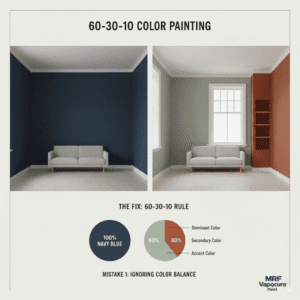
When planning an interior, homeowners often focus on choosing a single wall colour. But without balance, even the most attractive shade of interior wall paint can dominate or feel flat. That’s where the 60–30–10 rule comes in, and yes—it applies directly to paint.
- 60%: Your dominant wall colour. This is the shade that covers the majority of the space and sets the mood.
- 30%: A secondary colour, often used on an accent wall, woodwork, or built-in features. This creates depth and prevents monotony.
- 10%: An accent shade, applied sparingly to doors, trims, or even the ceiling for contrast.
Skip this balance and the room risks looking chaotic—or worse, dull. A bold colour on every wall can feel overpowering, while a single flat tone throughout may leave the space lifeless.
The fix: Map out your paint choices before you start. Choose one main interior wall paint colour for most surfaces, a complementary secondary shade for features or woodwork, and a third shade for accents. This approach ensures the room feels considered and harmonious, even before any furniture or décor is added.
Mistake 2: Painting the Ceiling White by Default
It’s not always about a false ceiling. Even in simple rooms, the ceiling plays a big role in how the space feels. Yet it’s often overlooked. Out comes the white paint, the roller goes up, and the decision feels settled. While white can make a room feel taller or brighter, it isn’t always the best choice. In many homes, a stark white ceiling clashes with the warmth or richness of the walls beneath.
Think of the ceiling as a “fifth wall”. Its colour has just as much influence on the atmosphere of a room as the surrounding surfaces.
The fix: Instead of defaulting to white, consider:
- A softer tint of the main wall paint creates a seamless flow between surfaces.
- A slightly darker shade to bring a sense of comfort and intimacy, particularly in bedrooms or the living room.
- A contrasting bold tone in small spaces, such as cloakrooms, turns the ceiling into a striking design feature.
By treating the ceiling as part of the overall interior wall paint scheme, the room instantly feels more polished and intentional.
Mistake 3: Painting Over Damaged Walls
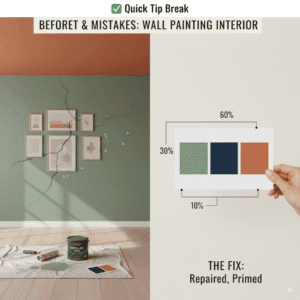
Few mistakes are as tempting as painting straight over old surfaces. Cracks, chips, and stains often seem like they’ll disappear under a fresh coat. In reality, they don’t – they stand out more. Worse still, paint applied to dirty, glossy, or peeling walls will fail to adhere properly, meaning all that effort may flake away within months.
The fix: Good preparation is essential. Before applying new interior wall paint, take time to:
- Clean the walls thoroughly, removing dust, grease, or smoke residue.
- Repair any damage. Fill cracks and holes, then sand smooth.
- Prime where needed—particularly if covering stains, glossy finishes, or dark colours with lighter ones.
A few extra hours spent preparing saves years of frustration later. Fresh paint only looks as good as the surface beneath it, and skipping this step almost guarantees disappointment.
| ✔ Quick Tip Break Always test paint on a larger patch before committing. A swatch on a card or tiny corner won’t reveal how the colour shifts in natural and artificial light. |
Truths That Transform How You See and Choose Interior Wall Paint
Myth 1: “Painting is just about adding colour.”
Truth: Paint does more than change a shade on the wall. It sets the mood of a room, protects surfaces, and reflects the lifestyle of the people living there.
At MRF Vapocure Paint, we look at paint as part of the whole interior experience — colour, finish, and atmosphere working together to create spaces people feel at home in.
Myth 2: “Any paint will do for every room.”
Truth: Kitchens, bathrooms, and bedrooms don’t face the same challenges. Moisture, stains, and heavy use call for tailored solutions.
MRF Vapocure Paint offers a range of interior paints designed for different needs, like stain-resistant, scrub-resistant, low odour, etc.
Myth 3: “Once the paint dries, all brands look the same.”
Truth: The real difference shows up months later — when walls either still look smooth and vibrant, or start peeling and fading.
At MRF Vapocure Paint, our interior wall paints are tested for durability and resistance. The finish stays even, the colours remain bold, and the walls keep their fresh look until it’s time for your next change.
Bringing It All Together
Interior painting isn’t only about colour–it’s about balance, preparation, and making thoughtful choices. By avoiding these three mistakes–ignoring the 60–30–10 rule, defaulting to white ceilings, and painting over damage–you give every room a professional finish that lasts.
Before opening the tin of interior wall paint, pause and ask:
- What kind of atmosphere do I want this room to create?
- Will the colour and finish still feel right to me a year from now?
- Is the chosen paint durable enough for the room’s daily use and conditions?
Answering these questions keeps costly mistakes at bay and ensures the result is one you’ll be glad to live with every day.
FAQs
1. What if I choose a colour and then regret it?
It happens often. The safest way to avoid it is by testing a small patch on your wall and looking at it in different lights before painting the whole room.
2. Do walls really need cleaning before painting?
They do. Even if the walls appear fine, dust or grease can prevent the paint from adhering properly. A quick wipe-down makes the finish smoother and longer-lasting.
3. How often should interior walls be repainted?
On average, every 5–7 years. Busy spaces like hallways or children’s rooms may need a refresh sooner.
4. Do light colours really make a room feel bigger?
Yes. Light shades reflect more light and create an open feel, while darker tones bring warmth and cosiness.
5. What’s the biggest mistake homeowners make when painting?
The biggest mistakes homeowners make with interior wall paint include skipping surface prep, picking colours without testing, rushing the job, using cheap tools, and painting straight over old or damaged walls. Avoiding these helps the finish look polished and last longer.