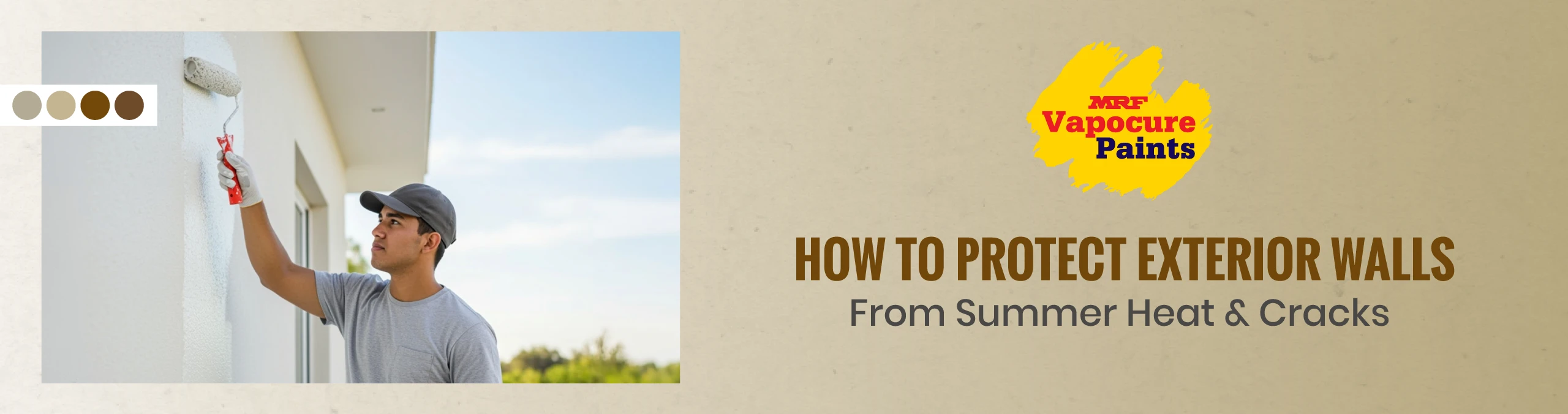
How to Protect Exterior Walls from Summer Heat & Cracks
Are your exterior walls heating up too much during summer afternoons? Noticing hairline cracks near windows or terrace walls? Heat and moisture together can weaken exterior surfaces faster than most homeowners expect. In this guide, let us look at what causes exterior wall cracks, how heat affects painted surfaces, and which paint systems help improve durability and weather resistance.
Your Exterior Walls Face Heat Every Single Day. Are They Already Showing Damage?
Step outside your home for a moment.
Do your terrace walls feel extremely hot during afternoons?
Are small cracks becoming visible near windows?
Has your exterior paint started fading unevenly?
Most homeowners notice these issues only after the damage becomes visible.
But summer heat quietly affects exterior walls every single day.
Continuous UV exposure, trapped heat in walls, moisture fluctuations, and surface expansion slowly weaken paint coatings and wall surfaces.
Especially in:
- Terrace-facing walls
- Top-floor homes
- Independent houses
- Sun-facing balconies
- Exterior compound walls
And once cracks start appearing, rainwater seepage during the monsoon can make the situation even worse.
| Did You Know? Not all wall cracks are structural. Many summer cracks happen because of:
low-quality exterior coatings. Dark exterior walls absorb much more heat than lighter shades. Continuous summer exposure can cause:
especially on terrace-facing surfaces. |
Poll:Which Exterior Wall Problem Do You Notice Most Often? 🔘 Hairline cracks |
The Biggest Mistake Most Homeowners Make
Many people repaint walls directly over damaged surfaces without proper preparation.
The problem?
Without proper priming:
- paint adhesion becomes weak
- cracks return faster
- patchiness increases
- Moisture enters the surface easily
That is why a proper exterior paint system matters more than just the topcoat colour.
| MUST KNOW A proper exterior wall painting system has three layers, and each has a specific job:
Step 1 – Putty Applied first to bare or freshly plastered walls. Wall putty fills surface imperfections, small holes, uneven patches, and minor undulations and creates a uniformly smooth base. Without putty, no topcoat will sit evenly on the wall surface. You will see every bump and irregularity through the final paint.
Step 2 – Primer Applied over the putty once it has fully dried and been sanded smooth. The primer seals the wall surface and creates the adhesion layer that bonds the topcoat to the wall. This is the step most people skip, and it is the single biggest reason most exterior paint jobs fail early. Without primer, the topcoat has nothing to properly grip. It will peel. But primer does more than just bond. A good exterior wall primer has high opacity, meaning it is thick and white enough to give the wall a clean, neutral base. This matters because it brings out the true, accurate colour of your topcoat. Without that neutral base, the colour of the wall beneath influences what you see, and your topcoat colour will look uneven, patchy, or simply different from what you expected.
Step 3 – Topcoat The protective and decorative finish layer. This is what you see: the colour, the sheen level, the final appearance. Depending on the product, your topcoat gives you a matte, sheen, or gloss finish. It also provides the weather resistance, UV protection, and surface durability that keep your walls looking good through sun, rain, and humidity. The topcoat only performs as well as the two layers beneath it. |
Why Primer Matters Before Exterior Painting
Think of primer as the foundation layer for your paint system.
A good primer helps:
- improve paint bonding
- smoothen uneven surfaces
- improve durability
- reduce paint peeling
- improve topcoat performance
For homes exposed to harsh summer heat and moisture, MRF Vapocure Paints offers solutions like:
Suitable for:
- damp-prone walls
- exterior surfaces exposed to moisture
- homes facing rain seepage concerns
It helps improve adhesion while preparing the surface for long-term exterior protection.
Which Exterior Paint System Works Best?
Different homes need different exterior solutions depending on:
- weather exposure
- wall condition
- budget
- sunlight exposure
Premium Long-Lasting Exterior Protection
For stronger weather resistance and long-term durability:
AquaFresh PU Exterior
Suitable for:
- terrace-facing walls
- independent homes
- high-sunlight-exposure areas
- premium exterior finishes
It helps improve:
- weather resistance
- colour retention
- durability
- surface protection
especially in harsh outdoor conditions.
Looking for a Balanced Exterior Paint Option?
A water-based acrylic exterior paint suitable for homeowners looking for:
- balanced exterior durability
- smoother finish
- practical maintenance performance
Need a Budget-Friendly Exterior Solution?
Suitable for:
- economical repainting
- basic exterior maintenance
- practical budget-conscious applications
Quick Home Check: Are Your Exterior Walls Summer-Ready?☐ Hairline cracks near windows or corners Results:
|
| Did You Know? Exterior wall cracks often become worse during the monsoon because moisture enters through already weakened summer-damaged surfaces. That is why summer maintenance becomes important before the rainy season begins. |
| If you are planning to repaint your home, this is for you! Choosing the right exterior shades can also help reduce visible fading and heat absorption over time. Explore these fade-proof exterior wall paint colour combinations for sunny climates before selecting your topcoat colours. |
How to Reduce Exterior Wall Damage During Summer
1. Repair Small Cracks Early
Small cracks become major seepage points during the monsoon.
Early crack repair helps prevent:
- water seepage
- paint peeling
- damp damage
2. Use Proper Exterior Primers
Skipping primer weakens paint durability significantly.
3. Choose Heat-Resistant Exterior Paint Systems
Exterior walls exposed to direct sunlight require stronger weather-resistant coatings.
4. Repaint Before Monsoon Arrives
Summer damage combined with monsoon moisture usually accelerates wall deterioration.
Which Exterior Areas Need Maximum Protection?
Some exterior surfaces face much higher weather exposure, especially:
- Terrace walls
- Balcony walls
- Compound walls
- Sun-facing elevations
- Top-floor exterior surfaces
These areas usually require stronger exterior paint systems and timely maintenance.
Which Exterior Paint Solution Fits Your Home?
| Wall Condition | Recommended Solution |
| Damp-prone walls | AquaFresh DampGarde Primer |
| Premium exterior protection | AquaFresh PU Exterior |
| Balanced exterior durability | Altura Acrylic Emulsion |
| Budget-friendly repainting | Campus Emulsion |
| Hairline cracks | Surface repair + primer + top coat |
Long-Lasting Exterior Protection Starts with the Right Paint System
At MRF Vapocure Paints, we understand how Indian summers affect exterior walls over time. From harsh sunlight and wall heat to moisture exposure and seasonal cracks, exterior surfaces need more than just colour coating. Solutions like AquaFresh DampGarde Primer, AquaFresh PU Exterior, Altura Acrylic Emulsion, and Campus Emulsion help improve durability, weather resistance, and long-term exterior performance.
Summing Up
Exterior wall damage usually starts small.
A minor crack. Slight fading. Small peeling patches.
But without timely maintenance, harsh summer heat and monsoon moisture together can gradually weaken exterior surfaces much faster.
Simple preventive steps like:
- repairing cracks early
- using proper primers
- choosing weather-resistant exterior paints
- repainting before monsoon
It can help improve durability and reduce expensive repairs later.
Because honestly, protecting your walls early is always easier than fixing severe damage later.
From heat-resistant exterior paints to damp-protection primers and long-lasting wall coatings, explore the MRF Vapocure Paints product range designed for Indian weather conditions.
FAQs
1. Why do exterior walls crack during summer?
Heat expansion, moisture fluctuations, poor surface preparation, and weak paint systems can cause cracks in exterior walls.
2. What is the best heat-resistant paint for exterior walls?
Weather-resistant exterior paint systems with proper primers help improve durability against heat exposure.
3. How do I fix hairline cracks on exterior walls?
Clean the surface, repair the cracks properly, apply primer, and repaint using exterior-grade coatings.
4. Why is primer important before exterior painting?
Primer improves paint adhesion, surface smoothness, durability, and moisture resistance.
5. Which exterior areas need maximum protection?
Terrace walls, balcony walls, compound walls, and sun-facing exterior surfaces usually require stronger protection.
6. Can summer heat damage exterior paint?
Yes. Continuous UV exposure and wall heat can cause fading, peeling, bubbling, and surface deterioration.
7. What causes paint peeling on exterior walls?
Moisture penetration, poor surface preparation, heat exposure, and improper priming often cause peeling paint.
8. When is the best time to repaint exterior walls?
Before the monsoon is usually ideal because summer damage can worsen during rainy conditions.
9. How can I reduce wall heat during summer?
Using suitable exterior coatings and maintaining exterior surfaces properly can help improve surface protection.
10. Why do terrace walls deteriorate faster?
Terrace-facing walls face direct sunlight, higher temperatures, rain exposure, and moisture fluctuations throughout the year.