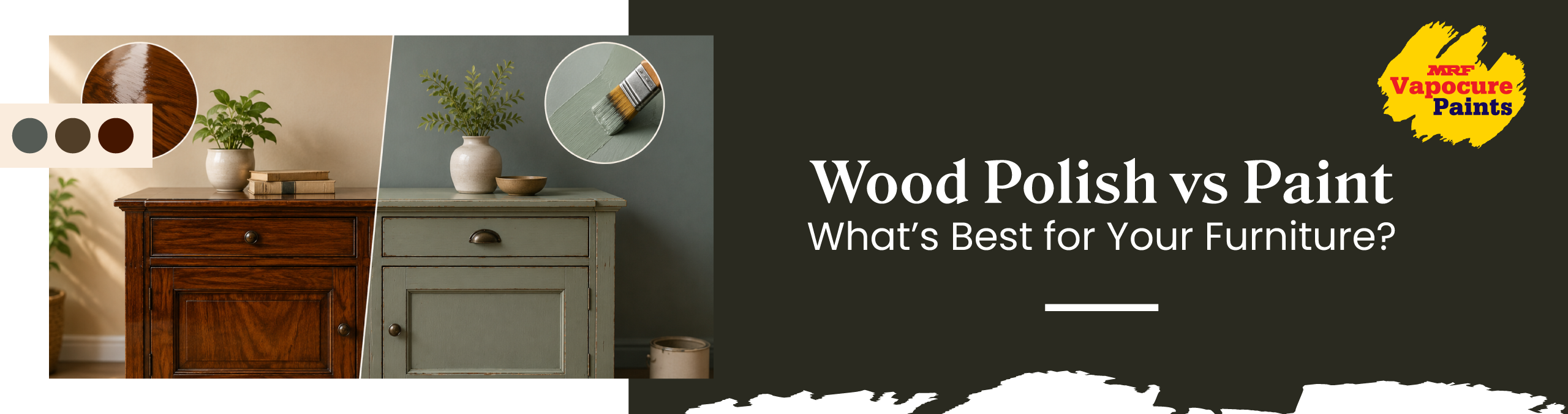
Wood Polish vs Paint: What’s Best for Your Furniture?
When you are choosing a finish for your furniture, your decision comes down to what you want to highlight and how much daily wear the piece needs to handle. You may want to show off the natural grain, cover existing flaws or simply give an old piece a completely new colour. This guide helps you compare wood polish and paint based on your furniture’s condition, use and appearance.
Quick Read and Key Takeaways
Wood polish keeps your furniture’s natural grain visible, making it a good choice when the wood underneath is worth showing off. Paint on wood gives you a much wider choice of colours and can hide stains, repairs and mismatched wood tones. To choose between polish and paint, ask yourself two questions: Do you want to keep the natural grain visible, and how much daily handling will your furniture take?
- Polish enhances and protects your furniture’s natural grain, while paint covers it with an opaque layer.
- Paint gives you far more colour options and can hide stains, patchy repairs and mismatched wood tones.
- Polish generally needs more frequent reapplication than a well-applied paint system.
- If you have solid wood with strong, even grain, polish can be a good choice. Veneered, engineered or heavily repaired furniture can be better suited to paint.
- If your furniture has sentimental or resale value, you may want to consider polish before painting over the natural wood.
- When you choose paint, remember that the right primer and preparation have a major role in determining the durability of the finish.
Two Very Different Ways to Finish the Same Piece
Your dining table and family dresser may both be made from solid wood, but that does not mean they need the same finish.
You may have one piece with beautiful natural grain that deserves to remain visible. Another may have stains, repairs or mismatched tones that would look better under a solid colour.
This is why choosing between wood polish and paint is not simply a matter of personal taste. You need to consider what is underneath the finish, how often you use the furniture and what you want the finished piece to look like.
Let’s look at how wood polish vs paint compares in terms of grain visibility, durability, maintenance and practicality so you can choose the right finish for each piece.
What Is the Real Difference Between Wood Polish and Paint?
How Polish Works on Wood
Wood polish sits close to the surface and allows light to pass through to the wood grain underneath rather than covering it.
Traditional approaches such as French polish or wax work this way. Today, you can also choose modern PU-based clear finishes that retain the visibility of the grain while offering better resistance to daily wear.
For example, MRF Vapocure WoodCoat Italia is a two-pack polyurethane finish available in clear and white. It enhances the natural tone and pattern of the timber rather than completely changing its appearance, while providing greater durability than older wax or French polish methods.
How Paint Works on Wood
Paint creates a fully opaque film over the wood, hiding the grain and giving you a solid, uniform colour.
This gives you far greater flexibility when choosing a colour because the final shade does not depend on the natural appearance of the wood underneath.
Wood Polish vs Paint at a Glance
| Aspect | Wood Polish | Paint |
| Grain visibility | Keeps and enhances the natural pattern | Covers the grain with an opaque finish |
| Colour range | Limited by the wood’s own tone | Wide range of colours available |
| Best suited to | Solid wood with attractive, even grain | Wood with damage, mismatched tone or veneer |
| Durability against daily wear | Tends to wear at edges and corners sooner | Generally holds up better against scuffs and handling |
| Maintenance frequency | Needs more frequent reapplication | Longer intervals between touch-ups |
| Hides flaws and repairs | No, flaws remain visible through the finish. | Yes, it covers stains, patches and mismatches. |
| Typical use case | Heirloom pieces and display furniture | High-use furniture and damaged or mismatched pieces |
Did You Know? Your polished wood surface may still need a primer or sealer step in some cases. Raw wood can absorb a finish unevenly, particularly when different areas of the same piece have different grain densities.
Why Do You Need to Choose Between Polish and Paint?
Grain Visibility Versus Colour Flexibility
- If you want your furniture’s natural grain to be the main feature, polish gives you that advantage.
- If you need a particular colour to match your room, paint gives you much greater flexibility.
- Neither option is universally better. The right choice depends on what you want to achieve with your furniture.
Your Attachment to Natural Wood
If you have inherited a piece of furniture from your family, you may want to keep its original wood tone visible. Painting over it can change the character of the piece and may not be what you want if its history or craftsmanship matters to you.
Before you choose paint simply because it is convenient, consider whether preserving the natural appearance of the wood is important to you.
How Can You Decide Between Polish and Paint for Your Furniture?
When Your Wood Grain Is Worth Keeping
If you have solid wood furniture with an even, attractive grain and no major surface damage, polish can be a strong choice.
Teak, sheesham and walnut, for example, have grain patterns that you may prefer to keep visible instead of covering them with paint.
When Paint Is the More Practical Choice
If your furniture has mismatched wood tones, visible repairs, water stains or a veneer that has started lifting, polish may not give you the result you want.
These imperfections can remain visible beneath a clear finish. Paint can be a more forgiving option because it covers these issues completely.
When Should You Repolish Instead of Repaint?
Signs Your Polish Needs a Refresh
Look closely at your furniture. If the surface has become dull or faded, no longer reflects light evenly or has started looking patchy, the existing polish may have worn thin.
If the wood underneath is still in good condition, you may simply need a fresh coat of polish rather than a completely new paint finish.
Signs Your Furniture Is Ready for Paint
If you notice chipped or peeling patches exposing bare wood unevenly, stubborn stains that cleaning cannot remove or a wood tone that no longer works with the rest of your room, paint may give you a more reliable result.
Instead of trying another round of polish and allowing these flaws to remain visible, you can use paint to create a more uniform finish.
Should You Choose Polish or Paint?
If You Own an Heirloom Piece
If you are keeping a piece because of its history, craftsmanship or potential resale value, polish may be the better option.
Painting over solid, well-grained wood can change its character and may affect its value. If preserving the original appearance matters to you, consider polish before choosing paint.
If You Are Working With Second-Hand Furniture
If you have bought a second-hand piece or inherited furniture without a strong sentimental attachment, paint can give you a practical way to make it work with your room.
You do not need the wood underneath to already have an attractive grain because the paint can cover mismatched tones and visible imperfections.
Which Furniture Pieces Suit Each Approach Best?
Solid Wood Versus Veneered or Engineered Wood
If you have solid wood furniture, polish can work well because the natural grain is a key part of the material’s appearance.
Veneered or engineered wood can be more challenging to polish convincingly. If the thin veneer has been damaged, you may expose the material underneath. In such cases, paint can be a safer option.
High-Use Pieces Versus Display Pieces
Think about how you use each piece before choosing a finish.
Dining tables, chairs and desks that see daily contact can benefit from a durable paint system. Display cabinets, side tables and furniture with attractive natural grain may be better candidates for polish, particularly when they are handled less frequently.
If paint is the right choice for your furniture, you can also explore specific shades in our guide to trending colours for wooden furniture.
Coatings Built for Both Approaches
If you are looking for a finish for your furniture, MRF Vapocure Paints offers options for both approaches.
For a solid colour finish, our Durothane multipurpose PU topcoat offers 29 exclusive factory shades, plus Durothane Hues with more than a thousand additional tintable options.
If you want to retain the natural grain, our WoodCoat Italia range is a two-pack, solvent-based polyurethane finish available in clear and white, with glossy and matt options. It is designed for fast drying and easy sanding while helping protect the natural character of the wood.
Conclusion
Choosing between wood polish and paint does not have to come down to which finish is universally better.
Look at your furniture first.
If the grain is attractive, the piece has sentimental value, and it does not face heavy daily use, polish may be the better choice.
If the wood has mismatched tones, visible damage or needs to withstand heavy everyday use, paint may be more practical.
Instead of choosing one finish for every piece in your home, assess each piece individually and select the finish that suits its condition, use and appearance.
Are you trying to decide between polish and paint for your furniture?
Explore MRF Vapocure’s Durothane and WoodCoat Italia ranges, or speak with a dealer near you for guidance based on your specific furniture.
Frequently Asked Questions
- What is the main difference between wood polish and paint?
Polish is a clear or lightly tinted finish that keeps your wood grain visible, while paint creates an opaque layer that fully covers the wood underneath.
- Why does paint offer more colour options than polish?
Paint creates a solid, opaque layer, so its colour does not depend on the natural tone of the wood underneath. Polish works with the colour the wood already has.
- How do I know if my furniture is a good candidate for polish?
If you have solid wood furniture with an even, attractive grain and no major surface damage or repairs, polish can be a strong option.
- When should I choose paint over polish for my furniture?
Choose paint if your furniture has visible damage, mismatched tones or stubborn stains, or if you need a specific colour that the natural wood cannot provide.
- Who should avoid painting over wooden furniture?
If your furniture has significant craftsmanship, history or resale value, think carefully before painting over solid, well-grained wood, as doing so can reduce its character and value.
- Which furniture types suit paint better than polish?
Veneered or engineered wood, furniture with visible repairs and high-use pieces such as dining chairs can be better suited to paint.
- Does polish need more maintenance than paint?
Generally, yes. Polish tends to wear at edges and corners sooner and can need reapplication more frequently than a durable paint system.
- Can I switch a piece from polished to painted later on?
Yes. You can sand the polished surface to remove its sheen and then apply a suitable wood primer before painting.
- Is polish or paint better for outdoor wooden furniture?
Both require weather-resistant formulations for outdoor use. Paint generally offers greater protection against sun fading and moisture damage over time.
- Does the type of wood affect the choice between polish and paint?
Yes. Woods with strong, attractive grain, such as teak or walnut, can be well suited to polish. Lower-grade wood or veneer with less visual appeal can often work better with paint.