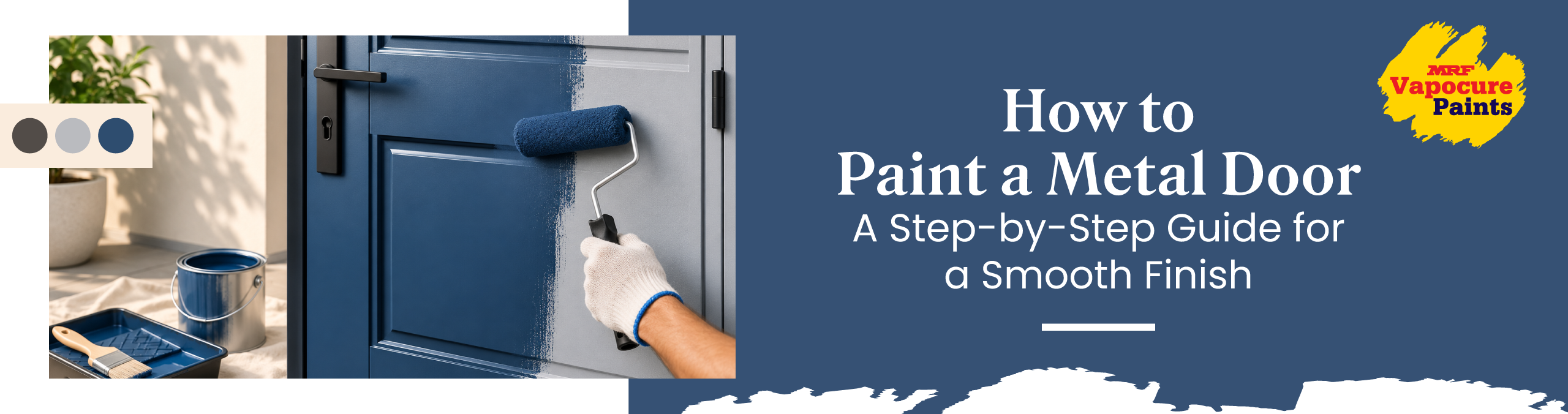
How to Paint a Metal Door: A Step-by-Step Guide for a Smooth Finish
Your metal door rarely fails because you chose the wrong paint colour. More often, the problem starts when you skip or rush a preparation step.
If you want your painted metal door to look smooth and last outdoors, you need to get the preparation, cleaning, sanding and priming right before you apply the topcoat.
This guide takes you through how to repaint a metal door properly, from gathering your tools to allowing enough time for the final coat to cure.
Quick Read and Key Takeaways
If you want to paint a metal door well, focus on proper preparation, cleaning, sanding and priming before applying thin, even coats of a paint system designed for metal.
Skipping the primer or rushing the drying time between coats can leave you with a patchy finish that starts showing signs of wear much sooner than expected.
- Use a dedicated metal primer instead of a general-purpose wall or wood primer.
- If you find rust on your door, treat it before painting. Painting directly over rust can trap moisture and allow the rust to continue spreading underneath.
- Apply two thin coats of topcoat with sufficient drying time between them instead of applying one thick coat.
- If you want the smoothest finish, spray application can give you better coverage. For smaller sections, a good-quality brush or roller can also work well.
- Choose suitable weather conditions for painting. Direct midday heat and high humidity can interfere with drying and curing.
- When selecting exterior metal door paint colours, check the shade against your actual exterior walls and materials rather than relying only on a swatch card.
From Rust Spots to a Finish That Holds
Your metal door probably experiences more daily contact and weather exposure than many other painted surfaces around your home.
You open and close it repeatedly, touch it with your hands, keys and bags, and expose it to sunlight and rain depending on its location.
That combination can make metal door paint fail faster than you expect, particularly if you rush the preparation.
If you want to repaint your metal door, you need to look beyond the colour. Your cleaning, sanding, rust treatment, primer, topcoat and curing process all contribute to the final result.
This guide shows you how to paint a metal door properly, step by step, while also helping you choose exterior metal door paint colours that work well with your home’s exterior.
What Do You Need Before You Start Painting a Metal Door?
Tools and Materials Checklist
Before you begin, gather everything you need, so you do not have to stop halfway through the job.
Your basic checklist should include:
- Metal degreaser or mild detergent
- Fine-grit sandpaper
- Wire brush for rust spots
- Rust-resistant metal primer
- Your chosen topcoat
- Painter’s tape
- Drop sheets
- Screwdriver for removing hardware
Having these materials ready can help you complete each preparation stage without rushing.
Should You Use a Brush, Roller or Spray?
The application method you choose depends on the type of door and the finish you want.
A brush gives you greater control when you are working around panels and detailed sections.
A foam roller works well on larger, flat sections.
If you want the smoothest and most even finish, spray application is generally the strongest option, particularly when your door has grooves or raised panels that can be difficult to cover evenly with a brush or roller.
Did You Know?
Your metal door can heat up much faster than a wall when it is exposed to direct sunlight. This can cause the paint to skin over quickly and may result in an uneven finish if you paint during the hottest part of the day.
Why Does Your Metal Door Need a Different Approach?
Rust, Expansion and Weather Exposure
Your metal door expands and contracts as temperatures change. This movement can put stress on the paint film over time.
A paint system designed specifically for metal is formulated to handle these conditions, while a standard wall emulsion or wood finish may not provide the same suitability.
Why Should You Never Skip Primer on Metal?
Primer gives your topcoat a stable surface to grip and creates a barrier that helps protect bare metal from moisture.
If you skip the primer, your paint can start peeling or flaking within months, particularly around edges and areas that were not cleaned properly before painting.
The Step-by-Step Guide to Painting Your Metal Door
Step One: Remove Hardware and Protect the Area
Start by removing your handles, locks and any other removable fittings.
Place drop sheets around the work area to protect your floor and surrounding walls.
Although you can paint around hardware, removing it gives you cleaner and more even edges.
Step Two: Clean and Degrease the Surface
Clean the entire door with a degreaser or mild detergent.
Your door may look clean, but it can still have grease, dust and marks from regular handling.
Paint will not bond properly to a surface that still has oil or grime on it, so do not rush this stage.
Step Three: Sand and Treat Any Rust
Lightly sand the entire surface to create a better grip for the primer.
If you find rust spots, use a wire brush until the affected areas are clean and the metal underneath is exposed.
Do not paint over untreated rust. The rust can continue spreading underneath your new paint and may become visible again within months.
Step Four: Apply Primer
Apply a rust-resistant metal primer in a thin and even coat.
Allow the primer to dry fully before moving on to your topcoat.
Skipping this step or rushing the drying time can significantly affect how long your finished paint job lasts.
Step Five: Apply the Topcoat in Thin Coats
Apply two thin coats of your chosen topcoat rather than one thick coat.
Allow the first coat to dry fully before applying the second.
Thin coats are more likely to dry evenly and are less likely to sag, drip or show visible brush marks than a single heavy coat.
Step Six: Allow the Door to Cure Before Rehanging Hardware
Do not stop at surface drying.
Give the final coat enough time to cure fully before you reattach your hardware or close the door against its frame.
If you handle or close a freshly painted door too soon, you can leave marks and smudges on an otherwise smooth finish.
| Step | Action | Why It Matters |
| 1 | Remove hardware and protect the area. | Gives you cleaner edges and protects nearby surfaces. |
| 2 | Clean and degrease the surface. | Helps the paint bond properly. |
| 3 | Sand and treat any rust. | Prevents untreated rust from spreading underneath the paint. |
| 4 | Apply primer. | Creates a moisture barrier and gives the topcoat a stable surface to grip. |
| 5 | Apply the topcoat in thin coats. | Helps prevent drips, sagging and uneven drying. |
| 6 | Allow the finish to cure before rehanging hardware. | Helps prevent marks and smudges. |
When Is the Right Time to Repaint Your Metal Door?
Signs Your Door Needs Repainting
Look out for a few common signs that your door needs a fresh coat.
Chalking, which appears as a powdery residue on your hand, can indicate that the existing finish has deteriorated.
You should also consider repainting if you can see rust bleeding through the surface or if the paint has started flaking around the edges or hinges.
What Weather Conditions Are Best for Painting?
Choose dry, moderately warm weather with low humidity for the most even drying and curing.
If possible, paint during the early morning or late afternoon instead of the middle of the day during peak summer.
Your metal door can heat up quickly under direct sunlight, which can affect how the paint dries.
Should You DIY Your Metal Door or Hire a Professional?
If you have a single, flat metal door and basic tools, you can usually manage the project yourself if you are willing to follow each preparation and drying step carefully.
However, you may get a better result from a professional if your door has heavy rust damage or detailed panelling.
Professional help is also worth considering if you want a spray-applied finish but do not have the required equipment at home.
Which Exterior Metal Door Paint Colours Work Best?
Match Your Door Colour to Your Exterior Walls
If your exterior walls are light in colour, darker shades such as charcoal, navy or deep green can create a clear contrast.
If you choose a door colour that is closer to the tone of your facade, the overall appearance can feel more understated.
If you need more ideas, our guide on main door colour ideas covers specific shade combinations in greater detail.
Should You Choose Matte or Gloss for an Iron Door?
A matte finish can help hide dents, weld marks and general surface texture.
However, matte surfaces can show oily fingerprints more clearly.
A gloss finish reflects more light and is easier to wipe clean, but it can also highlight imperfections underneath.
Coatings Built for Your Metal Door and Iron Work
If you are looking for a coating for your metal door, MRF Vapocure Paints offers options designed for different requirements.
Specta PU Enamel is available in 23+ shades and provides a glossy, durable polyurethane finish suited to both wooden and metal main doors.
If you want to coordinate your door with adjoining gates, grilles or railings, Durothane offers 29 exclusive factory shades along with more than a thousand additional tintable options from Durothane Hues. It can be used across both metal and wood, helping you create a consistent finish across different surfaces.
Conclusion
Your metal door paint job rarely fails because you chose the wrong colour.
It is much more likely to fail because you rushed or skipped a preparation step.
Clean the surface properly, sand it, treat any rust, apply a suitable primer and then build your finish with thin, even coats. Most importantly, give each layer enough time to dry and allow the final coat to cure properly.
Follow the sequence carefully, and you can give your metal door a finish that looks better and lasts longer.
Frequently Asked Questions
- What paint should I use on a metal door?
Choose a paint system designed specifically for metal, such as a PU enamel, along with a rust-resistant primer for a more durable finish.
- Why does my metal door paint keep peeling?
Your paint may peel if you skip the primer, paint over dirt or grease, or apply paint over untreated rust.
- How should I prepare my metal door before painting?
Clean and degrease the surface, lightly sand it, treat any rust spots with a wire brush and then apply a rust-resistant primer before applying your topcoat.
- When is the best time to repaint a metal door?
Dry, moderately warm weather with low humidity can give you more even results. Avoid painting in direct midday sunlight or immediately before heavy rain.
- When should I hire a professional to paint my metal door?
Consider professional help if your door has heavy rust damage or detailed panelling, or if you want a spray-applied finish but do not have the required equipment.
- Which exterior metal door paint colours work best against light-coloured walls?
Darker shades such as charcoal, navy and deep green can create a strong contrast against light or white exterior walls.
- Does an iron door need a different paint from a hollow metal door?
Both need a metal-specific paint system with a rust-resistant primer. Solid iron doors may need additional attention during rust treatment, particularly if the door is older.
- How many coats of paint does a metal door need?
Most metal doors need one coat of primer followed by two thin coats of topcoat, with sufficient drying time between each coat.
- Can I paint over an old glossy finish without stripping it?
Yes. Sand the surface first to break the existing sheen, clean away the dust and then apply a primer suited to the existing finish.
- Should I choose a matte or gloss finish for my metal door?
A matte finish can hide dents and surface texture, but it may show fingerprints more easily. Gloss is easier to wipe clean but can highlight surface imperfections. Your choice should depend on the door’s condition and how much daily handling it receives.