Best 7 Wall Primers in India 2026: Ranked Guide
Choosing the right wall primer decides whether your topcoat paint lasts five years or peels within one monsoon. This guide ranks the seven wall primer types that matter most for Indian homes and sites in 2026, matched to the wall condition each one actually solves.
- Water-based acrylic wall primer suits most Indian interiors and is the best overall wall primer pick for 2026.
- Damp-prone walls need a waterproofing primer, not a standard wall primer, before any topcoat goes on.
- Wood and metal surfaces need dedicated wood or metal primers — a generic wall primer will not bond correctly.
- From MRF Paints: AquaFresh PU Wall Primer, Altura 2-in-1 Primer and Sello 2-in-1 for walls, AquaFresh DampGarde for damp exterior walls, and Epidec RTC Primer for rusted metal.
- Stain-blocking primer is the only fix for tannin bleed and old water marks showing through fresh paint.
Best overall: water-based acrylic wall primer. Best for damp or monsoon-affected walls: waterproofing primer. Best for wooden doors and furniture: wood primer. Everything below explains why, and where each type actually belongs on a job.
Why primer choice matters more than the paint
Most paint failures in Indian homes — flaking, patchy sheen, stains bleeding back through — trace back to skipping primer or picking the wrong one. MRF Paints makes primers across interior, exterior, wood, and specialty categories, and the right pick depends entirely on what's under your topcoat: fresh plaster, old distemper, damp masonry, wood, or metal.
A wall primer seals the surface, evens out porosity, and gives the topcoat something consistent to grip. Paint over the wrong primer, or no primer, and you're repainting within 12 to 18 months instead of the 4 to 5 years a properly primed wall should hold.
What makes the best wall primer
- Adhesion to the actual substrate — fresh plaster, old paint, wood, or metal each need a different binder
- Alkali and stain resistance — new masonry is highly alkaline and will burn through weak formulas
- Coverage per litre — MRF’s wall primers cover about 80 to 120 sq ft per litre per coat indoors and less on exterior walls, so check the figure before you buy
- Recoat window — how fast you can move to topcoat without losing adhesion
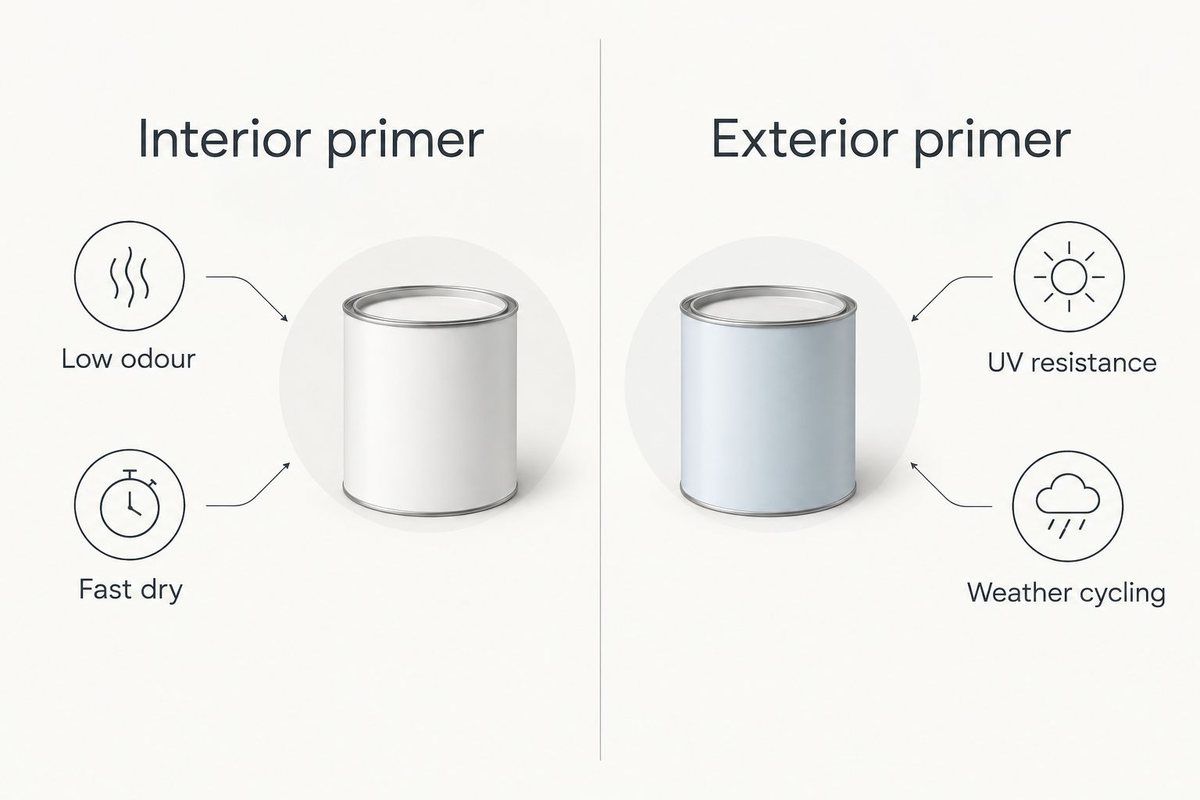
- Interior vs exterior weather tolerance — exterior primers need UV and rain resistance interior formulas don't
- Compatibility with the topcoat system — mismatched primer and paint chemistry causes peeling
Wall primers at a glance
| Primer type | Best for | Standout feature | Key limitation |
|---|---|---|---|
| Water-based acrylic primer | New interior plaster and repaints | Fast dry, low odour, easy topcoat compatibility | Weaker on heavy alkali or damp walls |
| Wall putty-based primer/sealer | Uneven, porous plaster surfaces | Fills hairline pores before paint | Adds a step and drying time |
| Stain-blocking primer | Water marks, smoke, tannin bleed | Locks stains so they don't resurface | Overkill on clean, unstained walls |
| Damp-proof waterproofing primer | Monsoon-affected or seepage walls | Resists moisture migration through the wall | Won't fix an active leak, only surface dampness |
| Exterior weatherproof primer | Facades exposed to sun and rain | Built for UV and thermal cycling | Not needed indoors, higher cost per litre |
| Metal primer (anti-corrosive) | Grills, railings, metal doors | Anti-rust protection under enamel paint | Wrong choice for any masonry surface |
| Wood primer/sealer | Wooden doors, windows, furniture | Seals grain and blocks tannin bleed from wood | Doesn't work on plaster or metal |
1. Water-based acrylic wall primer: best for new plaster and general repaints
This is the default wall primer for most Indian interiors — new POP or cement plaster, or a repaint over sound old paint. It dries fast, carries low odour, and is built to sit under both water-based and enamel topcoats without adhesion problems.
Water-based acrylic primer pros:
- Dries in hours, not overnight, so painters finish a room in one day
- Low odour, workable in occupied homes
- Broad compatibility with most interior topcoat paints
Water-based acrylic primer cons:
- Not built for standing damp or active seepage
- Needs a stain-blocking step first if the wall has water marks
Best for: fresh interior plaster and standard repaints. Verdict: Buy — this is the correct default unless your wall has a specific problem.
2. Wall putty-based primer/sealer: best for uneven or porous plaster
Used after a wall putty skim coat, this primer seals the putty layer so it doesn't drink up the topcoat unevenly. It's the step painters skip most often, and the one that causes patchy sheen later.
Wall putty-based primer pros:
- Locks down putty dust and porosity before paint
- Prevents blotchy, uneven finish on freshly puttied walls
Wall putty-based primer cons:
- Only relevant when putty has been applied — unnecessary on sound old paint
- Extra coat means extra drying time before topcoat
Best for: walls that just had a putty skim coat applied. Verdict: Buy if putty was used; Skip if it wasn't.
3. Stain-blocking primer: best for water marks, smoke, and tannin bleed
Ordinary wall primer won't stop an old water stain or smoke mark from bleeding through fresh paint — it needs a formula built specifically to lock the stain in place.
Stain-blocking primer pros:
- Seals water rings, smoke stains, and rust marks permanently
- Prevents repeat bleed-through after repainting
Stain-blocking primer cons:
- Costs more per litre than a standard wall primer
- Unnecessary on a clean, unmarked wall
Best for: ceilings and walls with visible old stains. Verdict: Buy for stained surfaces only.
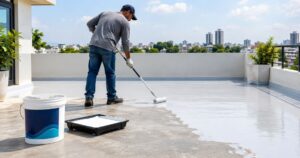
4. Damp-proof waterproofing primer: best for monsoon-affected walls
Walls with recurring seepage or peeling paint in monsoon season need a primer built to resist moisture migration, not a standard acrylic formula.
Waterproofing primer pros:
- Resists moisture pushing through from behind the wall
- Extends repaint intervals on damp-prone facades and bathrooms
Waterproofing primer cons:
- Doesn't fix an active plumbing leak or structural seepage source
- Higher cost than a general interior primer
Best for: bathroom walls, ground floors, and monsoon-exposed surfaces. Verdict: Buy where dampness is a repeat problem; Hold until the leak source is fixed first.
5. Exterior weatherproof primer: best for facades and boundary walls
Exterior surfaces face direct sun, rain, and temperature swings that indoor walls never see. A dedicated exterior wall primer is built for that thermal cycling.
Exterior weatherproof primer pros:
- Built for UV exposure and rain without early chalking
- Pairs correctly with exterior emulsion topcoats
Exterior weatherproof primer cons:
- Not necessary indoors — a waste of cost inside the house
- Needs full dry weather to apply properly
Best for: house exteriors, boundary walls, and terraces. Verdict: Buy for any exterior repaint job.
6. Metal primer (anti-corrosive): best for grills, railings, and metal doors
Metal surfaces need a rust-inhibiting primer, never a masonry wall primer. Skipping this step is the most common reason enamel paint on grills and gates bubbles within a year.
Metal primer pros:
- Anti-corrosive layer stops rust from working through the topcoat
- Gives enamel paint a surface it can actually grip
Metal primer cons:
- Wrong choice entirely for plaster or wood
- Needs rust removal and cleaning first for real adhesion
Best for: grills, railings, gates, and metal doors. Verdict: Buy — non-negotiable on any metal surface.
7. Wood primer/sealer: best for doors, windows, and furniture
Wood grain absorbs paint unevenly and can bleed tannins through light-coloured topcoats. A wood primer seals the grain and blocks that bleed before the finish coat goes on.
Wood primer pros:
- Seals grain for an even, smooth topcoat finish
- Blocks natural wood tannins from staining light paint colours
Wood primer cons:
- Doesn't work on plaster, masonry, or metal
- Needs sanding between coats for the best finish
Best for: wooden doors, window frames, and furniture. Verdict: Buy for any wood surface getting painted.
How this ranking was built
Each primer type is ranked against the six criteria above — adhesion, alkali resistance, coverage, recoat time, weather tolerance, and topcoat compatibility — and matched to the one surface condition it solves best, not stacked against each other for a single top spot.
Get the right primer for your wall
Match your surface condition to the correct MRF Paints primer before you paint.
Which wall primer should you choose?
For a standard interior repaint on sound plaster, water-based acrylic wall primer is the right default in 2026. If the wall has been puttied, prime after the putty, not instead of it. Stains get a stain-blocking primer, damp walls get a waterproofing primer, and wood or metal never touch a masonry primer at all. Match the primer to the surface first — the paint decision comes second.
MRF Paints primers for each wall condition
- New plaster and repaints, inside or out: AquaFresh PU Wall Primer (water-based polyurethane, about 85-95 sq ft per litre per coat), Altura 2-in-1 Primer (water-based acrylic, 90-110 indoors and 60-80 outdoors) or the budget Sello 2-in-1 Wall Primer (80-100 indoors, 50-60 outdoors). Match the primer to the topcoat range: AquaFresh under AquaFresh, Altura under Altura.
- Solvent-based interior primer: Solvent Thinnable Wall Primer, about 100-120 sq ft per litre per coat.
- Damp exterior walls and terraces: AquaFresh DampGarde, a fibre-reinforced waterproofing system that bridges cracks up to 0.5 mm.
- Rusted metal: Epidec RTC Primer, a two-pack epoxy rust-tolerant primer, under MetalCoat, Durothane or MC+.
- Wood: each MRF wood finish has its own sealer, such as FreshWood Interior Sealer Clear or WoodCoat Italia Filler White; see our guide to PU wood finishes.
FAQ
What’s the best wall primer for new plastered walls in India?
A water-based acrylic wall primer is the best choice for fresh plaster in 2026 because it handles alkalinity and dries fast enough for same-day topcoat work. It also gives the broadest compatibility with both water-based and enamel paints.
Is water-based primer better than solvent-based primer for interior walls?
Yes, for most interior walls, because it dries faster and carries lower odour in occupied homes. Solvent-based primers still have a role on specific stain or wood jobs where stronger sealing is needed.
How many coats of primer does a wall need before painting?
One coat is standard for sound, evenly porous walls; two coats are common on freshly puttied or highly absorbent plaster. MRF’s wall primers cover roughly 80 to 120 sq ft per litre per coat indoors and less outdoors, so factor that into how much you buy.
Can I skip primer and paint directly on old paint?
Skipping primer is only safe when the existing paint is sound, clean, and the same paint family as the new topcoat. Any stain, damp patch, or peeling area still needs targeted priming first.
What primer removes water stains before repainting?
A stain-blocking primer is built specifically to lock in water marks, smoke stains, and rust so they don’t bleed through fresh paint. A standard wall primer will not stop an existing stain from reappearing.
Do exterior walls need a different primer than interior walls?
Yes, exterior walls need a weatherproof primer built for UV exposure and rain, while interior primers are optimized for low odour and fast indoor drying. Using an interior primer outdoors leads to early chalking and failure.
How long should primer dry before applying topcoat paint?
Most water-based wall primers are ready for topcoat in 4 to 6 hours under normal humidity, while solvent-based and wood primers often need overnight drying. Always check the recoat window printed on the tin before starting the second coat.
Does wood need a different primer than plaster walls?
Yes, wood needs a dedicated wood primer that seals grain and blocks tannin bleed, which a masonry wall primer cannot do. Using the wrong primer on wood usually shows up as uneven sheen or staining within months.
One last thing
The single most skipped step isn't picking the wrong primer — it's skipping the stain-blocking coat on an old water mark and assuming the topcoat will hide it. It won't; the stain resurfaces within weeks, and the wall gets repainted twice instead of once.