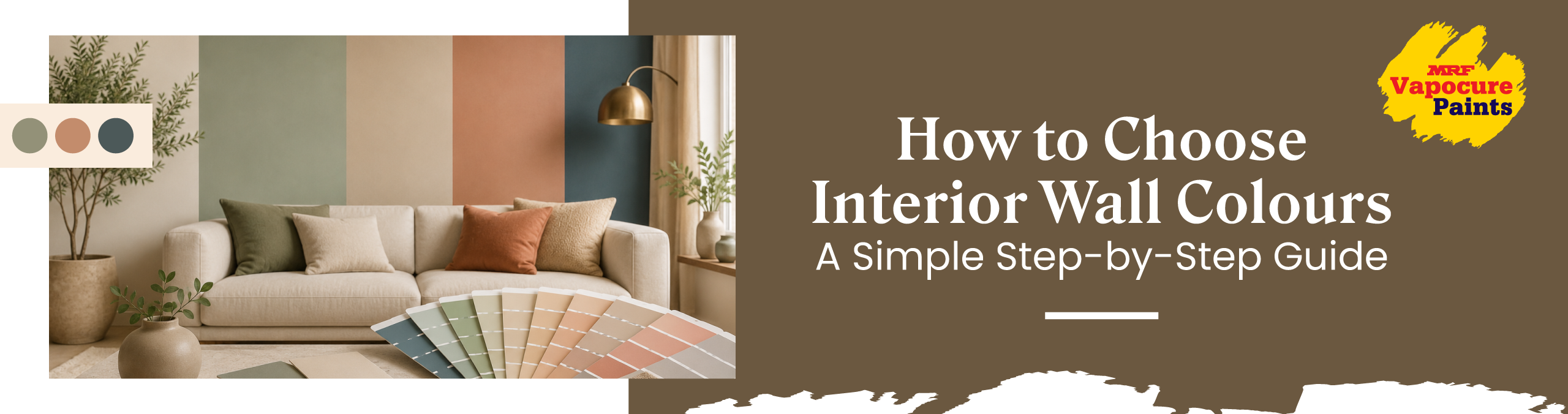
How to Choose Interior Wall Colours: A Simple Step-by-Step Guide
Choosing interior wall colours becomes much easier when you follow a clear process instead of deciding each room based on instinct. You need to consider the natural light, existing flooring and fixtures, the colours you want to use, and the type of finish each room needs.
This guide takes you through how to choose interior house colours step by step, from understanding the light in your home to testing your final shade directly on the wall.
Quick Read and Key Takeaways
When you are learning how to choose colours for house interior spaces, follow a simple sequence. Start by studying the light, choose a base neutral, add a supporting colour, introduce an accent and then test your shortlisted shades on the actual wall.
Following this order can remove much of the guesswork and help you choose room colours that work with your home’s lighting and existing finishes.
- Study the natural light in each room before shortlisting colours.
- Start with a base neutral, then build your supporting colour and accent around it.
- Pay attention to undertones, especially when comparing colours with your flooring and fixed fixtures.
- Test a large patch on the actual wall and observe it throughout the day before committing.
- Discuss your shortlisted colours with everyone living in your home before painting begins.
- Choose finishes based on how each room is used. Wet areas and high-traffic rooms need a different approach from bedrooms and quieter spaces.
Turning a Hundred Options Into One Clear Choice
If you have ever stood in front of a wall of paint swatches without knowing where to start, you know how overwhelming choosing a colour can feel.
The problem is not that you have too few choices. You have too many, and without a clear process, it becomes difficult to know which shade will actually work in your home.
Instead of comparing dozens of colours at once, break the decision into smaller steps. This makes it easier to narrow down your choices and understand why a particular shade works for your space.
Whether you are refreshing one room or planning colours for your entire home, this step-by-step approach can help you make a more confident decision.
What You Need Before You Start Choosing Interior Colours
Gather Inspiration Without Getting Overwhelmed
- Start by collecting a small number of reference images from magazines, social media, or rooms that already have the kind of look you want.
- You do not need to copy any one room exactly. Instead, look across your saved images and identify patterns.
- Do you keep choosing warm neutrals? Are you drawn to softer shades? Do you prefer deeper accent colours?
- These patterns can give you a useful starting point before you begin looking at paint shades.
Understand Your Home’s Natural Light
- Before you shortlist a colour, spend some time observing how natural light moves through your home.
- Note which rooms receive strong morning light, which get afternoon sun and which remain mostly shaded during the day.
- The direction and quality of light can change how a colour appears once it is on your wall.
- A shade that looks warm and inviting in one room can appear cooler or flatter in another room with less direct light.
Did You Know?
The same white paint can appear to have a blue, grey or yellow undertone depending on the direction a room faces. This is why you should always check a shade in the actual room where you plan to use it rather than relying only on how it looks somewhere else.
Why Should You Follow a Structured Approach?
The Cost of an Unplanned Colour Choice
Repainting a finished room can take considerably more time and effort than choosing the right colour before painting begins.
Once your furniture is back in place and the room is being used, changing the colour can become even more inconvenient.
Spending time on colour planning at the beginning can help you avoid an unnecessary repaint later.
How a System Removes Decision Fatigue
If you compare wall colours without having a base colour or direction, you can quickly end up looking at too many shades at once.
Instead, start broadly and narrow your choices step by step.
First decide on your base neutral. Then choose a supporting colour. Finally, introduce an accent.
This gives you an anchor for every decision instead of making you compare every shade against every other shade.
The Step-by-Step Guide to Choosing Interior Wall Colours
Step One: Study the Light in Each Room
Start by observing the light in every room you want to paint.
Notice which spaces receive strong morning light, which get afternoon sunlight and which remain mostly shaded.
This simple observation can influence every colour decision that follows because the same shade can look different under different lighting conditions.
Step Two: Build a Base Neutral
Choose one neutral shade, such as a warm white, soft grey or gentle beige, to carry across most of your connected spaces.
Your base neutral gives your home a consistent visual flow as you move from one room to another.
You can then introduce stronger colours without making the overall palette feel disconnected.
Step Three: Pick a Supporting Colour
Once you have your base neutral, select a second, slightly bolder shade for feature walls or secondary rooms.
Look for a supporting colour that shares an undertone with your base neutral. This helps the colours work together instead of competing with each other.
Step Four: Add an Accent
Now bring in a third, more saturated colour in smaller doses.
You could use it on a door, a piece of trim or a single accent wall.
Because you are using this colour in a controlled amount, you can add personality without making the overall palette feel overwhelming.
Step Five: Test on the Actual Wall
Do not finalise your colour based only on a swatch card.
Paint a test patch of at least two feet by two feet directly on the wall for each shortlisted colour.
Then observe each patch during the morning, afternoon and evening.
This gives you a much better idea of how the colour will actually look in your home.
Step Six: Check Undertones Against Flooring and Fixtures
Once you have your test patches, compare them with the fixed elements in your room.
Hold flooring samples, countertop samples and other fixture finishes next to the tested colours.
A shade may look perfect on its own but clash with your flooring or fixtures once everything is placed together.
| Step | Action | What It Solves |
| 1 | Study the light in each room. | Shows you how the colour is likely to appear once painted |
| 2 | Build a base neutral. | Creates consistency across connected spaces |
| 3 | Pick a supporting colour. | Adds depth without breaking the palette |
| 4 | Add an accent. | Brings personality into a controlled area |
| 5 | Test on the actual wall. | Shows how the colour behaves under real lighting |
| 6 | Check against flooring and fixtures. | Helps you identify undertone clashes before painting |
When Should You Finalise Colours During Your Renovation or Move-In?
Ideally, finalise your interior colours before your flooring, countertops and major fixtures are locked in.
These fixed elements can influence the undertones your walls need to work with. If you choose your wall colour after everything else has been finalised, you may find that the shades do not work together as expected.
If you are planning a complete renovation, our new home colour checklist provides more detail on the sequence you can follow.
Which Rooms Need a Different Colour Approach?
Social Spaces Versus Private Spaces
- Your living and dining areas generally work well with mid-tone neutrals or warm shades that remain comfortable to look at throughout the day.
- For bedrooms and other private spaces, you can choose calmer and more muted colours since these rooms are primarily used for rest.
- The key is to consider how you want each room to feel and how much natural light it receives.
Wet Areas and Utility Spaces
- Your kitchen and bathroom have different requirements from your bedroom or living room.
- These spaces deal with steam, grease and frequent cleaning, so you need to consider the finish as carefully as the colour.
- A washable, moisture-resistant finish can perform better in these areas than a standard matte wall paint.
- Once you have settled on your room colours, our guide on the 60-30-10 rule for wall colour can help you understand how to balance the colours within each space.
Interior Finishes Built for This Exact Process
At MRF Vapocure Paints, you can choose interior finishes based on the colour scheme and the requirements of each room.
For elegant two-colour or multi-colour interior schemes, RUCA Luxury Emulsion brings out the depth and richness of your selected shade.
For spaces that need greater durability and washability, such as kitchens, children’s rooms and other high-traffic areas, AquaFresh Interior offers a water-based polyurethane finish with a silky texture, strong stain resistance and a low-odour formulation suited to spaces that require frequent cleaning.
Conclusion
Choosing interior wall colours becomes easier when you treat it as a sequence rather than one large decision.
Start by studying the light in your rooms. Then build your palette with a base neutral, supporting colour and accent. Once you have shortlisted your shades, test them directly on your walls and compare them against your flooring and fixed fixtures.
This approach helps you replace guesswork with a clearer process and gives you greater confidence before you commit to painting.
Ready to start planning your interior palette?
Explore MRF Vapocure Paints’ interior wall paint collections and select the best match.
Frequently Asked Questions
- How do I start choosing colours for my home interior?
Start by studying the natural light in each room. Then choose a base neutral before adding a supporting colour and an accent.
- Why does the same paint colour look different in different rooms?
The direction and quality of natural light can change how a colour appears. A shade tested in one room can therefore look noticeably different in another room with different lighting.
- How many colours should I use for my house interior?
You can build your overall interior palette around three core colours: a base neutral, a supporting shade and an accent. You can then adjust the use of these colours from room to room.
- When should I finalise my interior colours during a renovation?
Ideally, finalise your wall colours before your flooring, countertops and major fixtures are locked in. These elements can influence the undertones that work best with your walls.
- Who should be involved in choosing interior house colours?
Everyone living in your home can be involved before painting begins. You can also ask a designer or experienced painter for an outside opinion if you need help identifying undertone clashes.
- Which rooms need a different paint finish from the rest of the house?
Kitchens and bathrooms can benefit from washable, moisture-resistant finishes. Bedrooms and living rooms can use finishes suited to their specific requirements.
- How do I test a paint colour before committing to a full room?
Paint a large test patch directly on the wall and observe it during the morning, afternoon and evening. This helps you see how the colour changes under your home’s actual lighting.
- What is a base neutral and why does it matter?
A base neutral is the main colour you carry across connected spaces. It creates consistency as you move from one room to another.
- Can I choose interior colours without a designer?
Yes. You can use a structured step-by-step process and test your shortlisted shades directly on your walls to make the decision yourself.
- What is the most common mistake when choosing room colours?
Choosing a colour based only on a swatch card under showroom lighting. Testing the colour directly on your wall under the room’s actual lighting gives you a more reliable indication of how it will look.