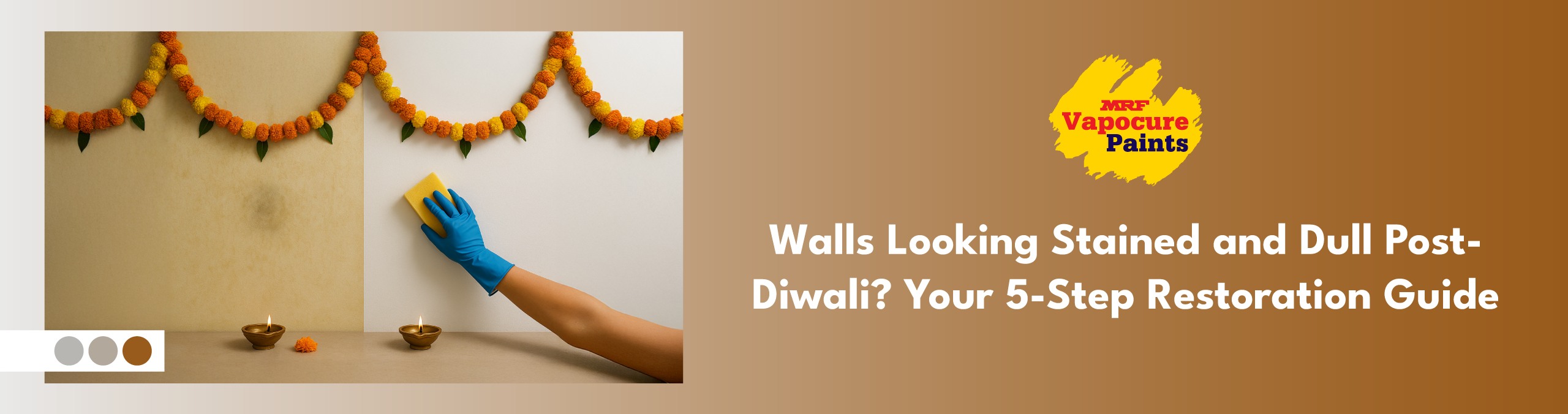
Walls Looking Stained and Dull After Diwali? Your 5 Step Restoration Guide
Did your vibrant Diwali celebrations leave your walls looking tired, stained, or shadowed by memories of diyas and swinging decorations? You’re not alone! Post-festival stains and dullness are a common Diwali after-effect in Indian homes—but guess what? You don’t have to repaint your world. This blog reveals a simple, five-step restoration process to rescue your painted walls. Ready to give your home’s walls a fresh lease of life—before the next round of festivities begins? Dive in, and say goodbye to post-Diwali wall woes for good!
Let’s Begin
Diwali fills your home with light, family and celebration. Once the festivities are over, another picture sometimes appears. The walls near the puja corner appear yellow or grey, the kitchen feels grimy, and there are clear marks where decorations once hung.
If your walls were recently painted, this can feel disappointing. The good news is that in many cases, you do not need to repaint the entire house. With a careful approach and the right products, you can restore the look of your walls and even extend the life of your paint.
This blog explains:
- Why does Diwali often leave stains and dullness on walls
- How to check whether cleaning is enough or repainting is needed
- A practical 5-step process to bring back a fresh finish
- Common mistakes that damage paint during cleaning
- Ways to keep your home celebration ready for next Diwali
Why Do Walls Get Stained After Diwali?
Understanding the sources of post-Diwali wall dullness is crucial for deciding the best restoration approach.
- Smoke & Soot: Diyas, candles, and fireworks all produce fine soot that settles into a grey or yellowish film, especially around puja corners and window sills. You might notice faint shadowy patches or halos above lamps and where diyas sat.
- Oil, Ghee & Food Splashes: Festive cooking means fry-ups, tempering, and deep frying that release tiny droplets of oil. These settle on kitchen and nearby dining area walls, attracting dust and quickly forming sticky, unattractive deposits.
- Tape Marks & Decoration Residue: Temporary decorations and lights fixed with tape or hooks often leave sticky marks, adhesive stains, or torn paint when removed. Dust can trace the outlines, and high foot traffic leads to smudges and fingerprints.
Combined, these create a tired look even on fresh paint. Fortunately, most damage is superficial and reversible with the right approach.
5-Step Interior Wall Restoration Guide
Follow these five steps to bring back a lively, smooth finish to your walls after Diwali.
Step 1: Inspect Walls in Natural Light
Start by examining every wall in the daytime with curtains drawn. Natural light reveals hidden stains, uneven patches, and peeling areas near puja zones and kitchens. Note:
- Large hazy areas (yellow/grey film)
- Soot patches above flames
- Grease or oil splashes
- Tape lines or torn paint
- Dampness, bubbles, or mould
If you spot peeling, mould, or damp, cleaning won’t be adequate—these areas likely need repair or repainting. Photograph the worst spots for future reference if professional help is needed.
Step 2: Dry Dusting and Vacuuming
Never start cleaning stained walls with a wet cloth! Moisture pushes dust deeper, causing streaks that are tough to remove. First, use:
- Clean microfiber cloth or feather duster
- Soft brush attachment on your vacuum
Work top-to-bottom, gently lifting away dust and soot. Focus on corners, coves, and around fixtures—often the dirtiest areas. Dry cleaning removes much of the grime, making later cleaning easier.
Step 3: Wet Cleaning for Everyday Stains
Once the loose dirt is gone, move to mild wet cleaning. Protect your paint film by following these steps:
- Prepare a gentle solution: Mix warm water with mild liquid detergent or dish soap. For stubborn stains, add a teaspoon of vinegar.
- Always patch test: Try your cleaner on a hidden spot—behind furniture or doorways. Only proceed if the paint shows no damage or dullness.
- Clean small sections: Use a damp (not dripping) soft sponge, gently wiping about half a square metre at a time with circular or vertical strokes. Rinse frequently and dry each area with a soft cloth.
Avoid harsh cleaning products, abrasive powders, or excessive water—these damage finishes, causing permanent dull patches.
Step 4: Treat Stubborn Post-Diwali Stains
Many marks, like soot, grease, or tape residue, need targeted action.
- Soot & Smoke: Start with dry cleaning. For persistent marks, use a dry cleaning sponge (soot sponge) with light dab motions; then your mild detergent solution. Never rub hard—this may create shiny spots or wear away matte finishes.
- Grease & Oil: Wipe with your soapy solution or try a vinegar-water mix. For tricky stains, a paste of baking soda and water works—dab gently, rinse, and dry.
- Tape & Decoration Residue: Press a fresh strip of painter’s tape onto sticky marks, pull off sharply. For stubborn residue, dab with rubbing alcohol or hand sanitiser, immediately rinsing with clean water. If paint has lifted, you’ll need to fill, prime, and repaint just that patch.
- Children’s Marks: Pencil marks may erase easily; crayon often needs a melamine foam pad or baking soda paste—test first to avoid damaging paint.
Work in ventilated rooms and wear gloves if your skin is sensitive. Never use strong degreasers or solvents meant for tiles or metal—they can damage painted plaster.
Step 5: Touch Up or Repaint for a Fresh Finish
After deep cleaning, step back and assess your walls:
- Is cleanliness even across the wall?
- Has colour brightness returned?
- Are any repaired or stained areas still visible?
If most areas look revived, a careful touch-up suffices; if patchiness or gloom remains, a repaint offers the best result. Touch-up is fine if:
- Only a few areas are affected
- You have the same paint (and shade) used before, still in good condition.
Lightly sand damaged spots, prime bare plaster if necessary, and apply thin coats, feathering the edges to blend the new and old paint. For multiple stains, old paint, or visible repairs, consider repainting.
Modern paints—especially washable emulsions or stain-resistant finishes—are ideal for busy Indian homes, making post-festival clean-up far easier next time.
Common Cleaning Mistakes to Avoid
For best results and long-lasting paint, avoid these errors:
- Using strong acid or bleach: Causes colour loss and permanent dull marks.
- Scrubbing with rough pads or brushes: Can polish and create unsightly shiny spots, especially on matte finishes.
- Soaking walls with too much water: Invites peeling, cracks, or mould.
- Ignoring safety around switches/sockets: Always turn off power and use only slightly damp cloths near electrical points.
- Cleaning only tiny spots: Creates noticeable contrast—clean to natural breaks like corners or mouldings.
- Painting on damp/recently cleaned walls: Always allow walls to dry fully before repainting to avoid blisters and peeling.
Proactive Tips: Keep Walls Celebration-Ready
Prevent stains before the next festival by making small, smart changes:
- Dust walls with a microfiber mop or soft brush weekly
- Lightly clean the kitchen and puja room walls every 2-3 months
- Place diyas/candles on trays away from walls and curtains
- Choose clean-burning wicks and candles
- Limit strong tape use—prefer removable hooks or nails
- Use washable, stain-resistant emulsions in high-use rooms
These habits minimise future cleaning effort and keep your home ready for any occasion.
When to Call a Professional Painter
DIY cleaning works for light to moderate stains, but call experts for:
- Large smoke/grease stains
- Visible mould, flaking, or damp damage
- High or difficult areas (ceilings, stairwells)
- Colour/finish changes in several rooms
Professionals assess, recommend primers and topcoats, and complete the work efficiently, ensuring safety and a polished result.
MRF Vapocure Paints: Colour, Protection And Innovation
At MRF Vapocure Paints, we believe a home should feel bright, personal and welcoming every single day, not just after a fresh coat. With thousands of carefully developed shades to choose from, homeowners can match the exact mood and character they want for every room, from calm neutrals to confident accent colours. Our coatings are created for Indian conditions, so colours stay true and finishes stay smooth despite daily wear, changing seasons and busy family life. Whether you prefer soft, timeless schemes or bold, modern contrasts, MRF Vapocure Paints helps you keep your spaces looking bright, vibrant and comfortably your own, year after year.
Summing Up
Diwali may leave behind smoke shadows, greasy patches and a light film of dust, but these marks do not have to outlast the celebration itself. A simple habit of inspecting walls in natural light, removing loose dust, cleaning gently with mild solutions and treating stubborn stains with care is often enough to bring back a smooth, lively finish. When you follow up with timely touch-ups or a planned repaint where needed, you protect the surface as well as the look of your rooms. It also helps to build small, preventive routines throughout the year, such as regular dusting and thoughtful placement of diyas and decorations, so stains never have a chance to settle deeply. If you do notice signs of damp, mould or widespread peeling, that is the point to seek professional advice rather than keep scrubbing. With a little attention at the right time, your walls can stay as bright and welcoming as your memories of the festival.
FAQs
1. Is bleach safe for wall stains?
No, bleach may cause fading, especially on colored paints. Stick to mild detergent and water first.
2. Are washable paints worth it?
Yes, high-quality washable emulsion paints resist stains, support gentle cleaning, and save both time and money, especially in homes with festival-loving or busy residents.
3. What if the walls still look yellow after cleaning?
Ageing, smoke, and sunlight can permanently change paint colour. When cleaning doesn’t restore brightness, opt for a fresh coat using MRF paints. We recommend using a high-quality primer, such as MRF primer, during repainting.
4. How soon after cleaning can I repaint?
If you have washed the walls, wait at least a full day with good ventilation before repainting, so that all moisture has evaporated. If there were any repairs involving damp patches or putty, follow the drying times advised by your painter, then use good-quality MRF primer during the repainting process.
5. My walls still look yellow even after a careful cleaning. What can I do?
Ageing of paint, cumulative smoke exposure and sunlight can permanently change the colour of a coating. If cleaning only offers a small improvement, the most effective answer is a fresh coat of MRF interior paint in your chosen shade.