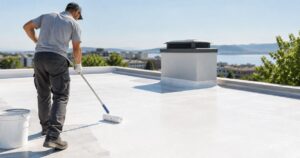
Best enamel paint for metal: exterior pick 2026
Best overall: exterior-rated enamel for metal used with a compatible metal primer. Best for indoor window frames: water-based enamel labelled for metal. Best for a simpler coating system: direct-to-metal enamel, but only when its label covers your surface. The best enamel paint for metal doors and windows in 2026 depends on where the frame sits, what coating is already on it and whether the new paint needs a separate primer.
- The best enamel paint for metal exposed to weather is exterior-rated enamel paired with a compatible metal primer.
- Choose water-based metal enamel for indoor frames when its label confirms the surface and intended finish.
- Direct-to-metal enamel simplifies the coating system only when its label covers your metal and surface condition.
- From MRF Paints: Specta PU Enamel or Durothane for most metal doors and windows, MetalCoat or MC+ where the frame takes full sun and rain.
Why this matters
A metal gate, an exterior door and an indoor window frame do not face the same conditions. Sun and rain matter outside; the finish you see at close range matters inside. A 2026 paint choice should start with the surface and its exposure, not a colour card alone.
MRF Paints makes polyurethane enamels and finishes for metal doors and windows; the MRF products section below lists which to use where. A confirmed match for the surface beats a familiar brand name.
What makes the best enamel paint for metal?
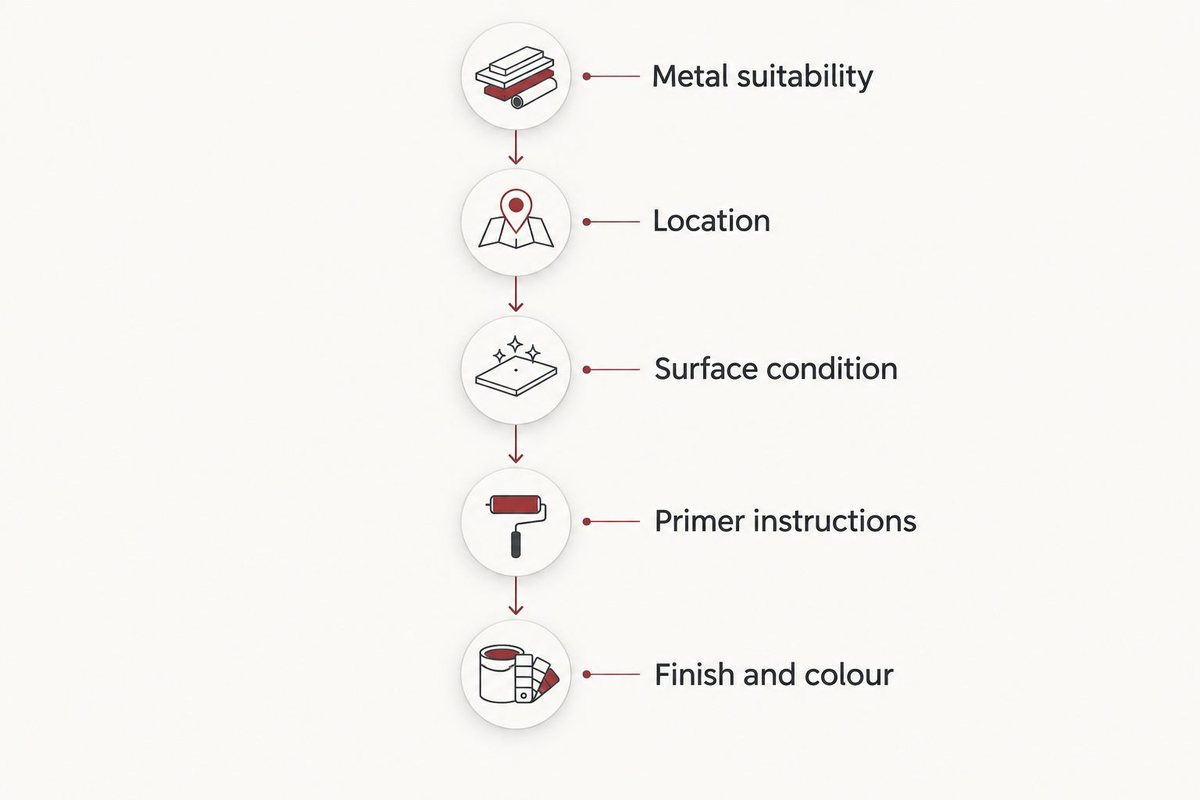
Use these checks before comparing finishes. They tell you whether a tin belongs on your shortlist at all.
- Metal suitability: The label must name your surface or clearly state that the coating is intended for that type of metal. Do not assume a paint described only as enamel suits every door or frame.
- Location: Look for exterior use on a surface exposed to weather. An indoor frame does not need the same selection priorities as an exposed gate.
- Surface condition: Identify bare metal, rust, old paint and flaking areas separately. A sound existing coat calls for a different preparation decision from loose paint or exposed metal.
- Primer instructions: Check whether the specified system requires a metal primer and whether the primer works with the chosen topcoat. Direct-to-metal wording is not permission to ignore preparation.
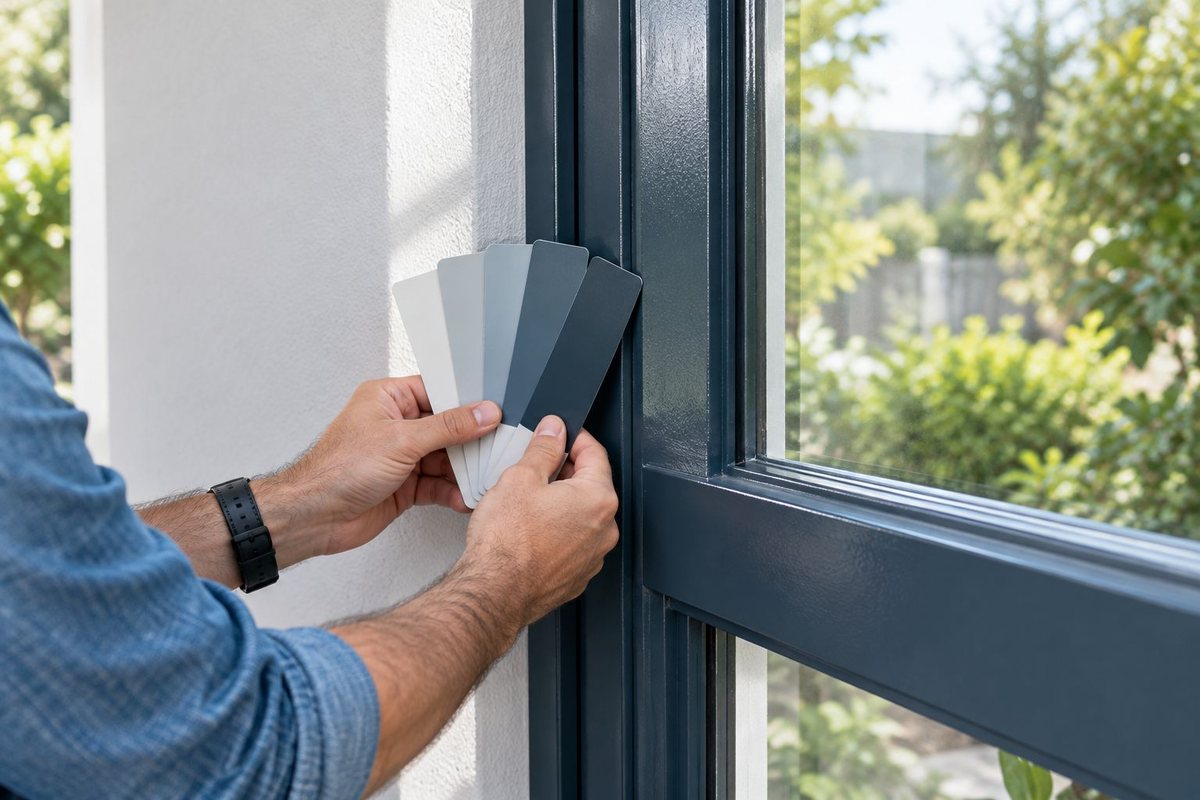
- Finish and colour: View a sample beside the wall, glass and nearby hardware. A dark gloss can make surface flaws easier to notice; a different sheen changes the look of the same colour.
- Application instructions: Follow the product's directions for cleaning, preparation, coats and drying. Do not borrow instructions from a different tin.
In 2026, make a short list only after you know the metal and whether the frame is indoors or exposed. This prevents a good-looking shade from deciding the coating system for you.
Best enamel paints for metal at a glance
| Paint approach | Best for | Standout feature | Key limitation |
|---|---|---|---|
| Exterior-rated enamel with compatible metal primer | Weather-exposed metal doors and window frames | Separates metal preparation from the visible topcoat | Requires a confirmed primer and topcoat pairing |
| Water-based enamel labelled for metal | Indoor metal window frames and doors | Gives indoor projects a metal-specific enamel option | An indoor-use label does not establish exterior suitability |
| Direct-to-metal enamel | Suitable, sound metal when the label permits direct application | Combines the surface and topcoat decision in one specified system | Surface restrictions and preparation still apply |
These are paint-system types, not ranked products. The order instead reflects the decisions a homeowner must make: exposure first, indoor use second and a direct-to-metal route only when its instructions fit.
1. Exterior-rated enamel with metal primer: best for exposed doors
Best for: A metal front door, gate or exterior window frame exposed to the weather. This is the default 2026 choice when you are starting with bare areas or replacing a failing coating and the product instructions call for a separate primer.
The primer and enamel have different jobs in the specified coating system: prepare the metal surface as directed, then apply the visible finish. Choose both from compatible product instructions rather than assuming that any metal primer will work beneath any enamel. If rust or old paint remains, follow the chosen system's directions for treating it before painting.
Exterior-rated enamel with metal primer pros:
- Puts exterior suitability at the centre of the buying decision.
- Gives you a specific primer step to check against exposed metal.
- Lets you choose the final colour and sheen after confirming the coating system.
Exterior-rated enamel with metal primer cons:
- You must verify compatibility between separate products.
- Preparation and priming add steps before the finish coat.
- It is a poor shortcut if you cannot inspect and prepare flaking or rusted areas.
For an existing door, inspect edges, corners and areas around handles before choosing a colour. These are useful places to find changes in the old coating. Mark loose paint and exposed metal so that a fresh coat does not conceal a problem you still need to address.
Verdict: Buy an exterior-rated enamel and compatible metal primer when their labels cover your metal, its condition and the door's exposure. Hold if the primer or topcoat instructions leave any of those points unclear.
2. Water-based metal enamel: best for indoor window frames
Best for: Indoor metal window frames and interior doors when the selected water-based enamel explicitly lists metal as a suitable surface. This option puts the appearance of a frequently seen frame alongside the practical requirement to use the right coating.
Do not choose by the words water-based alone. Read the surface list, any primer directions and the recommended application method. An indoor frame with sound existing paint still needs cleaning and any preparation the new coating requires; a chipped frame with exposed metal needs a closer look at the primer instructions.
Water-based metal enamel pros:
- Offers a clear shortlist for frames that are not exposed to weather.
- Keeps the purchase decision focused on a metal-labelled product.
- Allows a finish sample to be judged in the room where you will see it.
Water-based metal enamel cons:
- A product intended for indoor use is not an exterior-door recommendation.
- Water-based does not, by itself, confirm compatibility with an old coating.
- Bare or damaged areas can require additional preparation under the label's instructions.
For a window frame, test the colour beside the glass, wall and curtain or blind. Look at it in daylight and under the room's usual lighting before committing to the whole frame. The same shade can feel more prominent on a narrow frame than it does on a large wall sample.
Verdict: Buy a water-based metal enamel for an indoor frame when its label confirms the metal, existing surface and finish you want. Skip it for a weather-exposed frame unless that specific product also states exterior suitability.
3. Direct-to-metal enamel: best for a simpler specified system
Best for: A metal door or window whose material and condition are explicitly covered by a direct-to-metal enamel's instructions. It is an option when you want to consider a system that does not specify a separate primer for that particular application.
Direct-to-metal describes how a product is intended to be used under stated conditions; it does not mean paint over dirt, loose old coating or untreated damage. Check the label for bare versus previously painted metal, indoor versus exterior use and any exclusions. If your door has several surface conditions, follow the instructions for each area rather than applying one assumption to the whole door.
Direct-to-metal enamel pros:
- Makes it straightforward to check whether the label permits direct application.
- Can remove a separate primer selection when the instructions explicitly allow it.
- Gives a defined route for a sound surface covered by the product directions.
Direct-to-metal enamel cons:
- Not every direct-to-metal product suits every metal or existing coating.
- Required cleaning and surface preparation do not disappear.
- A damaged or rusted area can fall outside the conditions you first expected.
For a repaint, examine the lower edge and joints as well as the flat face. If the surface is not sound, deal with that condition before deciding that a direct-to-metal label applies. The product instructions, not the category name, determine the next step.
Verdict: Buy direct-to-metal enamel only when its directions match the complete surface and exposure. Wait if you have not identified the existing coating or assessed damaged areas.
How to choose the finish and colour
After settling the coating type, choose the appearance. This order matters: the best colour is not useful if the paint is unsuitable for the metal underneath it.
- Look at the whole entrance: Place a colour sample beside the exterior wall, door hardware and nearby trim. A gate or door occupies a visible part of the entrance, so judge it in context.
- Compare sheen on the actual surface: Gloss and less reflective finishes present marks and texture differently. Look at a sample on a prepared area or a suitable test piece rather than relying on the shade name.
- Check both sides of a door: The exterior side and interior side sit in different settings. Confirm that the selected coating instructions cover each side you intend to paint.
- Write down the coating sequence: Record the surface preparation, primer decision and topcoat from the chosen instructions before work starts. This makes it easier to spot an incompatible substitution.
For 2026 colour planning, decide whether you want the metalwork to contrast with the wall or sit quietly beside it. Then compare actual samples in the light where the door or window will be seen. Keep the coating choice fixed while you compare colours; otherwise, an attractive shade can pull you toward the wrong product type.
MRF Paints’ metal finishes come in a wide shade range: Specta PU Enamel in 24 shades, Durothane in 29 factory shades plus more than 1,000 from Durothane Hues bases, and MC+ in about 2,000 shades.
How we ranked these enamel approaches
The 2026 order follows the checks above. Exterior-rated enamel with a compatible metal primer comes first because a weather-exposed door is the broadest use case in this guide and needs an explicit exterior coating decision. Water-based metal enamel follows for indoor frames, where exterior exposure is not the deciding factor. Direct-to-metal enamel comes third because its suitability depends closely on the selected product's surface conditions.
This is not a performance test or a claim that one chemistry beats another on every door. A confirmed, suitable product in the third category is a better choice than an unsuitable product in the first. The ranking tells you which label to examine first for your situation, not which unopened tin to buy without checking it.
Which enamel paint for metal should you choose?
For a weather-exposed metal door or window in 2026, start with exterior-rated enamel and a compatible metal primer. For an indoor window frame, start with water-based enamel labelled for metal. Choose direct-to-metal enamel when its instructions expressly cover your metal, its present condition and its location.
From MRF Paints, use Specta PU Enamel or Durothane for most metal doors and windows, and MetalCoat or MC+ where the frame takes full sun and rain. A brand description or a matching colour is not a substitute for the product instructions.
MRF Paints enamels for metal doors and windows
- Specta PU Enamel: a quick-drying single-pack polyurethane enamel for metal and wood. About 110-140 sq ft per litre per coat; 24 shades.
- Durothane: a two-pack aliphatic polyurethane finish that is easy to brush, with colour, gloss, corrosion and UV resistance.
- MetalCoat: a two-pack aliphatic polyurethane topcoat for metal indoors and outdoors, with corrosion protection for up to 8 years.
- MC+: a two-pack polyurethane multi-surface finish, salt spray test certified, in about 2,000 shades.
- Epidec RTC Primer: for rusted metal, sand off loose rust and apply one coat before any of these topcoats.
For preparation, see our guides to painting metal surfaces and how to paint a metal door.
FAQ
What’s the best enamel paint for metal doors in 2026?
For a weather-exposed metal door, start with exterior-rated enamel used with a compatible metal primer. Confirm that both product instructions cover your metal and its current condition.
Is water-based enamel suitable for metal window frames?
Water-based enamel is suitable when the specific product lists your metal frame and its location as approved uses. Check its preparation and primer directions before repainting.
Can I paint directly over rust with enamel?
Do not assume an enamel can go directly over rust. Assess the affected area and follow the selected product system’s instructions for rust and surface preparation.
Does direct-to-metal enamel need primer?
Follow the selected direct-to-metal enamel’s instructions for your surface. Its label can permit direct application under stated conditions, but that does not remove cleaning or other required preparation.
Which enamel finish should I choose for a metal door?
Choose a finish offered by a coating confirmed suitable for the door, then compare samples beside the wall and hardware. Judge sheen on the surface because it changes how texture appears.
Can I use interior enamel on an exterior metal gate?
Use an interior enamel on an exterior gate only if that specific product also states that it suits the gate’s exterior exposure and metal surface. An interior-use description alone does not establish that.
Which MRF Paints enamel should I use on metal doors and windows?
Specta PU Enamel, a quick-drying single-pack polyurethane enamel for metal and wood, suits most doors and windows. For frames in full sun and rain, use MetalCoat, Durothane or MC+, two-pack polyurethane finishes for exterior metal, over Epidec RTC Primer where there is rust.
One last thing
Before you settle on a 2026 shade, inspect the least visible part of the frame as carefully as the front. A colour sample tells you how the finish looks; the condition of the old coating tells you what work must happen first. Choose the coating system for the surface you have, then choose the colour you want to live with.