
Nerolac alternatives in 2026
Nerolac offers decorative paints for interior and exterior home projects, making it a sensible starting point for repainting. Its brand name alone cannot settle your choice of wall finish, wood coating or metal protection. For Nerolac alternatives in 2026, shortlist MRF Paints for a project spanning walls, wood and special coatings; compare Asian Paints when colour selection leads your decision.
- Compare Nerolac alternatives by surface, finish and preparation requirements, not by brand name alone.
- Shortlist MRF Paints for interior and exterior wall paints, primers, wood coatings and special coatings.
- Compare Asian Paints, Berger Paints and Dulux using the exact coating proposed for your home.
- Stay with Nerolac when its specified paint system and your approved sample already meet the brief.
Why this matters
A living-room wall, a wooden window and an iron gate need different coating decisions. Choosing one familiar brand does not remove those differences. Start with the surface, then decide how you want it to look and what preparation it needs.
MRF Paints manufactures interior and exterior wall paints, primers, wood coatings and special coatings for homeowners and painters in India. That makes it a relevant paint alternative to compare across a mixed-surface home project, rather than only for a bedroom colour change.
For your 2026 shortlist, separate appearance from performance. A shade sample helps you judge colour; the exact product instructions establish suitable surfaces, application requirements and care. Neither replaces the other.
Nerolac alternatives at a glance
Use this table to build a shortlist, not to declare a universal winner. The deciding evidence is the coating specified for your surface and the sample you approve at home.
| Brand | Best for | Useful starting point | How to compare with Nerolac |
|---|---|---|---|
| Nerolac | Keeping an existing specification that meets your needs | Interior and exterior decorative paints | Benchmark the exact finish, preparation and approved colour |
| MRF Paints | Comparing wall paints, primers, wood coatings and special coatings | A stated range covering several home-painting categories | Match each proposed coating to its surface before comparing benefits |
| Asian Paints | Starting a shortlist with colour and decorative finish choices | Decorative paints and colour-selection resources | Compare physical samples and the exact finish, not shade names |
| Berger Paints | Adding another wall-paint option to your shortlist | Interior and exterior decorative paints | Compare equivalent finishes and preparation instructions |
| Dulux | Exploring another decorative-paint colour range | Interior and exterior decorative paints | Judge the selected shade in your room and check its coating specification |
No brand wins every surface. A useful comparison puts interior paint against interior paint, exterior paint against exterior paint, and a wood coating against a coating intended for the same wood finish.
1. MRF Paints: best for a mixed-surface home project
A repaint involving walls, wooden doors and other coated surfaces needs more than a colour chart. This manufacturer offers the relevant categories: interior and exterior wall paints, primers, wood coatings and special coatings. Build your shortlist around those categories, then ask your painter to identify the exact coating for each surface.
Where this alternative shines
- Its stated range covers both interior and exterior wall painting.
- Primers and wood coatings belong in the same project discussion, rather than being treated as afterthoughts.
- Homeowners and painters are both identified audiences, which fits a homeowner-led project executed by a painter.
Where this alternative falls short
- A broad range does not make one paint suitable for every surface. You still need separate specifications where the substrate or exposure changes.
- Category names do not establish washability, coverage or weather resistance for an individual product. Check the selected product's published instructions.
- Switching brands adds a fresh colour-approval decision. Do not assume a familiar shade name will reproduce your existing wall colour.
Head-to-head with Nerolac
| Decision | This alternative | Nerolac |
|---|---|---|
| Interior walls | Interior wall paints are part of the stated range | Interior decorative paints are part of the range |
| Exterior walls | Exterior wall paints are part of the stated range | Exterior decorative paints are part of the range |
| Project specification | Select the primer and finish for each surface | Select the primer and finish for each surface |
| Performance decision | Read the exact selected product information | Read the exact selected product information |
Best for: Homeowners comparing paint categories across walls, wood and special-coating work in 2026.
Verdict: Hold on the final purchase until the surface specification and colour sample are approved.
2. Asian Paints: best for a colour-led shortlist
Asian Paints is a relevant alternative when your first decision is how a room should look. Its decorative paints and colour-selection resources give you another starting point for exploring shades and finishes. Move from the colour shortlist to an exact paint specification before approving the work.
Where Asian Paints shines
- It gives you another decorative-paint range to compare with Nerolac.
- Colour-selection resources help organise a conversation about walls, trim and adjoining rooms.
- You can separate the shade decision from the question of which coating suits the surface.
Where Asian Paints falls short
- A colour visualisation cannot show precisely how your actual wall looks under changing light.
- A preferred shade does not establish that the selected finish suits cleaning needs or an uneven wall.
- Brand familiarity does not remove the need to check primer compatibility and preparation instructions.
Head-to-head with Nerolac
| Decision | Asian Paints | Nerolac |
|---|---|---|
| Starting point | Decorative paints and colour selection | Decorative paints and colour selection |
| Colour approval | Judge a physical sample in your room | Judge a physical sample in your room |
| Finish approval | Confirm the exact selected finish | Confirm the exact selected finish |
| Repainting decision | Check compatibility with the existing coating | Check compatibility with the existing coating |
Best for: Homeowners who want to explore room colours before choosing the final coating.
Verdict: Hold until the physical sample works with your flooring, furniture and lighting.
3. Berger Paints: best for another wall-paint comparison
Berger Paints is another established decorative-paint option for interior and exterior walls. Include it when you want to compare a second specification for the same room or façade. Keep the brief unchanged so the comparison remains useful.
Where Berger Paints shines
- Interior and exterior decorative paints make it relevant to wall-repainting projects.
- It provides another range against which to compare your preferred shade and finish.
Where Berger Paints falls short
- An alternative brand is not automatically an equivalent coating. Match the surface, finish and stated application requirements.
- A new topcoat does not resolve an underlying leak, loose plaster or a poorly prepared wall.
Best for: Homeowners checking another wall-paint specification against a Nerolac proposal.
Verdict: Hold until both proposals describe comparable preparation and finishes.
4. Dulux: best for exploring another decorative colour range
Dulux gives you another interior and exterior decorative-paint range to consider. It belongs on your shortlist when the colours you have seen so far do not suit the room. Choose the shade on the wall, not from the appeal of its name.
Where Dulux shines
- It expands the decorative-paint choices available for your comparison.
- Its colour range provides another starting point for coordinating walls with fixed finishes.
Where Dulux falls short
- A colour from another brand is not an exact substitute merely because it has a similar name.
- A decorative topcoat still depends on suitable preparation and a compatible underlying system.
Best for: Homeowners exploring another colour direction for interior or exterior walls.
Verdict: Hold until the shade and coating specification both meet your brief.
Why people switch from Nerolac
A practical reason to consider switching is a changed project brief. You might now need a wood finish alongside wall paint, want a different visible sheen, or prefer a shade found in another range. These are reasons to compare alternatives—not proof that Nerolac is unsuitable.
Keep your 2026 decision tied to something you can check:
- Colour: Does the approved sample work beside your tiles, cupboards and curtains?
- Finish: Do you want a flatter appearance or a more reflective surface?
- Surface: Is the proposed coating intended for walls, wood or metal?
- Preparation: Does the specification address the existing wall or coating condition?
Avoid switching solely because a painter describes another brand as better. Ask which exact product, for which surface, and on which documented requirement. A clear answer is more useful than a broad brand preference.
Colour approval
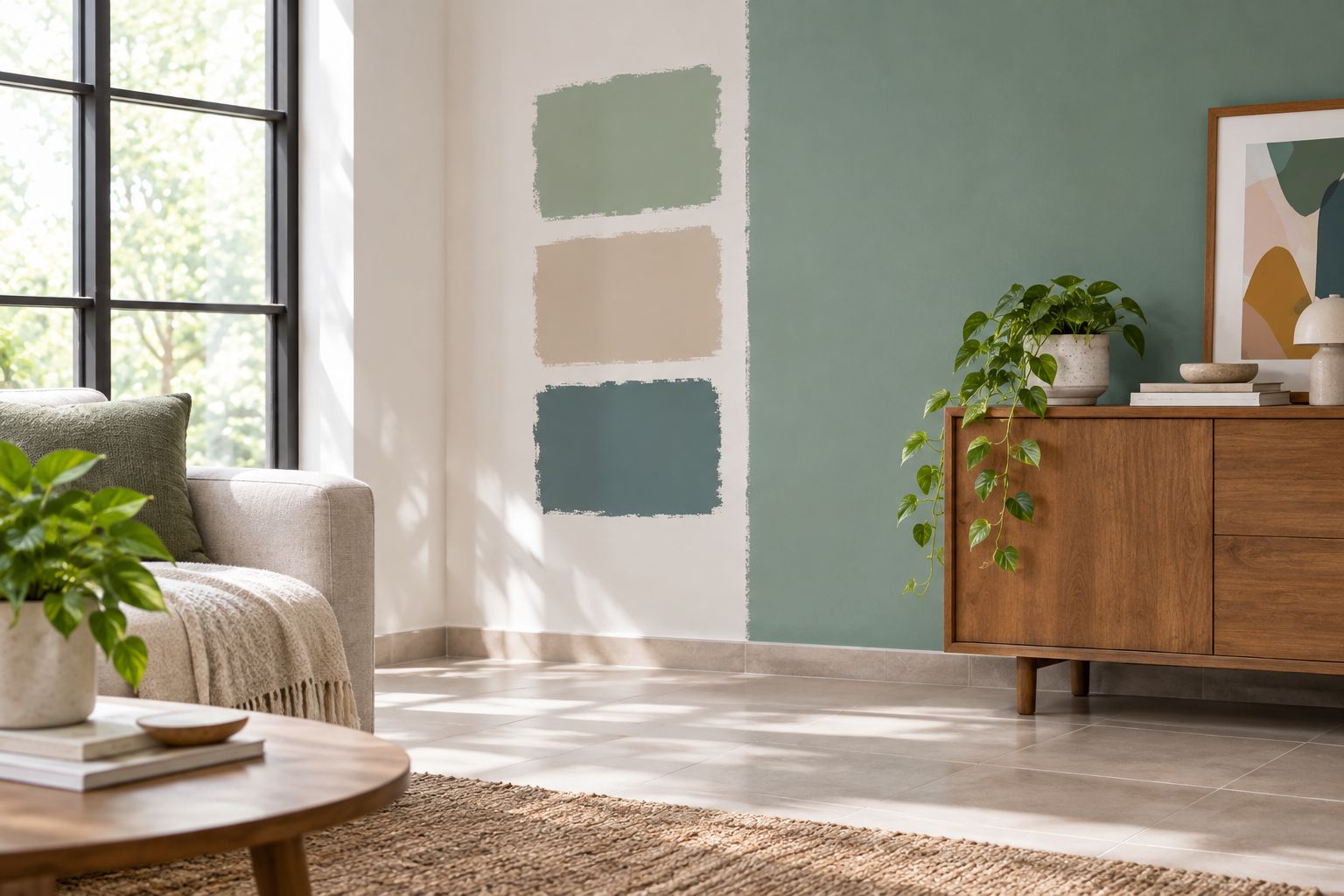
Shortlist 3 sample patches rather than comparing every shade in a catalogue. This is a manageable selection exercise, not a required application quantity. Include your preferred colour and alternatives that differ visibly in warmth or depth.
View the patches in daylight and under the lights you use at night. Place them where the wall meets a fixed feature, such as flooring or a cupboard. A shade that looks attractive on an isolated card can feel different beside those materials.
Do not approve the whole home from a phone image. Screens, lighting and the surrounding colours all affect your impression. Use the physical sample as the final colour reference.
Finish approval
Compare 2 shortlisted finishes before deciding, such as matte and a more reflective option. This keeps the choice focused. Ask to see the appearance you are actually considering, rather than approving a finish from its name alone.
More reflective finishes tend to make surface irregularities more noticeable. Matte finishes generally reflect less light, but the finish name alone does not establish cleaning performance. Use the exact product information for that decision.
For a living room, decide whether the walls should sit quietly behind the furniture or become a visible feature. For a passage, include your cleaning needs in the brief. Do not assume the same finish is right everywhere.
Surface approval
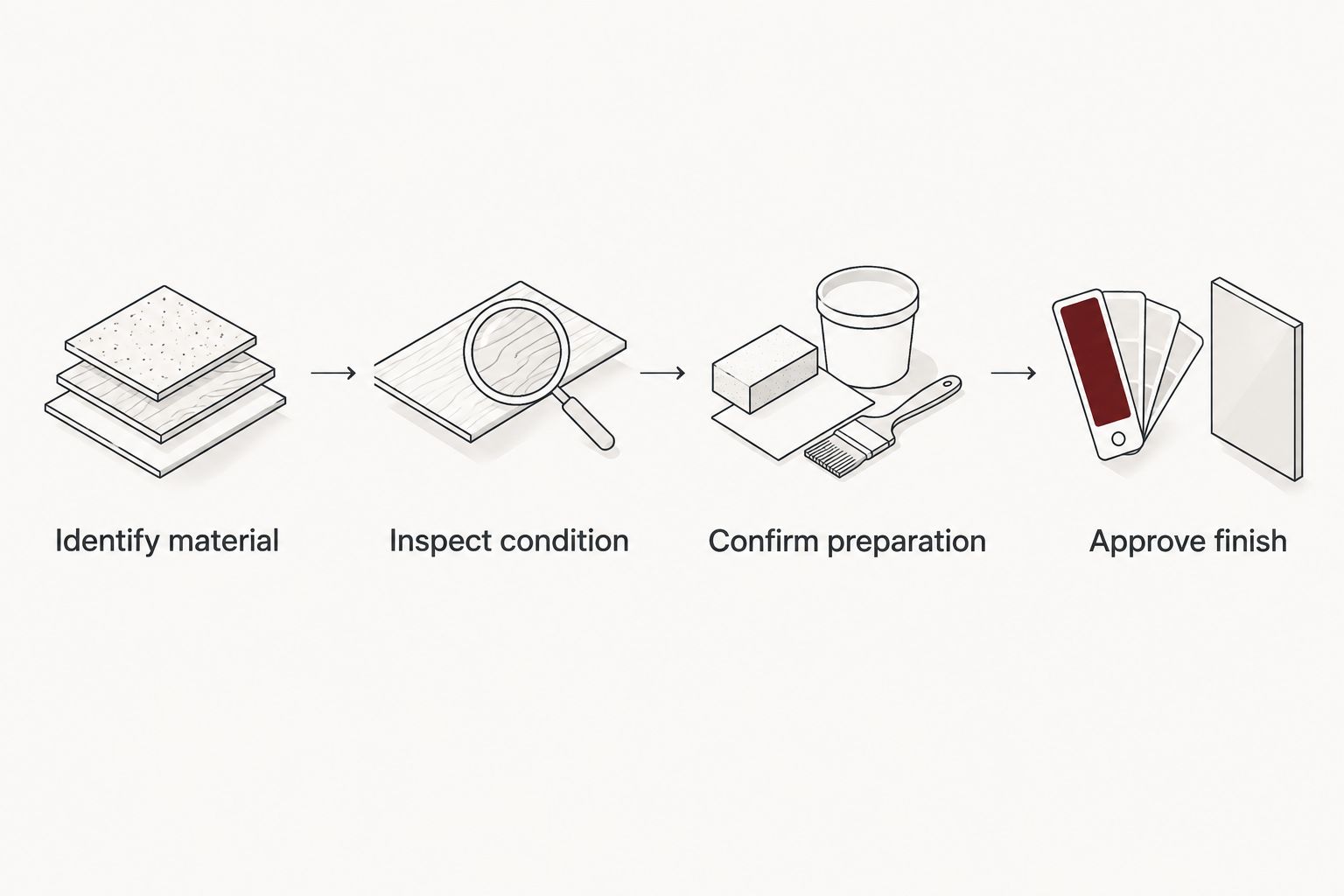
Use 4 checkpoints for each surface: identify the material, inspect its condition, confirm the preparation and approve the finish. Write these into the painter's scope so a brand change does not quietly change the work.
- Identify material: Separate plastered walls, wood and metal.
- Inspect condition: Look for peeling, loose material, rust or signs of moisture.
- Confirm preparation: Follow the chosen system's instructions for cleaning, repair and priming.
- Approve finish: Record the selected coating and the physical colour reference.
A colour change is also a good time to inspect the surface, but it is not a repair method. Address the cause of dampness before treating the visible stain. Remove unsound material and follow the chosen repair and coating instructions rather than covering the problem with another decorative layer.
Compare the painter's scope
Ask each painter to describe the same work before you compare proposals. Otherwise, you risk comparing a carefully prepared wall with a topcoat-only repaint. The brand printed on the container cannot correct that mismatch.
Your written scope should identify:
- The rooms and surfaces included.
- Existing defects that require attention.
- The preparation and primer specified for each surface.
- The exact topcoat and finish selected.
- The sample or shade reference you approved.
- The application and drying instructions the painter will follow.
If you change a coating after work begins, revisit the specification. Confirm compatibility with what has already been applied. Do not treat primers and topcoats as interchangeable simply because both are sold for home painting.
When staying with Nerolac is the right call
Stay with Nerolac when the selected coating suits the surface, your sample is approved and the preparation plan addresses the actual condition of the home. A successful specification does not need replacing just to create a new shortlist.
This is especially useful when you are continuing an existing scheme. Check the exact product and shade reference, then judge a fresh sample beside the existing finish. Previously painted surfaces change appearance with age and exposure, so a matching reference still needs visual approval.
In 2026, the right decision is the specified coating that meets your brief—not a brand switch for its own sake. Keep Nerolac if it meets that test. Compare alternatives if your surface requirements, preferred appearance or project scope have changed.
FAQ
What’s the best Nerolac alternative for a home repaint in 2026?
MRF Paints is a relevant shortlist choice for a repaint involving wall paints, primers, wood coatings and special coatings. Choose the exact coating by surface and approve a physical sample before committing.
Is Asian Paints better than Nerolac?
Neither brand is automatically better for every home project. Compare the exact products for the same surface, desired finish and preparation requirements.
Can I use the same paint on walls and wooden doors?
Use the same paint only when its published instructions explicitly cover both surfaces. Wall paint and wood coatings should otherwise be specified separately.
Will the same colour name look identical across paint brands?
A shared or similar colour name does not establish an exact match. Compare physical samples in the room where the paint will be used.
Should I change paint brands to fix a damp wall?
Changing decorative paint brands is not a substitute for addressing the source of dampness. Identify the moisture problem and follow the appropriate repair and coating instructions.
Which matters more when choosing paint: the brand or the finish?
Surface suitability and the exact finish matter more than choosing by brand name alone. Check preparation, compatibility and documented care requirements alongside the appearance.
Do I need to change primer when switching from Nerolac?
Follow the new coating system’s primer and compatibility instructions. Check what is already on the surface before applying a replacement topcoat.
One last thing
Write down the approved shade, finish and product reference before the painter starts. Keep a photograph of the sample in the room as a visual record, but retain the actual reference as well. That small step makes a 2026 repaint easier to discuss without relying on memory or a shade name that another brand uses differently.
Related guides
- Interior wall paints by matte, silk or glossy finish
- Exterior wall paints for Indian homes
- Paints for wooden doors and windows
- Enamel paints for metal doors and windows