
Best anti corrosion paint for metal: 2026 verdict
The best anti corrosion paint for metal depends on the surface, not the colour. For a typical exterior steel gate in India, choose a rust-inhibiting metal primer with a compatible exterior topcoat; for bare steel exposed to salt air, choose a zinc-rich primer system. A direct-to-metal coating is the simpler option when existing paint is sound and the label permits that surface.
- Best anti corrosion paint for metal gates: a rust-inhibiting primer with a compatible exterior topcoat.
- For bare steel near salt air, choose a zinc-rich primer system only if you can meet its preparation requirements.
- For sound existing paint, a compatible direct-to-metal coating avoids stripping the whole surface.
- From MRF Paints: Epidec RTC Primer on rusted metal, then a polyurethane topcoat such as MetalCoat, Durothane or MC+.
Why this matters
A gate can show rust at a weld while its broad panels still look freshly painted. Painting both areas in the same way misses the difference: the weld needs rust removal and preparation for bare metal, while the sound painted panel needs cleaning and a compatibility check.
That distinction matters when choosing a metal coating in 2026. A good system on a poorly prepared surface is still a poor paint job. Choose the system for the metal you have, then follow its instructions for preparation, primer and topcoat. From MRF Paints, that system is Epidec RTC Primer followed by a polyurethane topcoat (see the MRF products section below).
What makes the best anti-corrosion paint for metal?
Use these criteria before comparing tins. They determine whether a coating belongs on your particular gate, railing or metal fixture.
- Metal type: Bare steel, galvanised steel and aluminium are different substrates. A label that permits steel does not automatically permit galvanised metal or aluminium.
- Existing condition: Active rust, loose old paint and sound old paint call for different preparation. Do not treat a rusted weld like an intact panel.
- Exposure: Rain, persistent dampness, salt air and frequent handling change the demands on a coating. Match the complete system to the location.
- Primer and topcoat compatibility: A primer is not necessarily a finished exterior coating. Confirm that the proposed topcoat is approved over it.
- Preparation you can complete: Some systems demand especially thorough cleaning and mixing. Choose a system whose instructions you can follow on the whole surface, including joints and edges.
- Maintenance access: A gate you can inspect and touch up is different from steelwork you cannot readily reach. Plan for future rust checks before you paint.
These criteria also prevent a common 2026 buying mistake: choosing a finish because its tin says metal without checking what it requires underneath. Read the substrate and preparation instructions first. If the tin does not clearly cover your surface, do not assume it will work.
Metal paint options at a glance
| Option | Best for | Standout feature | Key limitation |
|---|---|---|---|
| Rust-inhibiting metal primer and compatible exterior topcoat | Everyday exterior steel gates and railings | Separate primer and finish choices | Requires careful preparation and more than one coating stage |
| Zinc-rich primer and compatible topcoat | Bare steel exposed to salt air | Primer system designed for steel corrosion protection | Preparation and topcoat compatibility are critical |
| Two-part epoxy primer and compatible topcoat | Frequently handled indoor steel | A dedicated primer beneath a chosen finish | Mixing and application instructions add complexity |
| Compatible direct-to-metal coating | Sound, previously painted metal with limited bare spots | Simpler coating route when its label permits the substrate | Not a shortcut over loose paint or active rust |
The table ranks systems, not unverified product claims. For galvanised metal or an unknown older coating, check the chosen product’s data sheet before you start.
1. Rust-inhibiting primer and topcoat: best for everyday exterior gates
Best for: A steel gate or railing with a mix of sound paint and small areas that need preparation down to bare metal. A rust-inhibiting metal primer prepares the exposed steel; a compatible exterior topcoat provides the visible finish. Choose both as one system rather than assuming any primer and enamel will work together.
Rust-inhibiting primer and topcoat pros:
- Lets you treat exposed steel differently from sound existing paint.
- Offers a clear sequence for preparation, priming and finishing.
- Suits homeowners who can reach and inspect the full gate.
Rust-inhibiting primer and topcoat cons:
- Loose rust or paint still has to come off before coating.
- Joints, undersides and edges take time to prepare properly.
- An incompatible topcoat can undermine an otherwise sensible primer choice.
For a steel gate in 2026, inspect the bottom edge and around hinges before choosing a colour. If rust extends beneath lifting paint, remove the failed coating until you reach a sound edge, then follow the selected system's directions for exposed metal. Verdict: Buy for an ordinary exterior steel gate when you can prepare every rusted area.
2. Zinc-rich primer system: best for bare steel near salt air
Best for: Bare steel at a salt-air site where the manufacturer specifies a zinc-rich primer and an appropriate topcoat. Zinc-rich primers are a corrosion-control option for steel, but their instructions on substrate preparation and compatible finishes are part of the choice, not small print.
Zinc-rich primer system pros:
- Gives exposed steel a defined primer stage before finishing.
- Fits projects where salt-air exposure drives the coating decision.
- Makes system compatibility an explicit part of selection.
Zinc-rich primer system cons:
- Does not remove the need to clear rust and contamination.
- Is harder to justify for a small touch-up on mostly sound old paint.
- Cannot be substituted for every primer on every metal surface.
Do not confuse zinc-rich paint with galvanised steel. One is a coating choice; the other describes a metal surface that needs its own compatible preparation and paint. If your gate is already galvanised, verify that the chosen product permits galvanised substrates instead of selecting it by the word zinc alone. Verdict: Buy for suitably prepared bare steel near salt air; hold for a gate whose substrate or existing coating is uncertain.
3. Two-part epoxy primer system: best for frequently handled indoor steel
Best for: Indoor steel fixtures that receive frequent handling and need a specified primer-and-topcoat system. A two-part epoxy primer involves mixing components according to its instructions before application. The topcoat must be compatible with that primer and with the location.
Two-part epoxy primer system pros:
- Gives you a defined system for prepared steel.
- Separates the primer decision from the desired finish.
- Suits a planned job where you can follow mixing and application instructions.
Two-part epoxy primer system cons:
- Adds mixing and application steps to a small household job.
- Does not compensate for oil, rust or loose paint beneath it.
- Needs an appropriate topcoat where the finished surface is exposed to sunlight.
An epoxy primer is not an automatic upgrade for every gate. If the work is outdoors, assess the full primer-and-topcoat system rather than choosing epoxy by name and deciding on a finish later. If you cannot follow the stated preparation and mixing instructions, choose a system you can apply correctly. Verdict: Buy for a planned indoor steel job with suitable preparation; hold for an improvised gate touch-up.
4. Direct-to-metal coating: best for sound existing paint
Best for: A metal surface whose existing paint remains well bonded, with only limited exposed areas, when the chosen direct-to-metal coating permits both the substrate and the existing finish. The label determines whether bare spots need separate treatment. Direct-to-metal describes a product category; it does not mean paint straight over rust.
Direct-to-metal coating pros:
- Can make a refresh more straightforward when old paint is sound.
- Keeps the decision focused on the stated substrate and preparation instructions.
- Avoids stripping intact paint solely because nearby areas need work.
Direct-to-metal coating cons:
- Loose paint and active rust still need removal.
- Compatibility with an unknown old coating needs checking.
- One tin is not proof that a separate primer is unnecessary on every bare spot.
For a 2026 repaint, press a fingernail against the edge of a damaged area. If more old paint lifts, keep preparing until the remaining edge is firm rather than covering the failure. Check the coating's directions for that transition between old paint and bare metal. Verdict: Buy for a sound, compatible repaint; skip as a cover-up for spreading rust.
How to choose and prepare a metal surface
Start with what is already on the object. A new steel gate, a galvanised railing and an older gate with several layers of paint are not interchangeable jobs. Inspect the parts people often miss: the underside, welded joints, hinge areas and places where water remains after rain.
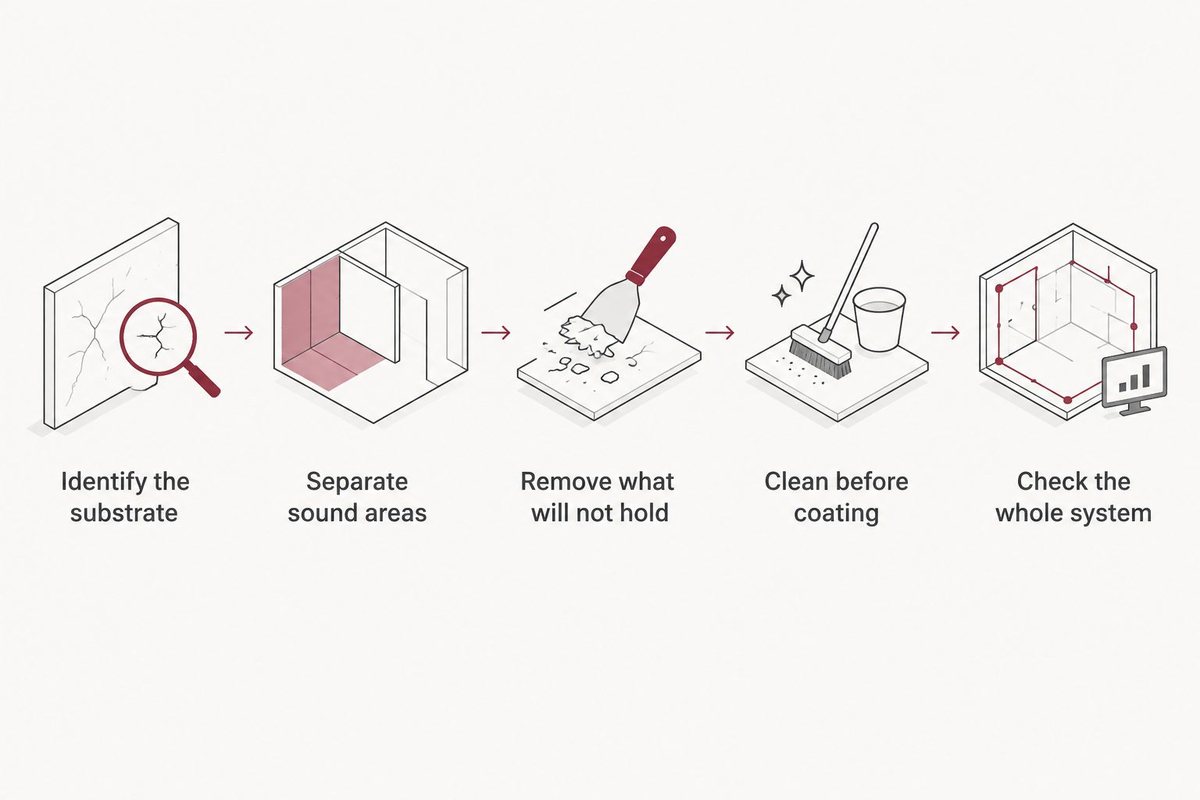
- Identify the substrate. Confirm whether you are painting steel, galvanised steel or another metal. If you cannot identify it, do not buy a substrate-specific system on appearance alone.
- Separate sound areas from failed areas. Mark loose paint, visible rust and intact paint. The preparation may differ across the same gate.
- Remove what will not hold. Clear loose coating and rust using methods allowed by the coating instructions. An 80-grit abrasive is a practical option for initial work on rough steel; a 120-grit abrasive can help refine a prepared edge. Neither replaces the product's specified preparation.
- Clean before coating. Remove sanding residue, dirt and grease. Let the surface meet the product's stated condition before you prime or paint.
- Check the whole system. Match primer, topcoat and substrate using the manufacturers' instructions. A 50 mm brush can be useful on broad, accessible sections, but choose tools that let you reach corners and joints too.
- Revisit vulnerable areas. After the coating has been applied according to its instructions, keep an eye on edges, welds and scratches so new damage does not sit unnoticed.
If you suspect an old coating contains hazardous material, avoid dry sanding it until you have identified a safe removal method. The aim is not to strip every sound panel by default. It is to give the new coating a stable, correctly prepared surface wherever it goes.
How we ranked these options
The ranking starts with the job a homeowner is most likely to recognise: an exterior steel gate that needs preparation, primer and a finish. The other systems earn separate places because salt-air exposure, frequently handled indoor steel and a largely sound repaint present different decisions. The order is not a claim that one chemistry lasts longer than another on every surface.
The MRF products below fit this ranking directly: Epidec is MRF’s two-pack epoxy range, including the rust-tolerant primer, and MetalCoat, Durothane and MC+ are the polyurethane topcoats that go over it. MC+ is salt spray test certified, which matters for coastal homes.
Which anti-corrosion paint should you choose?
Choose a rust-inhibiting metal primer with a compatible exterior topcoat for a typical steel gate. It addresses the common mix of exposed steel and existing finish without treating every metal job as a specialist project. If the steel is bare and near salt air, move to a zinc-rich primer system only when you can meet its preparation requirements.
For an indoor fixture that receives frequent handling, consider the two-part epoxy primer system with its specified topcoat. If most existing paint is sound, check whether a direct-to-metal coating permits that surface and how it treats bare spots. In every case, the label's substrate, preparation and compatibility instructions decide whether the shortlist becomes a usable 2026 paint plan.
MRF Paints anti-corrosion system
- Epidec RTC Primer: a two-pack epoxy rust-tolerant primer for rusted metal. Sand off loose rust, then apply one coat.
- MetalCoat: a two-pack aliphatic polyurethane topcoat for metal indoors and outdoors, with corrosion protection for up to 8 years.
- Durothane: a two-pack aliphatic polyurethane finish with colour, gloss, corrosion and UV resistance, easy to brush.
- MC+: a two-pack polyurethane multi-surface finish, salt spray test certified.
- Acrylic Super Fine: a single-pack metallic acrylic topcoat for a metallic look over Epidec.
For gates in harsh sun, see also our guide on how to protect metal gates and grills in extreme heat.
FAQ
What is the best anti corrosion paint for metal gates in India?
For a typical exterior steel gate, choose a rust-inhibiting metal primer and a compatible exterior topcoat. From MRF Paints, that is Epidec RTC Primer followed by MetalCoat, Durothane or MC+. Remove loose rust and paint first, then follow the data sheet.
Can I paint directly over rust on a metal gate?
Do not use ordinary metal paint as a cover-up for loose, active rust. Remove failed material and follow the chosen coating’s instructions for any rust that remains.
Is zinc-rich primer better than an ordinary metal primer?
Zinc-rich primer is a distinct option for suitably prepared bare steel, particularly when salt-air exposure shapes the job. It is not automatically the right choice for galvanised metal or a mostly sound, previously painted gate.
Do I need primer under direct-to-metal paint?
Follow the direct-to-metal coating’s instructions for your substrate and any exposed spots. The category name alone does not establish that a separate primer is unnecessary everywhere.
Can I use the same paint on steel and galvanised steel?
Only use the same coating when its instructions permit both substrates. Galvanised steel and bare steel can have different preparation and primer requirements.
What should I check before repainting an old metal railing?
Check the metal type, the condition of the old paint, visible rust and the railing’s exposure. Confirm that the proposed coating is compatible with both the substrate and any sound finish left in place.
Which metal paint option is easiest for a small repaint?
A compatible direct-to-metal coating is a simpler option when the existing paint is sound and the label permits the surface. Loose paint and rust still require preparation before you apply it.
One last thing
Before choosing your 2026 gate colour, photograph a hinge, a weld and the bottom edge in daylight. Those areas will tell you whether you are planning a straightforward repaint or a job with exposed steel that needs its own preparation and primer. The best-looking finish starts with the least glamorous decision: identifying what will actually hold the paint.