Best Wood Polish for Furniture in India: PU Wins 2026
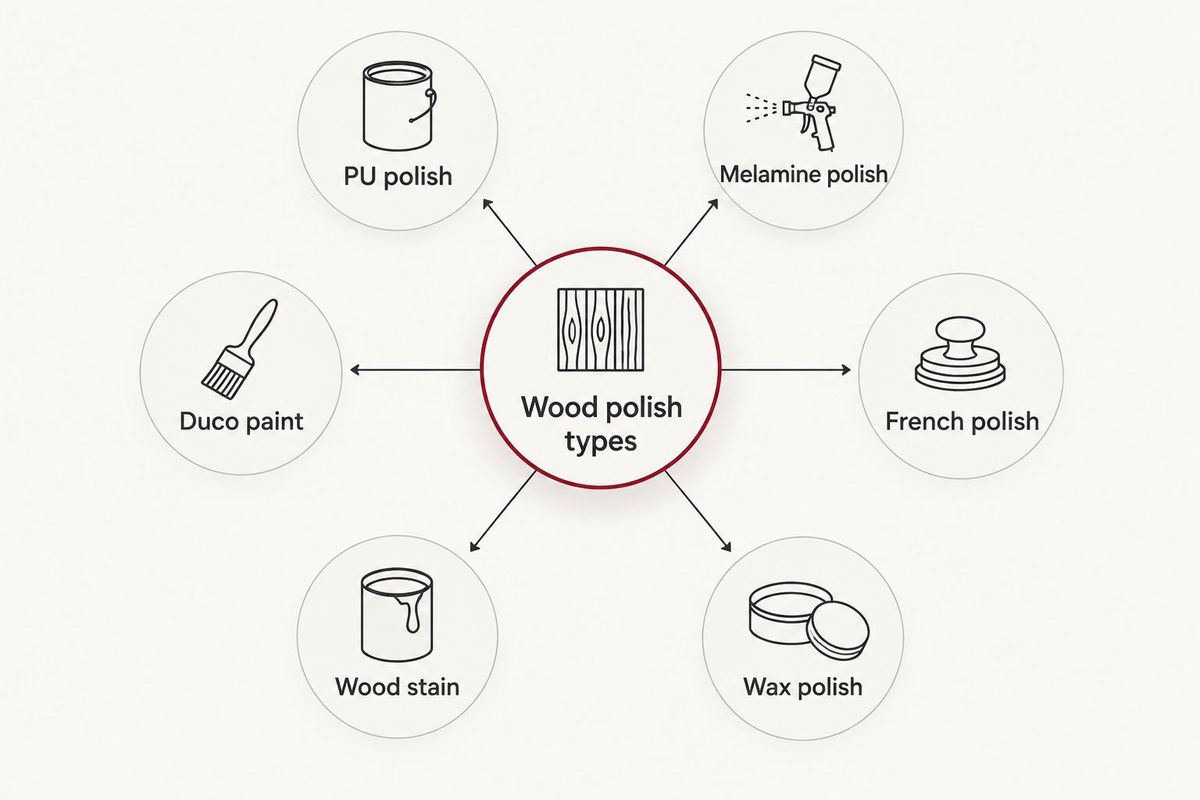
Best overall wood polish for furniture in 2026 is PU (polyurethane) polish, because its hard film resists water rings, heat marks and daily scratches on dining tables, wardrobes and cabinets. Best for a quick glossy finish on a budget: melamine polish. Best for restoring antique or heirloom pieces: French polish. Best for a modern matte or solid-colour look on furniture and doors: duco paint. Best for showing off natural wood grain: wood stain with a clear topcoat. Best for light DIY touch-ups between full refinishing jobs: wax polish.
- PU polish is the best wood polish for furniture in 2026 for pieces that face daily spills and scratches.
- Melamine polish gives a glossy look at the lowest cost but wears faster than PU on heavily used surfaces.
- French polish suits antique furniture restoration and needs a skilled hand plus periodic touch-ups.
- Duco paint (spray enamel) delivers a modern matte or solid-colour finish but hides the wood grain completely.
- Wax polish is a maintenance step for an existing finish, not a standalone protective coat on new furniture.
Why this matters
Furniture in Indian homes deals with dust, humidity swings between summer and monsoon, and daily handling that ages a finish faster than a showroom sample suggests. Pick the wrong wood polish in 2026 and you're likely redoing the job within a year or two, sanding off a coat that never bonded properly with the surface underneath.
The right choice depends on how the furniture actually gets used, not on which polish looks glossiest in the tin. A study table wiped down daily needs a different film than a display cabinet that mostly sits still. Match the finish to the use case first, then to the look you want. For furniture and doors, MRF Paints wood coatings span several of the categories below, so the finish you settle on here can guide what you look for next.
What makes the best wood polish for furniture
- Durability against daily wear, water splashes and scratches
- Drying and curing time before the furniture is safe to use again
- Compatibility with the wood type and any existing finish underneath
- Sheen and colour options – gloss, matte, natural, or tinted
- Ease of application – brush-on, spray, or professional-only
- Ongoing maintenance needed to keep the finish looking new
Best wood polish for furniture: at a glance
| Wood polish type | Best for | Standout feature | Key limitation |
|---|---|---|---|
| PU (polyurethane) polish | Daily-use furniture exposed to spills and scratches | Hard, water-resistant film | Needs ventilation and multiple coats to cure |
| Melamine polish | Budget-friendly gloss on new furniture | Fast application, glossy shine | Less resistant to water and heat than PU |
| Duco paint (spray enamel) | Modern matte or solid-colour furniture and doors | Even, spray-smooth finish | Hides the wood grain completely |
| French polish | Restoring antique or heirloom furniture | Warm, hand-rubbed shine | Time-consuming, needs a skilled polisher |
| Wood stain + clear topcoat | Highlighting natural wood grain | Lets timber texture show through | Less protection than PU alone without a topcoat |
| Wax polish | Quick touch-ups and routine maintenance | Easy to apply with a cloth | Not a standalone protective coat for new furniture |
1. PU (polyurethane) polish: best wood polish for daily-use furniture
Polyurethane polish forms a hard, plastic-like film on top of the wood, which is why it holds up on dining tables, kitchen cabinets and wardrobes that see daily handling. It typically goes on in 2 to 3 coats, with light sanding between coats to keep the surface level and the sheen even.
PU polish pros:
- Resists water rings, heat marks and everyday scratches
- Available in gloss, semi-gloss and matte sheens
- Holds its shine longer than melamine before it needs a touch-up
PU polish cons:
- Needs good ventilation while curing because of the fumes
- Costs more per litre than melamine polish
- A poor first coat is hard to fix without stripping the whole surface
Best for: furniture used every day – dining tables, study desks, kitchen cabinets.
Verdict: Buy if durability matters more than the lowest sticker price.
2. Melamine polish: best wood polish for a budget-friendly gloss finish
Melamine polish is the standard factory finish on a lot of new wooden furniture sold in India, applied by spray for an even glossy coat. It dries fast, which is why furniture workshops lean on it for quick turnover.
Melamine polish pros:
- Lower cost than PU polish
- Fast drying, so furniture is ready to use sooner
- Simple touch-ups on small scratches
Melamine polish cons:
- Less resistant to water and heat than a PU film
- Tends to yellow with age faster than PU in direct sunlight
- Not ideal for furniture facing a balcony or window in full sun
Best for: new furniture on a budget, indoor pieces that don't face heavy daily wear.
Verdict: Buy for cost-conscious buyers furnishing a new home; Hold on it for anything that sits near a sunny window.
3. Duco paint (spray enamel): best wood polish for a modern matte or coloured finish
Duco paint is a spray-applied enamel finish, and it's the reason so many contemporary wardrobes and flush doors in India come in solid colours like white, grey or navy instead of a wood tone. It goes on with a sprayer in a controlled setup, not brushed on like traditional wood polish.
Duco paint pros:
- Even, factory-smooth finish in any solid colour
- Works on MDF and plywood, not just solid wood
- Matches modern matte or high-gloss interior schemes
Duco paint cons:
- Hides the wood grain completely
- Needs spray equipment and a dust-free area for a clean result
- Chips show more visibly on furniture edges over time
Best for: modern wardrobes, flush doors and furniture meant to match a colour scheme rather than show timber.
Verdict: Buy if you're going for a contemporary, monochrome interior; Skip it if the furniture's grain is the reason you bought it.
4. French polish: best wood polish for restoring antique furniture
French polish is built up in thin layers of shellac, hand-rubbed into the wood until it develops a deep, warm shine. It's the traditional finish for teakwood furniture and heirloom pieces passed down over generations, and it reads as a craft finish rather than an industrial one.
French polish pros:
- Produces a shine that machine-sprayed finishes struggle to match
- Suits restoration work on furniture that's already decades old
- Can be spot-repaired by a skilled polisher without redoing the whole piece
French polish cons:
- Takes far longer to apply than PU or melamine
- Softer than PU, so it marks more easily from heat and water
- Needs a trained polisher, not a weekend DIY job
Best for: antique or heirloom wooden furniture where original character matters more than everyday durability.
Verdict: Buy for restoration projects; Wait if the piece is a daily-use table that needs a harder film instead.
5. Wood stain with a clear topcoat: best wood polish for showing natural wood grain
A wood stain changes the colour of the timber while leaving the grain visible, then a clear topcoat, often PU-based, locks the colour in and adds protection. This combination is common on solid-wood dining sets and staircases where the grain is part of the appeal.
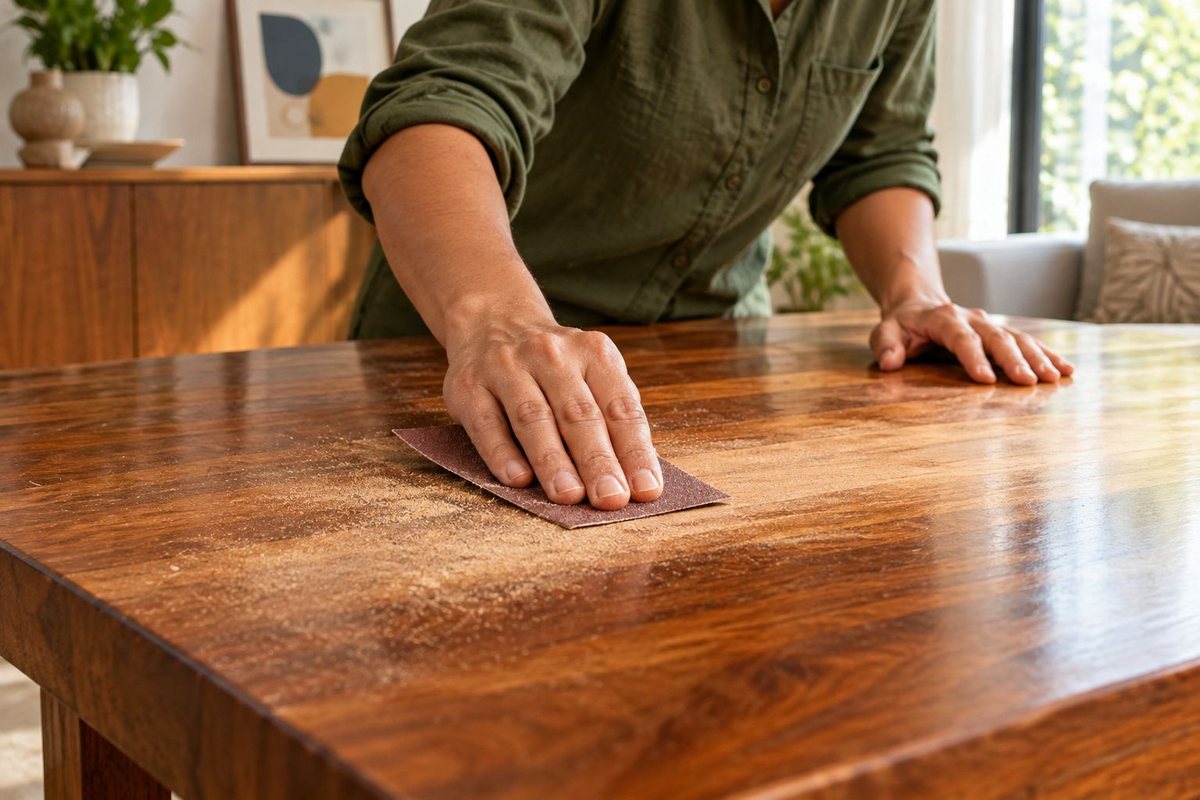
Before staining, the surface usually gets sanded down to around 220-grit sandpaper so the stain absorbs evenly instead of blotching in patches.
Wood stain pros:
- Keeps the natural grain and texture visible
- Wide range of tones, from light oak to walnut, without hiding the timber
- Pairs with a PU topcoat for added protection
Wood stain cons:
- Offers less protection on its own; needs a topcoat to hold up daily
- Uneven sanding or prep shows up clearly once the stain is applied
- Limited to solid wood or veneer, not MDF or plywood edges
Best for: solid-wood furniture where the grain pattern is the main visual feature.
Verdict: Buy for statement wood furniture; Skip for furniture where the base material isn't solid wood.
6. Wax polish: best wood polish for quick DIY touch-ups
Wax polish is a soft paste or liquid rubbed on with a cloth, and it's better thought of as maintenance than as a standalone protective finish. It fills in minor scuffs on an existing PU, melamine or French-polished surface and brings back some shine between full refinishing jobs.
Wax polish pros:
- Easiest option for a homeowner to apply without professional help
- Refreshes dull furniture in under an hour
- Works over most existing finishes without stripping them
Wax polish cons:
- Wears off with regular wiping and needs frequent reapplication
- Provides no real resistance to water or heat on bare wood
- Not a substitute for PU or melamine on new, unfinished furniture
Best for: upkeep on furniture that already has a proper polish or paint film underneath.
Verdict: Buy as a maintenance product; Skip it if the furniture needs its base coat redone, not a top-up.
How this list was ranked
Each wood polish type above is judged against the same six criteria listed earlier: durability, drying time, compatibility with the wood, sheen and colour options, ease of application, and ongoing maintenance. None of the six is a bad choice – they solve different problems, which is why this reads as a decision tree instead of a single leaderboard. Match your furniture's daily use to the item description that fits, not the one listed first.
Find a wood coating for your furniture
See the interior and wood coating range from MRF Paints before you choose a finish.
Which wood polish should you choose in 2026?
If you're furnishing a home and want furniture that survives daily use without babying it, PU polish stays the safe default for tables, desks and cabinets. Reach for melamine polish only when the budget is tight and the piece won't face heavy daily wear. Save French polish for furniture worth restoring rather than replacing, and treat duco paint as the answer when the look you want is a solid colour, not visible timber. Wood stain is for furniture where the grain sells the piece, and wax polish is for keeping any of the above looking fresh between bigger jobs. The MRF Paints finish for each of these options is listed below.
MRF Paints wood finishes for each option
- PU polish: FreshWood Interior (two-pack, 100% PU, glossy or matt), TreatWood Interior (economy two-pack PU) or the water-based, low-odour AquaCoat PU 1K.
- Melamine polish: Melamine Aura, a two-pack clear melamine finish for interior wood, glossy or matt.
- Solid white instead of duco: WoodCoat Italia, a two-pack polyurethane in High Gloss White and Matt White, also available clear.
- Stain with a clear topcoat: MRF Woodstains Interior shades go over the first or second coat of sealer in the FreshWood Interior or WoodCoat Italia systems, before the clear topcoat.
- DIY touch-ups: EezeeWood Interior, a single-pack PU with no hardener, in packs from 200 ml.
- Outdoor wood: WoodCoat Exterior or the water-based AquaCoat PU 2K.
For the difference between PU and other finishes, see what is PU paint; to buy, use the MRF Paints dealer locator.
FAQ
What is the best wood polish for furniture in 2026?
PU (polyurethane) polish is the best wood polish for furniture in 2026 for pieces that face daily use, spills and scratches. Melamine polish is a lower-cost alternative for furniture that sees lighter use.
Is PU polish better than melamine polish?
PU polish forms a harder, more water-resistant film than melamine, so it holds up longer on dining tables and cabinets. Melamine polish dries faster and costs less, which suits furniture with lighter daily use.
Can I apply wood polish over old paint or varnish?
Most wood polishes need the old finish sanded back first so the new coat bonds properly. Applying PU or melamine directly over flaking varnish usually peels within months.
How long does wood polish take to dry?
PU and melamine polish are typically touch-dry within 24 hours between coats, with full curing taking longer. French polish and wax dry faster to the touch but need more coats or reapplications over time.
Is duco paint the same as wood polish?
Duco paint is a sprayed enamel finish that hides the wood grain under solid colour, while wood polish such as PU, melamine or French polish is meant to protect or enhance the timber underneath. They serve different looks, not the same purpose.
Does wax polish protect furniture from water damage?
Wax polish adds a light sheen and fills minor scuffs, but it doesn’t give real resistance to water or heat on bare wood. It works as maintenance on top of an existing PU, melamine or French-polished finish, not as a standalone protective coat.
How much sanding is needed before polishing furniture?
Bare wood usually needs sanding down to around 220-grit before staining or polishing so the finish absorbs evenly. Skipping this step is the most common reason a new polish job looks patchy.
One last thing
The finish that fails first usually wasn't the wrong wood polish – it was the wrong prep. Furniture refinished without a full sand-down to bare wood, or with a fresh coat rushed on before the previous one cured, wears out no matter which polish went on top. Budget the drying time between coats before you budget for the polish itself.