How to Waterproof Your Roof for Long-Lasting Protection?
Do you know what the first line of defence of your home is against rain, heat, and moisture?
It is undoubtedly the roof. To protect your home from structural damage, damp walls, mould growth, and costly repairs, waterproofing your roof is essential. Waterproofing not only enhances aesthetics but also adds safety and strength to your entire home.
In this article, you will learn:
- Why waterproofing your roof matters
- Common mistakes people make
- MRF roof waterproofing products
- A step-by-step DIY roof waterproofing process
- Important Tips for a Successful Waterproofing Job
1. Why Waterproofing Your Roof Matters?
Waterproofing is more than just helping you feel secure at home, it has numerous benefits.
2. Prevents Structural Damage
When water penetrates the roof surface, it gradually weakens the roof, walls, and even the foundation. Waterproofing stops moisture from seeping through the walls.
3. Stops Mold and Mildew
We often see fungal growth on damp surfaces. To keep internal areas dry, hygienic, and aesthetically clean, effective waterproofing is necessary.
4. Increases Roof Life
When you seal cracks with proper waterproofing solutions, the coating minimises weather-related deterioration, resulting in fewer repairs and a longer-lasting roof.
5. Reduces Long-Term Costs
If you belong to a lower-middle-class or middle-class family, the initial investment may feel heavy. But waterproofing significantly reduces future expenses on water damage, repainting, and structural maintenance.
6. Boosts Energy Efficiency
Certain waterproofing products from MRF Vapocure Paints offer features such as heat reduction, moisture resistance, flexibility, and fibre reinforcement.
Common Mistakes People Make During Waterproofing.
Many waterproofing failures occur not because of poor products but because of simple application mistakes.
- The most common mistake is applying waterproofing solutions on dirty, wet, or unprepared surfaces, which leads to early peeling.
- For vertical exterior & Interior walls, Waterproofing Primer is essential for proper bonding and better coverage, but many people skip it.
- MRF Vapocure Paints has an eco-friendly product, Aqua Fresh DampGarde, which is mainly used on terraces and exterior walls, and MRF DampDefence for Interior Walls.
- Applying too thin or uneven coats affects the coating’s ability to stop water penetration effectively.
- Inadequate curing and low-grade materials can compromise the long-term performance of the coating.
Step-by-Step Guide for DIY Roof Waterproofing.
1. Inspect & Clean the Roof
- Determine Roof Type: First, identify whether your roof is flat or sloped.
- Look for Damage: Identify cracks, stains, algae, or visible signs of water ingress.
- Clean Thoroughly: Use a stiff broom, brush, or pressure washer to remove dirt, debris, and algae. Make sure the surface is completely dry before the next step. A clean surface ensures proper adhesion of the waterproofing material.
2. Repair Cracks and Joints
- Widen the Cracks: Use a putty knife to open up hairline cracks.
- Use Crack Filler: Apply a crack repair compound in two coats with a putty knife, filling every gap completely. Allow it to cure for about 24 hours. This step prevents water from entering through weak points.
3. Apply Primer
- Select the Right Primer: Choose a waterproofing primer that offers strong adhesion and durability.
- Apply in Layers: For the first coat, add about 10% water to the primer and apply it with a brush or roller. For the Second coat, apply the primer undiluted for stronger bonding.
- Dry Time: Let the primer dry for 6–8 hours.
4. Apply the Base Waterproofing Coat
- Mix the Coating: Prepare the waterproofing material as per the manufacturer’s instructions.
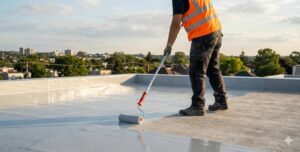
- Apply evenly: Use a roller or brush to coat the entire roof, especially in areas where water pools.
- Cure Time: Allow this coat to dry for 12–16 hours. This becomes the primary waterproofing membrane.
5. Strengthen with a Second Layer
- Apply a second coat of high-performance waterproofing material.
- Apply in a perpendicular direction to the first coat.
- Allow it to cure for 24 hours.
6. Add a Protective Topcoat
- Apply 2–3 coats of high-quality external paint over the waterproof layers.
- Make sure each coat dries fully before applying the next coat. This improves aesthetics and protects against moisture and UV damage.
7. Final Inspection & Touch-Ups
- Check for any gaps or uneven coating.
- Apply touch-ups where necessary.
- Allow the roof to cure fully for 2–3 days before exposing it to rain or foot traffic.
Important Tips for a Successful Waterproofing Job.
- Choose a dry, sunny day for application.
- Wear safety gear like gloves, goggles, and non-slip shoes, especially on sloped roofs.
- Always follow product instructions carefully.
- Inspect your roof every 5–10 years; reapply coatings if needed.
- Call a professional if you notice major cracks, structural issues, or heavy water pooling.
Colouring Every Surface With Uncompromised Quality
At MRF Vapocure Paints, we bring decades of expertise in paints and surface coatings to homes, offices and commercial spaces across India. Over the years, the brand has become synonymous with tough, long-lasting finishes that are engineered for Indian weather, from harsh sun to heavy monsoons. Our products are formulated for superior coverage, strong adhesion and rich colour retention, so walls, wood and metal surfaces stay beautiful for longer with less maintenance. With a focus on innovation and quality control at every stage, each batch of paint is rigorously tested for performance, safety and consistency. From interiors and exteriors to specialist finishes, MRF Vapocure Paints is committed to delivering reliable, high-quality solutions that combine aesthetics with protection, helping customers create spaces they are truly proud of.
Conclusion
Rather than a maintenance task, waterproofing your roof is a long-term investment for the safety, strength and comfort of your home. A well-waterproofed roof protects your family from leaks, dampness, and harmful mould while reducing repair costs and improving energy efficiency. If you do proper surface preparation, the right product, and a systematic application process, even homeowners can achieve durable and long-lasting results. And although DIY waterproofing works well for small areas, don’t hesitate to call a professional if you notice major cracks or structural issues.
Frequently Asked Questions.
- What is the most durable roof waterproofing?
Polyurethane- or acrylic-based waterproofing solutions are considered highly durable. MRF Vapocure Paints has an eco-friendly product named Aqua Fresh DampGarde that is mostly used on terraces & exterior walls, and MRF DampDefence for Interior Walls.
- How to stop roof leakage permanently?
Seal all cracks and apply a high-quality waterproofing system to prevent leaks permanently.
- Can I handle roof waterproofing on my own?
Yes, you can waterproof your roof by yourself for small areas (up to around 150 sq. ft.).