
Best Waterproof Paint for Terrace in India 2026
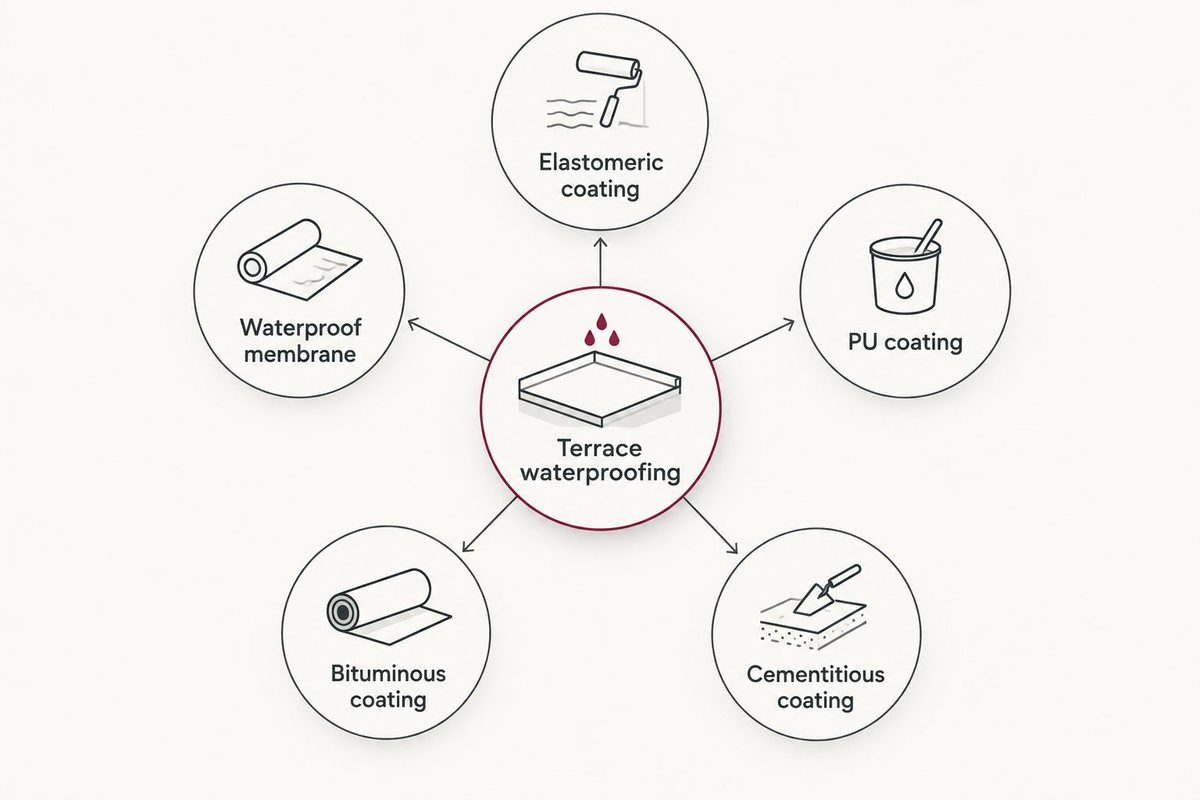
Five systems compete for the terrace and roof waterproofing job in India, and only one of them is a genuine DIY paint job: an elastomeric acrylic coating. The other four are cementitious slurries, bituminous coatings, polyurethane (PU) systems and sheet membranes, and each solves a different problem. Best overall for most terraces in 2026: elastomeric acrylic waterproof coating. Best for terraces with movement cracks: polyurethane (PU) coating. Best budget option: cementitious waterproof coating.
- The best waterproof paint for terrace in 2026 for most Indian homes is an elastomeric acrylic coating applied over a primed, crack-repaired surface.
- Polyurethane (PU) coatings handle terraces with hairline cracks and heavy foot traffic better than any paint-on system.
- Cementitious coatings are the budget pick for wet areas and terraces before tiling, but they crack if the substrate moves.
- Bituminous coatings are a legacy fix for old tar roofs, not a first choice for new waterproofing work.
- Sheet membranes suit new construction and underground structures more than an occupied terrace that needs a quick fix.
Why this matters
Most homeowners start looking for terrace waterproofing just before India's four-month monsoon window from June to September. By the time water is already pooling on the slab, the choice narrows fast and homeowners end up picking whatever the local hardware shop has in stock.
The five systems below aren't interchangeable. A coating built to seal a static concrete surface behaves very differently from one built to stretch across a crack that opens every summer and closes every monsoon. MRF Paints makes terrace coatings in the first category below; the primer you pair with any waterproofing layer matters as much as the coating itself.
What makes the best waterproof paint for terrace
Rank each option against these six criteria before you commit a whole terrace to it:
- Crack-bridging flexibility — can the film stretch over hairline cracks that move with heat and cold?
- Ponding resistance — does it hold up under standing monsoon water, not just splashes and rain runoff?
- UV and weather stability — will the surface chalk, fade or crack after multiple summers of direct sun?
- Application method — can a homeowner roller it on, or does it need a trained applicator?
- Substrate compatibility — does it work on bare concrete, old tar roofing, or tiled surfaces?
- Recoat and maintenance cycle — how much attention does the surface need after the first monsoon?
Waterproof paint for terrace: at a glance
| System | Best for | Standout feature | Key limitation |
|---|---|---|---|
| Elastomeric acrylic coating | Overall terrace waterproofing | Roller-applied, stretches over hairline cracks | Needs a properly repaired surface before application |
| Polyurethane (PU) coating | Terraces with movement cracks | High elongation, handles foot traffic well | Needs a trained applicator, not a weekend DIY job |
| Cementitious coating | Budget terraces and wet areas | Low cost, bonds directly to bare concrete | Rigid — cracks if the slab underneath moves |
| Bituminous coating | Old tar-based roofs | Familiar, easy patch repair | Degrades faster under direct summer sun |
| Waterproof membrane (sheet) | New construction, underground structures | Continuous barrier laid before finishing | Not practical to retrofit on an occupied terrace |
1. Elastomeric acrylic coating: best waterproof paint for terrace overall
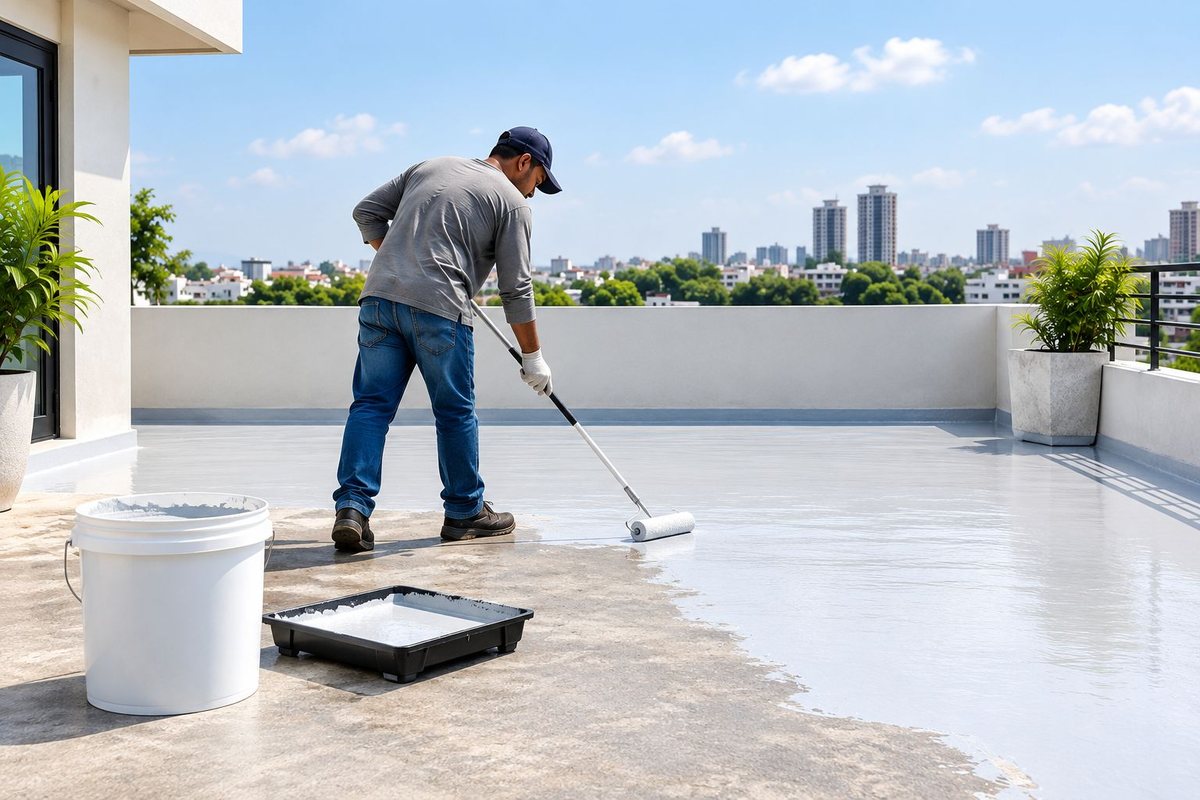
An elastomeric acrylic coating is applied by roller or brush over a primed, crack-filled concrete surface, and it cures into a rubber-like film that expands and contracts with the slab underneath. It's the closest thing to a paint-on waterproofing system, which is why it is the most popular choice — homeowners want something they or their painter can apply without specialist equipment. MRF Paints makes two coatings in this category: AquaFresh DampGarde, a fibre-reinforced system that bridges cracks up to 0.5 mm, and AquaFresh Cool, a heat-reflective terrace coating that is waterproof when applied with the proper procedure.
Elastomeric acrylic coating pros:
- Roller or brush application — no specialist equipment required
- Bridges hairline cracks that open and close seasonally
- Available in light, heat-reflective shades that suit exposed terraces
Elastomeric acrylic coating cons:
- Only performs if the surface is crack-repaired and primed first
- Not built for deep structural cracks or joints that move significantly
- Needs reapplication once the top film starts chalking or thinning
Best for: homeowners waterproofing an existing terrace themselves before monsoon. Verdict: Buy.
2. Polyurethane (PU) coating: best for terraces with movement cracks
PU coatings are liquid-applied systems that cure into a seamless, highly elastic membrane. They stretch further than acrylic systems, which is why applicators reach for PU on terraces where the slab has real movement — expansion joints, parapet junctions, or areas where earlier patch repairs have already cracked again.
PU coating pros:
- Higher elongation than acrylic systems, so it survives more movement
- Handles foot traffic and light furniture without tearing
- Forms a seamless membrane with no joints for water to find
PU coating cons:
- Needs a trained applicator, not a homeowner DIY job
- Surface prep is more demanding than for acrylic coatings
- Costs more per square foot than acrylic or cementitious systems
Best for: terraces with visible cracking at joints, parapets, or old repair lines. Verdict: Buy.
“A coating that can’t stretch with the slab underneath it is just an expensive layer of paint.”
3. Cementitious coating: best budget waterproof paint for terrace
Cementitious coatings are cement-based slurries brushed or troweled onto bare concrete, and they're the standard budget choice for toilets, sunken slabs, and terraces before tiling goes down. They bond directly to concrete without a separate primer step, which keeps the job cheap and quick.
Cementitious coating pros:
- Lowest-cost option among the five systems
- Bonds directly to bare concrete, no primer needed
- Widely available and easy for any local mason to apply
Cementitious coating cons:
- Rigid film — cracks if the slab beneath it moves at all
- Not designed for terraces exposed to constant sun and rain cycling
- Usually paired with a topcoat rather than left exposed long-term
Best for: wet areas and terraces about to be tiled over. Verdict: Hold — fine as a base layer, not a standalone exposed terrace solution.
4. Bituminous coating: best for old tar-based roofs
Bituminous coatings are the tar-and-bitumen systems that have waterproofed Indian roofs for decades. They're still common as a patch fix on older buildings where a bitumen layer already exists, since compatible bitumen products bond easily to the old surface.
Bituminous coating pros:
- Familiar to most local contractors and painters
- Easy to patch over existing bitumen roofing
- Works on flat roofs with minimal surface prep
Bituminous coating cons:
- Degrades faster than acrylic or PU under direct summer sun
- Dark surface absorbs more heat, which isn't ideal for terraces used as living space
- Not the system to choose for a fresh waterproofing job in 2026
Best for: patching an existing tar-based roof, not starting a new waterproofing job. Verdict: Wait — only if you're already working with bitumen.
5. Waterproof membrane (sheet): best for new construction
Sheet membranes — torch-applied or self-adhesive rolls — go down before the finishing layer during construction, forming a continuous barrier under the terrace surface or around underground structures like basements. They're a builder's decision, not a homeowner's touch-up.
Waterproof membrane pros:
- Continuous barrier laid in a controlled construction sequence
- Well suited to underground and below-grade waterproofing
- Long service life when installed correctly at the build stage
Waterproof membrane cons:
- Not practical to retrofit on a finished, occupied terrace
- Requires professional installation during construction
- Overkill for a simple existing-terrace waterproofing job
Best for: new-build terraces and basements planned at the construction stage. Verdict: Buy — but only if you're building, not retrofitting.
How we ranked these
The order above follows the six criteria set out earlier — crack-bridging flexibility, ponding resistance, UV stability, application method, substrate compatibility, and recoat cycle. Elastomeric acrylic coating wins overall because it's the only system that scores well on both DIY application and crack flexibility, which covers the largest share of Indian terrace situations in 2026. PU coating outranks cementitious and bituminous systems specifically on movement-crack performance, even though it costs more and needs a professional applicator.
Which waterproof paint should you choose for your terrace?
If your terrace is an existing, occupied space with minor cracking and you want a system you or your painter can apply directly, go with an elastomeric acrylic coating over a properly repaired and primed surface. If the terrace has visible cracking at joints or parapets, upgrade to a PU coating and bring in a trained applicator rather than stretching an acrylic system past its limit. Cementitious coating stays the right call only as a budget base layer for wet areas, not as the final exposed surface on a terrace that sees full sun and monsoon rain every year.
Explore MRF Paints’ coating range
Compare primers, topcoats and specialty coatings before you start the job.
MRF Paints terrace coatings
- AquaFresh DampGarde: a fibre-reinforced waterproofing and heat-reduction system for terraces and exterior walls. It bridges cracks up to 0.5 mm and reduces heat by up to 10 degrees C in white; also in grey and terracotta.
- AquaFresh Cool: a water-based heat-reflective terrace coating that lowers surface temperature by up to 12 degrees C. It is waterproof when applied with the proper procedure: one coat of AquaFresh PU Wall Primer, then two coats 4-5 hours apart, left to cure for 72 hours. About 120-130 sq ft per litre per coat.
Choose DampGarde when cracks and seepage are the main problem, and AquaFresh Cool when the room below also gets too hot. Our guide to heat-reflective roof paint explains the cooling side, and why monsoon is the wrong time to paint covers timing.
FAQ
What is the best waterproof paint for terrace in 2026?
An elastomeric acrylic coating over a properly repaired and primed surface is the best waterproof paint for terrace for most existing homes in 2026, since it’s DIY-friendly and bridges hairline cracks. Terraces with visible movement cracks do better with a polyurethane (PU) coating instead. From MRF Paints, AquaFresh DampGarde bridges cracks up to 0.5 mm, and AquaFresh Cool adds heat reflection.
How is waterproof paint different from regular exterior paint?
Waterproof paint forms a flexible, water-shedding film designed to bridge hairline cracks and resist standing water, while regular exterior paint is built mainly for color and weather protection on vertical walls. Applying regular exterior paint to a terrace floor won’t stop water penetration through cracks.
Is monsoon the wrong time to waterproof a terrace?
Monsoon isn’t ideal for applying most waterproof coatings, since the surface needs to be dry during application and curing. The safer window is before the monsoon starts, so the coating is fully cured by the time India’s June-to-September rains arrive.
Elastomeric acrylic vs PU coating — which is better for terraces?
Elastomeric acrylic coating suits terraces with minor hairline cracking and homeowners who want a roller-applied DIY system. PU coating handles more movement at joints and parapets and takes heavier foot traffic, but it needs a trained applicator.
Do I need a primer before applying waterproof paint on a terrace?
Yes — a primer improves adhesion between bare concrete and the waterproof topcoat, and skipping it is one of the most common reasons a coating fails within the first monsoon. Crack repair should also happen before priming, not after.
Can I apply waterproof paint over old cracks without repairing them?
No — cracks should be filled and repaired before any waterproof coating goes on, since even a flexible film will eventually reopen over an unrepaired crack. This applies to acrylic, PU and cementitious systems alike.
How many coats of waterproof paint does a terrace need?
Most elastomeric and PU systems are applied in two to three coats to build up a continuous, pinhole-free film, with each coat allowed to dry before the next. Coverage and coat count vary by product, so check the specific system’s application instructions.
Is cementitious coating enough to waterproof a terrace on its own?
Cementitious coating works well as a base layer for wet areas and pre-tiling terraces, but it’s rigid and can crack if the slab moves. Terraces exposed to full sun and monsoon cycling do better with a flexible topcoat over the cementitious base.
One last thing
The system homeowners skip most often is surface prep — crack filling, cleaning, and priming — and it's the single biggest reason a waterproof coating fails in its first year rather than lasting through multiple monsoons. Before shortlisting a coating for 2026, get the substrate right first; the paint on top only performs as well as what's underneath it.