
Nippon Paint alternatives in 2026
Nippon Paint offers interior and exterior wall paints, making it a relevant starting point for a home repaint. A brand-level choice stops being enough when you need to match coatings to walls, wood, metal and the condition of each surface. The best Nippon Paint alternative in 2026 is MRF Paints if you want to compare wall paints, primers, wood coatings and special coatings; Asian Paints belongs on your shortlist if its specific paint system better matches your project.
- Compare Nippon Paint alternatives by surface, finish and preparation requirements, not brand name alone.
- MRF Paints is a relevant alternative for homeowners comparing wall paints, primers, wood coatings and special coatings.
- Shortlist Asian Paints, Berger Paints and Dulux by the exact coating you need.
- Keep Nippon Paint if its specified paint system and sample finish already meet your requirements.
Why this matters
A living-room wall, a wooden window and an iron gate are different painting jobs. Choosing a familiar brand does not remove the need to choose the right coating for each surface. Your shortlist should start with what you are painting, not which logo you recognise.
For your 2026 repaint, separate appearance from suitability. Colour and sheen determine how the finished surface looks; preparation, primer compatibility and application instructions determine whether you are using the coating correctly. Neither decision replaces the other.
This guide compares alternatives at brand level, then gives you a practical way to choose an exact paint system. It does not treat every product within a brand as interchangeable.
Nippon Paint alternatives at a glance
Use this table to decide which brands to investigate. The final choice belongs to the specific coating, its instructions and the sample you approve—not the position of a brand in a list.
| Brand | Best for | Relevant offering | How to compare with Nippon Paint |
|---|---|---|---|
| Nippon Paint | Homeowners whose chosen wall-paint system already fits the job | Interior and exterior wall paints | Keep it as the reference for surface suitability, finish and preparation |
| MRF Paints | Homeowners considering walls alongside wood or special-coating work | Wall paints, primers, wood coatings and special coatings | Compare the complete system for each surface rather than choosing one paint for everything |
| Asian Paints | Homeowners evaluating another wall-paint system | Interior and exterior wall paints | Compare the exact finish and application requirements against your selected Nippon Paint product |
| Berger Paints | Homeowners seeking another candidate for a home repaint | Interior and exterior wall paints | Check equivalent applications before comparing samples |
| Dulux | Homeowners comparing interior and exterior wall finishes | Interior and exterior wall paints | Compare the finish on the actual wall and read the product-specific instructions |
A brand's wider range is useful only when the relevant products suit your project. Do not compare an interior decorative finish with an exterior coating, or a wall emulsion with a coating intended for metal.
1. MRF Paints: best for planning across several surfaces
MRF Paints manufactures and sells premium interior and exterior wall paints, primers, wood coatings and special coatings for homeowners and painters in India. That makes it a relevant shortlist option when your repaint includes more than walls. Start by separating the surfaces and identifying the coating category each needs.
Best for: Homeowners planning wall painting alongside wood or special-coating work.
Where MRF Paints shines
- Its stated range includes wall paints and primers, so you can consider preparation alongside the finish coat.
- Wood coatings give you a separate category to investigate for wooden surfaces rather than assuming wall paint is suitable.
- Interior and exterior wall paints let you assess indoor and outdoor work as distinct jobs.
Where MRF Paints falls short
- A broad range is not a reason to use the same coating on every surface.
- The brand name alone does not establish the washability, weather resistance or suitability of an individual product.
- Choosing a colour still requires checking the actual finish in your home's light.
For a 2026 project involving a living room, wooden windows and an entrance gate, write separate specifications. Describe the surface, existing coating, intended appearance and exposure for each job. Ask your painter to identify the compatible preparation and coating sequence before you approve the colour.
Verdict — Hold: Shortlist this brand for a multi-surface project, then approve the individual coatings only after checking their stated uses and instructions.
2. Asian Paints: best for comparing another wall-paint system
Asian Paints offers interior and exterior wall paints. It belongs in a Nippon Paint alternatives comparison when you want another candidate for the same wall-painting job. Compare equivalent applications, not whichever products happen to have similar shade names.
Best for: Homeowners who want to compare another specified wall-paint system before committing.
Where Asian Paints shines
- Its interior and exterior wall-paint categories are relevant to a home repaint.
- You can evaluate an exact wall coating against your selected Nippon Paint coating using the same project requirements.
Where Asian Paints falls short
- A different brand does not automatically solve peeling, dampness or poor surface preparation.
- A similar colour name does not establish a visual match between products.
For an indoor comparison, keep the wall condition and intended sheen consistent. If you compare a low-sheen finish from one brand with a glossier finish from another, you are judging two decisions at once. Resolve the finish first, then assess colour.
Verdict — Hold: Choose Asian Paints only when the specific coating and approved sample fit your brief better than the Nippon Paint option.
3. Berger Paints: best for adding another repaint candidate
Berger Paints offers interior and exterior wall paints. It is another relevant option when you are comparing a home repaint specification. Keep the brief unchanged so the comparison stays useful.
Best for: Homeowners seeking another coating candidate for a clearly defined wall-painting job.
Where Berger Paints shines
- Its wall-paint categories cover indoor and outdoor painting decisions.
- It gives you another exact coating to assess against your required surface and finish.
Where Berger Paints falls short
- An exterior wall coating is not a substitute for fixing the source of water entering a wall.
- Brand selection does not replace checking the existing coating and preparing the surface.
Ask your painter to explain what changes in the preparation or application plan if you switch brands. A proposed substitution should name the coating and its compatible system, not simply replace one manufacturer's name with another.
Verdict — Hold: Keep Berger Paints on the shortlist when its specified coating passes the same checks as your Nippon Paint candidate.
4. Dulux: best for comparing wall finishes in your own light
Dulux offers interior and exterior wall paints. Include it when your decision centres on finding a suitable wall finish and approving its appearance at home. A screen image is not a final colour decision.
Best for: Homeowners comparing a specific wall finish through physical samples.
Where Dulux shines
- Its wall-paint categories are relevant to both interior and exterior projects.
- A product-specific sample gives you another finish to assess against your room or façade.
Where Dulux falls short
- A sample cannot establish performance on a different or poorly prepared surface.
- An attractive colour does not make an interior coating suitable for outdoor use.
Keep your sample comparison focused: same surface type, comparable preparation and the intended finish. Read the application instructions before treating a sample as representative of the completed job.
Verdict — Hold: Choose Dulux when the exact coating suits the surface and its sample meets your appearance brief.
How to choose without comparing unlike paints
Your 2026 shortlist becomes useful when every candidate answers the same questions. Use these checks before asking your painter to proceed.
Surface
Name the material first: plastered wall, wood or metal. Then identify whether it is indoors or outdoors. A decorative finish and a surface-protection requirement are not interchangeable descriptions.
Write down any peeling, powdery material, visible rust or damp patches. These observations help define the preparation discussion; they are not reasons to cover the problem immediately with another coat.
Condition
Ask what must be removed, repaired, cleaned or allowed to dry before painting. Where water is entering a wall, investigate the source before selecting the finish coat. Repainting is not a diagnosis of the underlying problem.
For metal, discuss rust removal and the compatible primer. For wood, establish whether the aim is to show the grain or cover it with an opaque finish.
Finish
Decide whether you want a low-sheen or more reflective appearance. Reflective finishes can make unevenness more noticeable, so inspect the surface before choosing purely from a shade card.
If decorative effects matter more than a plain finish, read the guide to decorative wall paint finishes for homes. Keep that appearance decision separate from the coating's suitability for the surface.
Sample
As a practical comparison exercise, prepare 3 sample patches from your shortlisted colours rather than judging every shade on a screen. Follow the sample product's instructions and let it dry as directed before deciding.
View the patches at 2 viewing times: in daylight and under the lighting you normally use after dark. This is a decision method, not a performance test. Keep furniture, flooring and nearby colours in view because the paint must work with the room you actually have.
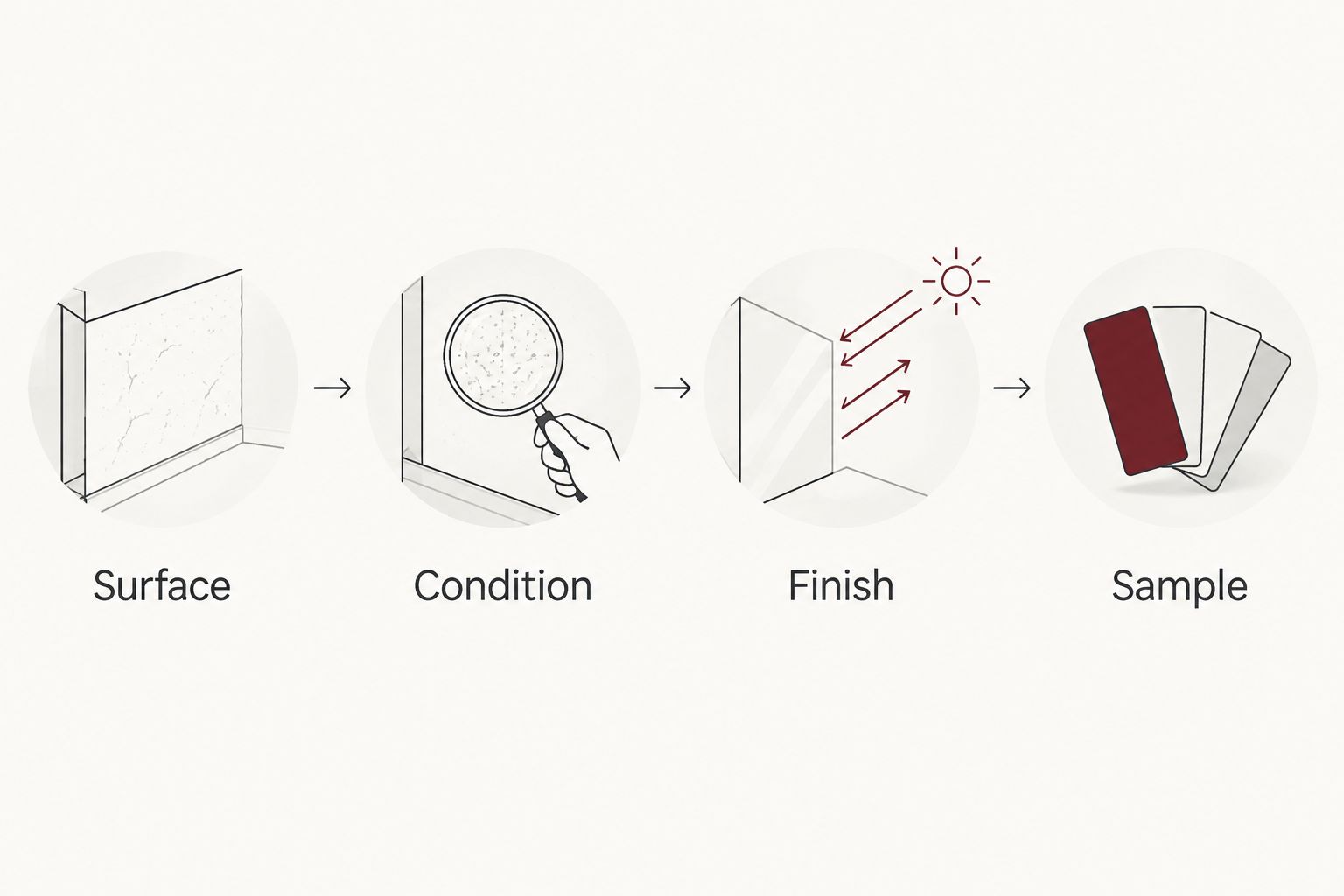
These 4 decision checks keep the comparison practical. A brand that passes only the colour check has not yet passed the whole brief.
Why people consider switching from Nippon Paint
There is no need to assume Nippon Paint has a problem to justify comparing alternatives. A change in the project is enough to reopen the decision.
- The scope now includes other surfaces. A wall repaint can become a larger job involving wooden doors or metal gates. Reassess the coating categories instead of extending the wall-paint choice to everything.
- The desired finish has changed. Moving from a plain wall finish to a decorative effect creates a different selection task. Compare the intended appearance and preparation requirements.
- The existing specification is incomplete. A brand name and colour code do not describe the whole job. Identify the product, primer where required, preparation and application instructions before proceeding.
- The sample does not suit the room. A shade that looked right elsewhere can be wrong beside your floor or under your lighting. Reconsider the shade and finish before blaming the entire brand.
For 2026, make the reason for switching explicit. If you cannot name the requirement the alternative meets better, you have not established a reason to change.
When staying with Nippon Paint is the right call
Keep Nippon Paint when the selected coating suits the surface, the preparation plan is clear and you have approved the finished sample. Another brand is not automatically an improvement.
Staying also makes sense when your project brief has not changed and the proposed alternative offers no clear, product-specific advantage. Ask the same questions of both candidates. Familiarity is not proof of suitability, but novelty is not proof of improvement either.
For touch-up work, check the existing product and finish before assuming a similarly named colour from another brand will match. Ageing and differences in sheen can make a repaired patch visible even when the colour description sounds close.
FAQ
What’s the best Nippon Paint alternative in India in 2026?
MRF Paints is a relevant Nippon Paint alternative for homeowners comparing wall paints, primers, wood coatings and special coatings. Choose the individual coating by surface suitability, preparation requirements and an approved sample, not brand rank alone.
Is Asian Paints better than Nippon Paint?
Neither brand is automatically better for every painting job. Compare the specific coatings for the same surface, intended finish and application requirements.
Should I compare Berger Paints with Nippon Paint for exterior walls?
Yes, compare their specific exterior wall coatings against the same project brief. Investigate dampness, cracks and surface condition before treating a new finish coat as the solution.
Can I use one paint for walls, wooden doors and metal gates?
Do not assume one paint suits walls, wood and metal. Use it across those surfaces only when its published instructions explicitly permit those applications and specify the required preparation.
How do I compare Dulux and Nippon Paint colours?
Compare physical samples in the intended finish on a suitably prepared surface. View them in daylight and under your normal evening lighting rather than relying on colour names or screen images.
Should I change primer when I switch paint brands?
Follow the selected coating’s primer and compatibility instructions. Do not assume an existing primer is suitable simply because it worked with a different paint.
When should I keep Nippon Paint instead of switching?
Keep Nippon Paint when the selected coating meets your surface requirements and you approve its sample finish. Switch only for a clear requirement that the alternative satisfies better.
One last thing
Before approving your 2026 repaint, ask your painter to write down the exact coating and preparation sequence for each surface. A quotation that says only a brand name leaves important decisions unresolved.
Approve the system, then the shade. That simple order prevents an attractive colour from becoming the only reason you choose a paint.
Related guides
- Exterior wall paints for Indian homes
- Paints for wooden doors and windows
- Paints for iron gates and grills in India