
Best Decorative Paint for Walls: Matte Wins in 2026
Best overall: matte wall paint. Best for a softly reflective finish: satin. Best for a statement wall: textured paint. The best decorative paint for walls in 2026 is the finish that suits your room’s light, surface condition and cleaning needs—not simply the most striking sample.
- Matte is the best decorative paint for walls when you want a quiet, low-sheen backdrop.
- Satin suits homeowners who prefer a softly reflective finish; confirm washability for the specific paint.
- Textured paint, limewash and metallic effects serve different feature-wall looks, not interchangeable purposes.
- From MRF Paints: Altura 2-in-1 or Visa for matte, RUCA Luxury Emulsion or AquaFresh Interior for a soft sheen.
Why this matters
Decorative wall paint changes more than colour. Its sheen, texture and application pattern influence how a wall looks beside windows, under ceiling lights and behind furniture. A finish you like on a small swatch can feel very different across a whole room.
For homeowners choosing wall paints from MRF Paints, matte is the default for a quiet, low-sheen look. Choose a more reflective or patterned finish only when that effect serves the room. The MRF emulsions for the matte and sheen options are listed near the end of this guide.
What makes the best decorative paint for walls?
Use these criteria before choosing a finish:
- Light response: Decide whether you want a flat-looking surface, a soft sheen or a noticeable shimmer.
- Surface condition: Check for uneven plaster, cracks and dampness before considering the decorative layer. Paint is not a repair for the underlying problem.
- Cleaning needs: Read the specific paint’s washability and care instructions. A sheen name alone does not establish cleaning performance.
- Application demands: Ask your painter to reproduce the intended effect on a sample. Patterned finishes depend on technique as well as material.
- Future repairs: Consider how you will repaint or touch up the wall. Irregular effects need more planning than a uniform colour.
- Room balance: Choose whether the wall should support your furniture or become the room’s main visual feature.
Decorative wall finishes at a glance
The ranking below gives each finish a different job. Matte and satin describe sheen; textured paint, limewash and metallic finishes describe a surface treatment or decorative effect. They are not equivalent product categories.
| Rank and finish | Best for | Standout feature | Key limitation |
|---|---|---|---|
| 1. Matte wall paint | A quiet whole-room backdrop | Low-sheen appearance | Cleaning performance depends on the particular paint |
| 2. Satin wall paint | A softly reflective interior | Gentle sheen | Reflected light draws attention to uneven areas |
| 3. Textured paint | A statement wall with physical detail | Raised or patterned surface | Repairs must match both colour and texture |
| 4. Limewash | A softly varied, mineral-style look | Tonal movement and brush character | Substrate compatibility and application need careful checks |
| 5. Metallic-effect paint | A light-catching decorative accent | Reflective shimmer | Lighting and application influence the appearance strongly |
1. Matte wall paint: best for a calm whole-room backdrop
Matte wall paint creates a low-sheen surface rather than a visibly reflective one. It suits bedrooms and living rooms where you want artwork, textiles or furniture to attract attention before the walls. Think warm off-white behind wooden furniture or a muted blue around a reading corner.
For a 2026 home refresh, matte is a straightforward starting point when you want to change colour without introducing a second decorative effect. That simplicity is its main advantage. It is not a promise that every matte paint cleans equally well.
Matte wall paint pros:
- Creates a quiet background for furniture and artwork.
- Avoids the pronounced reflections of higher-sheen finishes.
- Keeps the design focused on colour rather than surface pattern.
Matte wall paint cons:
- Washability varies between individual paints.
- A flat-looking finish does not remove cracks or plaster defects.
- Touch-up patches can remain visible because of application or colour differences.
Best for: Bedrooms, reading corners and living rooms where the wall should remain visually understated.
From MRF Paints, Altura 2-in-1 comes in matte, and Visa is the budget choice. Compare the shade beside your flooring and curtains, not against a blank screen.
Verdict: Buy matte wall paint for a calm backdrop; choose the specific paint by its cleaning instructions.
2. Satin wall paint: best for a softly reflective interior
Satin wall paint adds a gentle sheen without making the wall look deliberately metallic. Choose it when a completely flat appearance feels too subdued and you want light to play softly across the colour. It offers a different visual result, not an automatic performance upgrade.
A satin sample deserves close inspection beside a window. Side lighting makes changes in the surface easier to see, so careful filling and preparation matter. Ask the painter to demonstrate the intended application before committing to the room.
Satin wall paint pros:
- Adds a soft reflective quality to a plain colour.
- Offers an alternative to both flat-looking and strongly glossy walls.
- Suits a coordinated scheme with painted doors or trim, provided each surface gets an appropriate coating.
Satin wall paint cons:
- Reflections draw attention to uneven patches and surface repairs.
- Cleaning resistance cannot be inferred from the word satin alone.
- Application differences can affect the consistency of the sheen.
Best for: Interiors where you deliberately want a softly reflective wall rather than a flat backdrop.
If you are choosing satin for a hallway or dining area, prioritise the manufacturer’s cleaning guidance. These spaces need a paint selected for how you use them, not just how the sample catches light.
Verdict: Buy satin for its gentle sheen; skip it if surface irregularities remain prominent in the sample.
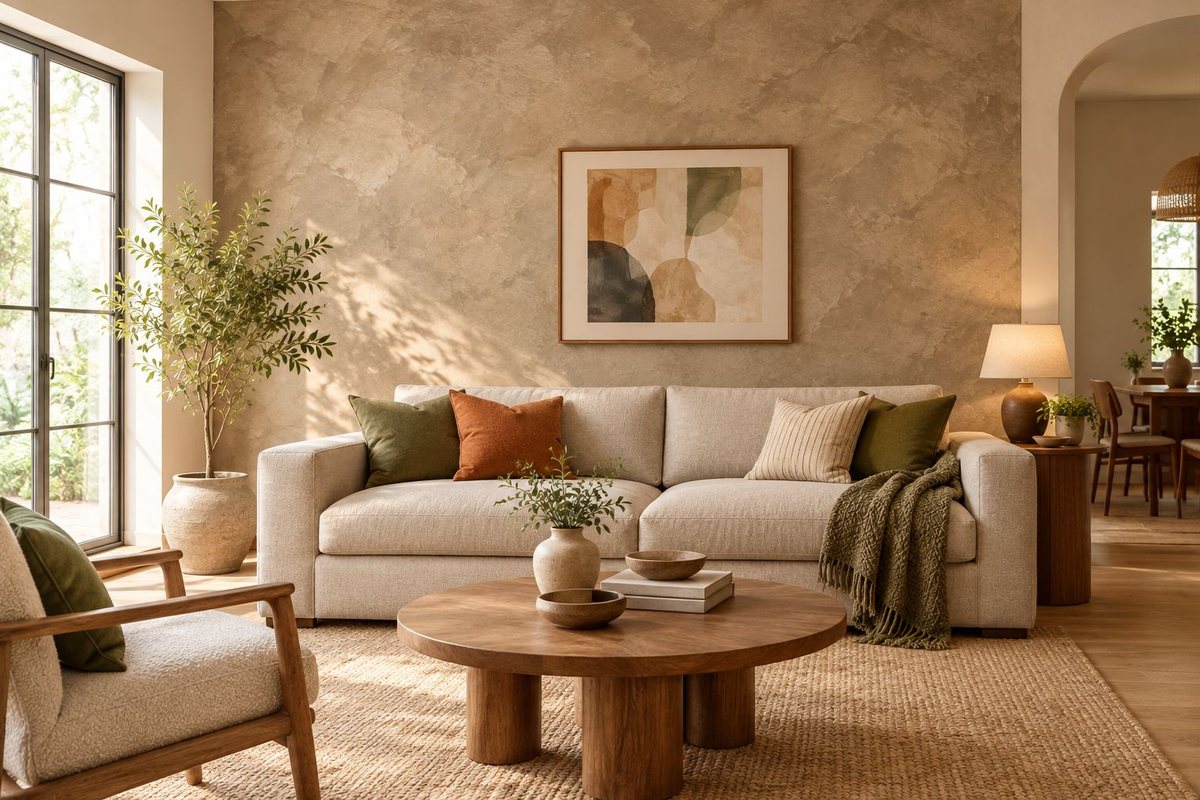
3. Textured paint: best for a statement wall with physical detail
Textured paint creates a surface with visible or tactile pattern rather than relying on colour alone. It gives a TV backdrop, entrance wall or dining nook a distinct role in the room. Start with 1 feature wall so you can judge the effect without repeating it throughout the space.
Choose the pattern alongside the furniture that will stand in front of it. A strongly patterned sofa and a deeply patterned wall both demand attention; a simpler pairing is easier to control. For further ideas, compare wall texture paint designs for living rooms before approving a sample.
Textured paint pros:
- Creates physical detail that a plain colour cannot provide.
- Defines a feature area without adding wall-mounted decoration.
- Offers a choice between restrained and pronounced patterns.
Textured paint cons:
- Local repairs need to reproduce the texture as well as the colour.
- Raised detail adds cleaning considerations compared with a smooth surface.
- The result depends heavily on the applicator’s technique.
Best for: A single statement wall where texture is the intended focal point.
Approve an actual application sample, not just a photograph. Ask the painter how corners, switchboards and repaired areas will be handled; these details affect whether the finished wall looks deliberate.
Verdict: Buy textured paint for a planned feature wall; hold until you approve the pattern and repair approach.
4. Limewash: best for a softly varied, mineral-style look
Traditional limewash is a lime-based coating associated with a matt appearance and visible tonal variation. Its appeal comes from movement across the surface rather than a perfectly uniform colour. It suits homeowners who want brush character to remain part of the design.
For a 2026 limewash project, distinguish traditional limewash from a paint marketed as a limewash effect. They are not automatically the same material. Check the chosen coating’s suitable substrates, preparation requirements and care instructions before using it over an existing painted wall.
Limewash pros:
- Creates a softly varied appearance rather than a uniform painted field.
- Makes brushwork part of the decorative finish.
- Pairs visually with natural materials such as wood and woven textiles.
Limewash cons:
- Existing wall coatings need a compatibility check.
- Tonal variation is unsuitable if you expect perfectly even colour.
- Repairs and cleaning require the chosen coating’s specific guidance.
Best for: Rooms where you want a deliberately irregular, mineral-style wall appearance.
Ask the applicator to show both a restrained sample and a more visibly varied sample. Choose the amount of movement you actually like; the name of the finish does not determine that for you.
Verdict: Buy limewash for intentional tonal variation; skip it if uniform colour is your priority.
5. Metallic-effect paint: best for a light-catching decorative accent
Metallic-effect paint adds reflective shimmer to a wall. The effect changes with the direction of light and your viewing position, making it better suited to a deliberate accent than an unexamined whole-room choice. Consider it behind a console or within a clearly defined decorative area.
Distinguish wall-safe metallic decorative coatings from paints intended for metal objects. A metallic appearance does not establish substrate suitability. Use only a coating whose instructions identify your wall surface as an appropriate application.
Metallic-effect paint pros:
- Creates a light-catching accent without a raised texture.
- Adds contrast beside quieter, non-reflective walls.
- Makes the interaction between lighting and wall colour part of the design.
Metallic-effect paint cons:
- Reflections highlight application differences and surface irregularities.
- A small swatch does not show the full wall’s reflective effect.
- Strong shimmer competes with other reflective finishes in the room.
Best for: A decorative accent where changing reflections are part of the intended look.
View the sample with your usual lamps switched on. If the effect feels distracting beside a television or mirror, move the accent rather than expecting the completed wall to behave differently.
Verdict: Buy metallic-effect paint for a controlled accent; skip it where you want a visually quiet wall.
How we ranked these finishes
This 2026 ranking prioritises an easy-to-understand visual role, room suitability and the decisions required before application. Matte leads because it provides an understated backdrop; the other finishes address more specific preferences.
The ranking does not assign washability, coverage or durability to an entire finish category. Those properties belong to individual coatings and their application systems.
Choose your finish before approving the full wall
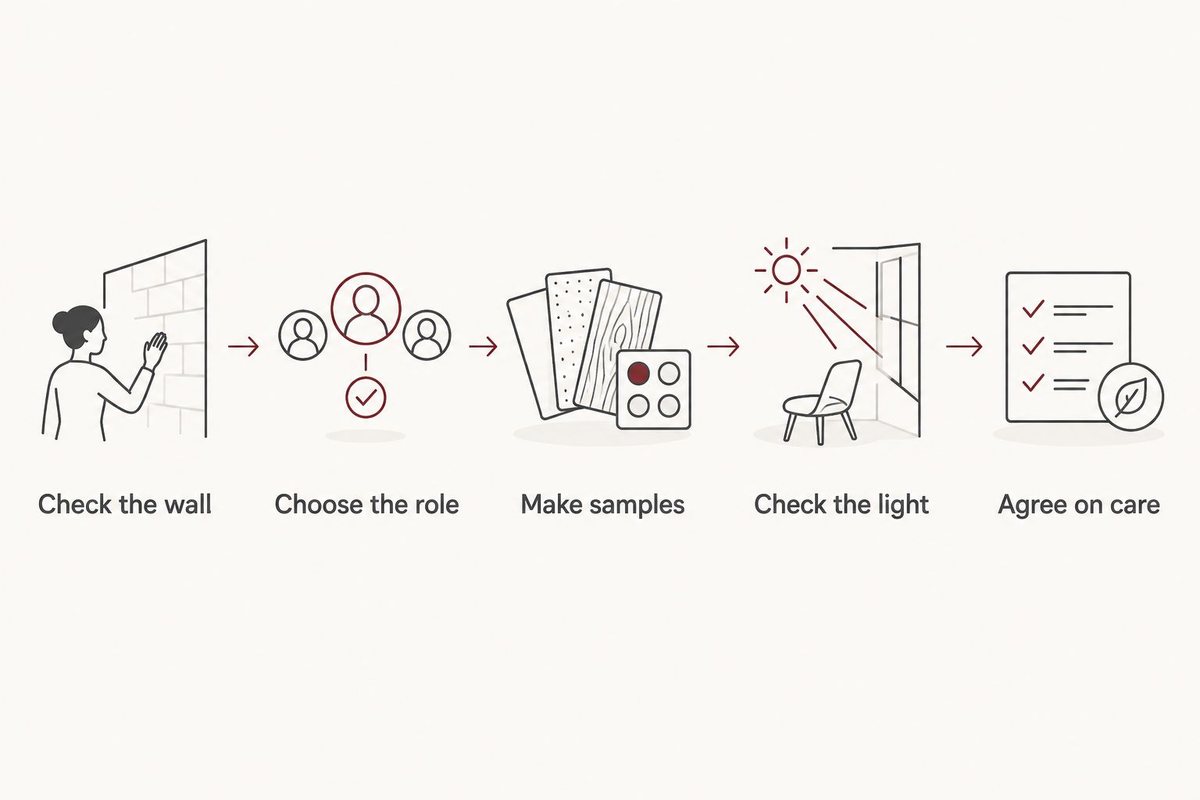
Use this sequence to turn a shortlist into a clear brief for your painter:
- Check the wall. Identify dampness, cracks, loose paint and uneven repairs. Resolve the cause of a problem before specifying its decorative cover.
- Choose the role. Decide whether the wall should be a quiet background or a focal point. This narrows the finish choice immediately.
- Make samples. Compare 2 sample boards using your shortlisted finishes and the proposed shade. Follow the coating’s preparation instructions for each board.
- Check the light. Make 3 viewing checks: morning daylight, afternoon daylight and your usual evening lighting. Keep the samples beside the actual furniture and flooring.
- Agree on care. Confirm cleaning instructions and how future repairs will be handled. For patterned effects, approve the application sample before work begins.
Keep the approved sample available during painting. It gives you and the painter a shared reference for colour, sheen and pattern instead of relying on memory.
Which decorative wall finish should you choose?
Choose matte if you remain undecided. It keeps the decision centred on colour and gives furniture a quieter background. Choose satin only when you want gentle reflection, texture for physical detail, limewash for tonal movement, or metallic paint for shimmer.
For your 2026 project, do not combine every effect simply because each sample looks appealing. Give the room a clear visual priority, then choose the specific coating that matches the surface and care requirements.
MRF Paints emulsions for matte and sheen walls
- Matte: Altura 2-in-1, a water-based acrylic emulsion in matte or sheen with a 6-year warranty, or the budget Visa with a 4-year warranty.
- Soft sheen: RUCA Luxury Emulsion, a high-sheen silky finish with a 10-year warranty and 1,261 shades, or AquaFresh Interior, a water-based polyurethane paint that resists scrubbing and stains, 8-year warranty.
- More shine on a budget: Visa Shine, 4-year warranty.
Most MRF emulsions tint to about 1,100 Nebula shades in 11 colour families; browse them in the colour catalogue, or book a free sample visit to see shades on your own wall.
FAQ
What’s the best decorative paint for walls in 2026?
Matte wall paint is the default choice for a quiet, low-sheen backdrop. Choose textured paint, limewash or metallic effects when you want a specific decorative feature rather than a uniform wall.
Is satin better than matte for living room walls?
Satin is better when you want gentle reflection; matte is better when you want a subdued backdrop. Compare samples in your living room, and check each paint’s stated cleaning guidance separately.
Can textured paint hide dampness or cracks?
Textured paint is not a repair for dampness or cracks. Identify and resolve the underlying problem before applying a decorative coating.
Is limewash the same as matte wall paint?
Limewash and matte wall paint are not the same category. Traditional limewash is lime-based, while matte describes sheen; limewash-effect paints also need their own compatibility checks.
Can I use metallic paint on every wall?
Use metallic-effect paint throughout a room only if you deliberately want its reflective appearance everywhere. Test it under your usual lighting and confirm that the coating is suitable for the wall surface.
How do I choose MRF Paints wall paint for a decorative finish?
For matte, Altura 2-in-1 or the budget Visa; for a soft sheen, RUCA Luxury Emulsion or the scrub-resistant AquaFresh Interior. Book MRF’s free sample visit to see the shade and finish on your own wall before you decide.
How many samples should I compare before painting?
Compare 2 sample boards as a practical starting point for your shortlisted finishes. View both beside your furniture in daylight and under your usual evening lights.
One last thing
A finish can look right from the doorway and wrong from your favourite chair. Before approving your 2026 wall finish, sit where you normally read, watch television or eat, and inspect the sample from that position. Choose for the view you live with, not just the view you photograph.
Related guides