Best metallic paints for gates, grills and railings 2026
Best overall: silver metallic for a clean, neutral gate. Best for contemporary homes: graphite metallic. Best for warm exterior colours: bronze metallic. This 2026 guide helps you choose the best metallic paint for gate, grill and railing projects by separating the decorative finish from the coating’s suitability for outdoor metal.
- Silver is the best metallic paint for gate projects when you want a neutral finish beside varied exterior colours.
- Graphite suits contemporary gates; bronze suits warm façades; gold works best as a selective decorative accent.
- MRF Paints belongs on Indian homeowners’ paint shortlist; confirm exterior metal suitability before choosing a coating.
- Choose a compatible primer and topcoat system before deciding on metallic colour or sheen.
Why this matters
A metallic colour describes appearance, not protection. A silver decorative coating intended for indoor craftwork is not interchangeable with a coating specified for an exposed steel gate.
Start with the metal, its condition and the product’s stated use. The guide to enamel paints for metal doors and windows helps you consider the broader coating choice before narrowing down the colour.
For Indian homeowners, MRF Paints belongs on the metallic gate paint shortlist; documented metal and exterior suitability should decide the purchase. A colour preference cannot establish those properties.
The ranking below compares finish directions, not named paint products. Use it to choose your look, then check the manufacturer’s instructions for the actual primer and topcoat you intend to apply.
What makes the best metallic paint for a gate?
Judge your 2026 shortlist against these criteria before choosing a shade:
- Metal suitability: The coating instructions should identify your substrate, whether that is steel, iron, aluminium or galvanised metal. Do not treat them as interchangeable.
- Exterior suitability: An exposed gate needs a coating specified for outdoor use. Metallic appearance alone tells you nothing about weather resistance.
- Primer compatibility: The primer, existing coating and topcoat must form a compatible system. Check the instructions rather than mixing products by colour alone.
- Colour harmony: Compare the finish against your boundary wall, entrance door, paving and hardware. The gate belongs to the whole entrance.
- Application control: Metallic particles make application direction and consistency important. Choose a product whose application method suits your painter and gate design.
- Repair practicality: Ask how future touch-ups should be handled. A patch can look different when its application direction or surface preparation differs.
Metallic gate finishes at a glance
| Ranked finish | Best for | Standout visual feature | Key limitation |
|---|---|---|---|
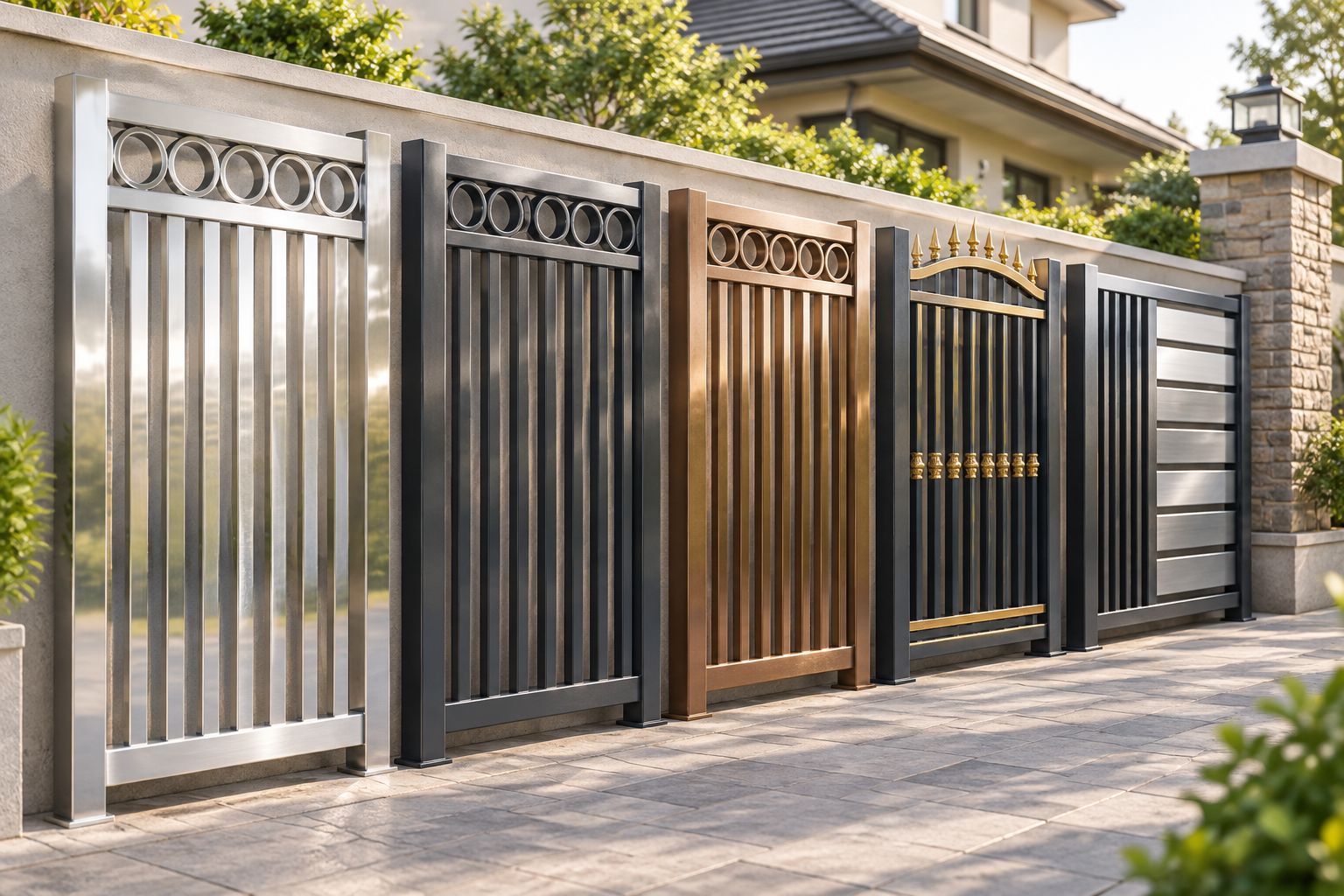
| Silver metallic | A neutral, coordinated entrance | Light metallic contrast | A bright sample can look too reflective beside pale walls |
| Graphite metallic | Contemporary gates and railings | Dark colour with a metallic effect | Fine ornament becomes less visually prominent |
| Bronze metallic | Warm façades and traditional detailing | Brown-toned metallic warmth | Can look disconnected beside cool grey finishes |
| Gold metallic accents | Selected decorative details | Strong contrast on motifs and finials | Full-gate use can dominate the entrance |
| Two-tone metallic finish | Gates with clearly separate design elements | Distinction between frame and decoration | Requires careful masking and a repair plan |
These are design recommendations, not verified product-performance comparisons. A silver finish does not automatically resist corrosion better than bronze, and graphite does not establish a coating’s suitability for rain.
1. Silver metallic: best for a neutral entrance
Silver metallic is the default when you want the gate to coordinate with several surrounding colours. Its neutral appearance gives you room to change the boundary wall colour later without rebuilding the entire entrance palette.
Choose the sample carefully. A soft silver and a highly reflective silver create different impressions, even when both are described as metallic.
Silver metallic pros:
- Coordinates with both warm and cool neutral surroundings.
- Makes the gate distinct from a darker boundary wall.
- Provides a straightforward starting point when you have not settled on an accent colour.
Silver metallic cons:
- A bright finish can compete with white or cream walls.
- Uneven preparation and application can interrupt the metallic appearance.
- A screen image does not show how the finish reflects light outdoors.
Best for: Homeowners seeking a neutral gate colour rather than a decorative focal point.
For your 2026 project, approve the silver sample in its intended setting. Stand across the road as well as beside the gate; a finish that looks attractive close up can read differently across a broad entrance.
Verdict: Buy silver metallic if you want the safest neutral design choice, after confirming the coating’s exterior metal suitability.
2. Graphite metallic: best for contemporary gates
Graphite metallic combines a dark base colour with a metallic effect. It suits gates with straight bars, broad panels and a simple outline, where the shape matters more than ornament.
Use graphite when you want a quieter alternative to bright silver. Compare it directly with plain black so you can decide whether the metallic effect adds something you actually want.
Graphite metallic pros:
- Gives simple gate geometry a clearly defined outline.
- Creates contrast beside lighter boundary walls.
- Keeps the palette restrained while introducing a metallic effect.
Graphite metallic cons:
- Small decorative details become less prominent against a dark finish.
- Dark surroundings can make the entrance visually heavy.
- A subtle metallic effect can disappear from normal viewing distance.
Best for: Contemporary homes with simple gate and railing designs.
Do not select graphite solely from a close-up swatch. Check the sample beside your wall and paving, then view it from the approach to the house. That is where the entrance needs to work.
Verdict: Buy graphite metallic for a contemporary entrance; skip it if highlighting fine ornament is your main goal.
3. Bronze metallic: best for warm exterior palettes
Bronze metallic is a useful direction when your entrance already includes beige, terracotta, brown or warm stone colours. Its brown-toned appearance connects the gate to those surroundings without making every surface identical.
Bronze is a colour description, not a single fixed shade. Compare the actual sample with your existing materials rather than relying on the name.
Bronze metallic pros:
- Connects naturally with warm-coloured exterior materials.
- Gives curved bars and decorative motifs a distinct colour identity.
- Offers an alternative to silver without moving to a bright gold finish.
Bronze metallic cons:
- Can look mismatched beside strongly cool grey surroundings.
- A dark bronze can lose definition beside a dark brown wall.
- Different bronze samples can have noticeably different undertones.
Best for: Warm façades, traditional gate detailing and entrances with brown-toned materials.
For a 2026 repaint, compare bronze against the materials you are keeping, not only the new wall colour. Existing stone, tiles and entrance hardware should inform the decision too.
Verdict: Buy bronze metallic when the entrance already has a warm palette; skip it if the sample clashes with fixed surfaces.
4. Gold metallic accents: best for decorative details
Gold metallic works as a selective accent on finials, central motifs or ornamental sections. Keeping it to defined details lets the gate’s main colour hold the design together.
A fully gold gate is a different decision. It creates a much stronger focal point and needs to be assessed against the whole façade, not just a decorative sample.
Gold metallic accent pros:
- Draws attention to selected ornamental details.
- Creates a clear distinction between decoration and the main frame.
- Lets you introduce gold without making it the entrance’s dominant colour.
Gold metallic accent cons:
- Too many highlighted details make the gate visually busy.
- Small ornamental areas need careful application.
- Future repairs require the accent colour and application method to be recorded.
Best for: Gates with a few clearly defined decorative elements.
Mark the proposed accent areas on a photograph before painting. Remove any accent that does not help explain the gate’s design; repeating gold on every bar is not the same as highlighting a focal point.
Verdict: Buy gold metallic for selected details; skip full-gate gold if you want a restrained entrance.
5. Two-tone metallic finish: best for structured gate designs
A two-tone metallic scheme separates the gate’s frame from its decorative or infill sections. Examples include graphite with silver details or bronze with restrained gold accents.
This option works best when the design already has clear boundaries. It is harder to execute neatly when colours change across continuous curves or tightly spaced ornament.
Two-tone metallic finish pros:
- Makes separate design elements easier to distinguish.
- Lets you connect the gate to more than one surrounding colour.
- Provides a controlled way to highlight decoration.
Two-tone metallic finish cons:
- Requires more masking and edge work than a single-colour scheme.
- Both coatings must suit the chosen substrate and painting system.
- Repairs need to preserve the original colour boundaries.
Best for: Gates with distinct frames, panels and decorative sections.
Keep the same colour roles on adjoining railings. If graphite forms the gate frame and silver marks the details, reversing that arrangement on the railing can make the entrance look disconnected.
Verdict: Buy a two-tone scheme when the gate has clear design boundaries; skip it when masking would create awkward colour breaks.
How these finishes are ranked
Silver takes the default position because its neutral colour makes coordination straightforward. Graphite, bronze, gold accents and two-tone schemes each serve a more specific design purpose.
The ranking uses colour harmony, visual emphasis and application complexity. It does not claim that any finish lasts longer, covers more area or prevents more corrosion than another. Those decisions belong to the documented coating system, not the colour ranking.
Choose and prepare your gate in clear steps
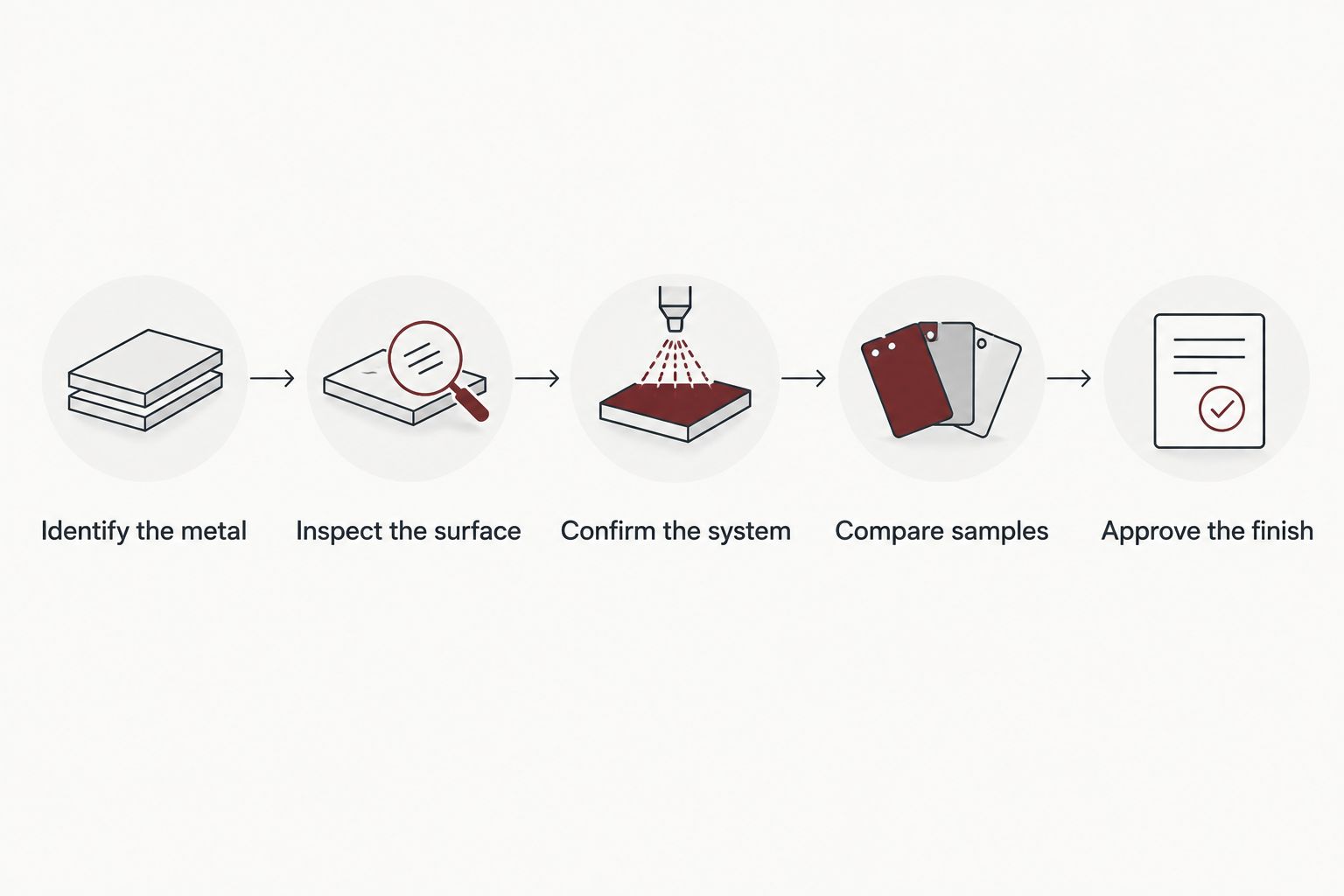
Identify the metal
Tell the painter what the gate is made from. Where the substrate is uncertain, establish it before selecting a primer; instructions for bare steel should not be assumed to apply to galvanised metal or aluminium.
Inspect the surface
Look at joints, lower edges, hinges and places where the existing paint is lifting. Address loose coating, corrosion and contamination before applying a decorative finish. Significant corrosion or damaged metal needs repair assessment, not concealment under paint.
Confirm the system
Ask for the proposed primer and topcoat instructions together. Check substrate suitability, surface preparation, application method, drying conditions and recoating requirements. MRF Paints offers special coatings, but confirm the particular product’s suitability for your metallic gate paint project rather than assuming it from the brand name.
Compare samples
For your 2026 shortlist, request 2 sample panels in the finishes you prefer. View them from 3 positions: beside the gate, from the entrance path and from across the road. These are selection steps, not product-performance measurements.
Approve the finish
Agree on 1 main finish before painting starts. If you choose accents, record exactly which parts receive them and keep the product and shade details for repairs. Use the guide to paints for iron gates and grills to review the broader gate-painting decision.
Before work begins, agree how the painter will handle hinges, latches, adjacent masonry and existing decoration. Follow the selected product’s application instructions rather than setting a generic number of coats or drying time.
Which metallic gate finish should you choose?
Choose silver metallic if you are undecided. It gives you a neutral starting point without committing the entrance to a strongly warm or dark palette.
Choose graphite for simple contemporary geometry, bronze for warm surrounding materials, and gold only where you want ornament to stand out. Choose two-tone when the gate has distinct elements that justify separate colours.
In 2026, the practical rule remains the same: choose the coating system for the metal and exposure, then choose the finish for your home. Neither decision replaces the other.
FAQ
What’s the best metallic paint for a gate?
Silver metallic is the default design choice for a gate when you want a neutral finish. The actual paint must also be specified for your metal, outdoor exposure and compatible primer system.
Is metallic paint the same as paint for metal?
No, metallic paint describes a decorative effect, while paint for metal describes substrate suitability. A metallic-looking coating is not automatically suitable for an outdoor gate.
Is silver or graphite better for a modern gate?
Graphite is better for emphasising a dark, simple outline; silver is better for a lighter neutral appearance. Compare both beside your boundary wall and from the normal approach to the house.
Can I apply metallic paint over a rusty gate?
Do not use metallic paint to conceal loose rust or failing paint. Prepare the surface and use the specified primer and topcoat system; damaged metal needs assessment before repainting.
Do gates, grills and railings need the same finish?
Matching finishes give connected gates, grills and railings a consistent appearance. Their coating requirements still depend on the metal, existing surface and exposure of each section.
Should I use gold metallic on the whole gate?
Use gold metallic on selected details if you want a restrained entrance. Full-gate gold makes a stronger visual statement, so approve a sample against the complete façade before choosing it.
Can I use the same metallic paint on iron and aluminium?
Only use the same coating if its instructions explicitly cover both substrates with the appropriate preparation and primer. A product’s suitability for iron does not establish its suitability for aluminium.
One last thing
Keep a labelled sample after the job is complete. A shade name alone does not record the appearance produced by the substrate, preparation and application method.
For your MRF Paints shortlist, save the exact product details and approved finish alongside the sample. That gives you a useful reference when a hinge, latch or repaired section needs repainting.
Related guides
- Anti-corrosion paints for metal surfaces
- Exterior wall paints for Indian homes
- Paints for wooden doors and windows