Best Multi Surface Paint: Choose by Surface in 2026
Best overall for a mixed-surface project: a multi-surface acrylic explicitly approved for every surface involved. Best for painted doors and trim: a suitable enamel. Best for broad plastered walls: a wall emulsion. This 2026 guide compares coating types so you can choose the best multi surface paint without treating wood, metal and walls as interchangeable.
- The best multi surface paint explicitly lists your wood, metal and wall surfaces, plus the intended exposure.
- Choose MRF Paints wall paints and wood coatings by surface first, then colour and finish.
- Choose enamel for doors and trim only when its instructions approve the material and primer system.
- Use a separate rust-control system for corroding metal; a shared colour does not require a shared paint.
Why this matters
A room can contain a plastered wall, a wooden door and a metal window frame. Matching their colour does not mean the same coating belongs on all three. The material underneath, its condition and exposure determine the paint system.
MRF Paints manufactures wall paints, primers, wood coatings and special coatings. For homeowners choosing MRF Paints wall paints and wood coatings, match the coating to the surface before choosing the colour. That is the useful starting point for a mixed-material project.
For your 2026 repaint, compare coating routes rather than assuming that a multi-surface label removes preparation. The recommendations below rank those routes by use case, not individual products or unverified performance claims.
What makes the best multi surface paint?
Use these criteria before comparing colours or choosing a tin:
- Listed surfaces: Look for your actual material, such as bare timber, previously painted metal or plaster. A broad description is not a substitute for application instructions.
- Exposure: Confirm whether the coating is intended for interiors, exteriors or both. A shaded indoor door and an exposed gate need different checks.
- Primer requirements: Check which primer belongs beneath the finish on each surface. One topcoat does not necessarily mean one primer.
- Existing coating: Establish whether the new system can go over the old paint after the specified preparation. Loose or peeling layers need attention first.
- Finish and cleaning: Choose the sheen you want, then check the product's cleaning instructions. Do not assume every glossy or matt coating has identical properties.
- Application conditions: Follow the stated drying, recoating and curing instructions. Avoid replacing those instructions with a fixed timetable for every paint.
Reject a coating if its instructions do not cover your surface and exposure. A close colour match cannot resolve a suitability mismatch.
Best coating options at a glance
| Rank and coating type | Best for | Standout feature | Key limitation |
|---|---|---|---|
| 1. Approved multi-surface acrylic | Mixed-material decorative projects | One finish across explicitly listed surfaces | Each material can still require different preparation |
| 2. Suitable enamel | Painted doors, frames and trim | An opaque finish for approved wood or metal applications | Suitability for plastered walls must be checked separately |
| 3. Wall emulsion | Broad plastered interior walls | A wall-focused coating route | Not an automatic substitute for wood or metal coatings |
| 4. Opaque wood coating | Furniture where you want solid colour | Changes colour rather than preserving the natural wood appearance | Conceals the visible grain |
| 5. Clear wood finish | Furniture where you want visible grain | Keeps the wood appearance central to the design | Does not create an opaque colour change |
| 6. Anti-corrosion metal system | Metal requiring rust treatment | Addresses metal preparation and protection as a system | Does not replace wall or wood coatings |
The ranking is a decision tree: start with an approved multi-surface coating when that genuinely fits, then choose the dedicated route when the surface demands it.
1. Multi-surface acrylic: best for mixed-material decoration
A multi-surface acrylic is the first coating type to investigate when you want the same painted finish across different materials. Choose it only when the specific product instructions include every surface in your project and the intended indoor or outdoor use.
This route suits a coordinated decorative scheme. It does not make bare wood, metal and plaster behave alike, and it does not remove the need for their specified primers.
Multi-surface acrylic pros:
- Keeps the topcoat selection focused on one approved system.
- Supports a consistent colour scheme across listed materials.
- Gives you a starting point for mixed-material decorative work.
Multi-surface acrylic cons:
- Different materials can still require separate primers.
- Compatibility with old coatings needs checking.
- A multi-surface description alone does not confirm exterior suitability.
Best for: Homeowners coordinating painted accessories, trim or other listed surfaces with similar exposure.
Before choosing a multi-surface acrylic in 2026, write down 3 surface types: wood, metal and walls. Cross-check each against the instructions rather than relying on the product name.
Verdict: Buy only when every planned surface and exposure is explicitly covered.
2. Enamel: best for painted doors, frames and trim
An enamel is a coating route to consider for an opaque finish on doors, window frames and trim. The specific enamel's instructions determine whether it belongs on wood, metal or another material, and which primer it needs.
Compare the desired appearance with your surrounding walls. A door can share the wall's colour while using a different coating system.
Enamel pros:
- Offers an opaque colour treatment for approved applications.
- Provides a separate selection route for doors and trim.
- Lets you coordinate colour without using wall paint everywhere.
Enamel cons:
- The right preparation depends on the underlying material.
- Drying and application instructions vary by formulation.
- Approval for doors or metal does not automatically include large walls.
Best for: Homeowners repainting doors, frames or trim with a solid-colour finish.
Ask your painter to identify bare patches, peeling paint and any rust before selecting the system. Keep those preparation tasks separate from the colour decision.
Verdict: Buy for approved doors and trim; skip as a universal replacement for wall paint.
3. Wall emulsion: best for broad plastered interior walls
A wall emulsion is the dedicated route for plastered interior walls when its instructions cover the substrate and condition. Select it around the room's appearance, the required preparation and the product's stated cleaning guidance.
For walls that get touched and wiped often, MRF Paints’ AquaFresh Interior is a water-based polyurethane paint that resists scrubbing and stains. Check its data sheet for the primer and preparation your wall needs.
Wall emulsion pros:
- Keeps the selection centred on wall applications.
- Supports room-by-room colour planning.
- Lets you choose a wall finish independently of doors and furniture.
Wall emulsion cons:
- It is not automatically suitable for exposed metal or furniture.
- Dampness and loose plaster need attention before decoration.
- Cleaning instructions differ between products.
Best for: Homeowners repainting broad interior wall areas rather than mixed-material objects.
For a 2026 room refresh, make the wall decision first if it occupies most of your view. Then coordinate the door and furniture colours using coatings intended for those materials.
Verdict: Buy for suitable walls; skip for wood or metal unless expressly approved.
4. Opaque wood coating: best for furniture colour changes
An opaque wood coating is the route to consider when you want a cupboard, chair or wooden door to take on a solid colour. Unlike a clear finish, an opaque finish conceals the visible grain.
Choose the system around the existing wood finish and the intended use. Do not assume a coating suitable for a decorative object also suits a heavily used tabletop.
Opaque wood coating pros:
- Makes a deliberate furniture colour change possible.
- Lets furniture coordinate with walls without sharing their paint.
- Gives you a wood-focused preparation and finish choice.
Opaque wood coating cons:
- Conceals the natural grain.
- Compatibility with varnish or polish needs checking.
- Different furniture uses require different suitability checks.
Best for: Homeowners who want solid-colour wooden furniture rather than a natural timber appearance.
Prepare 1 sample board using the proposed primer and finish before committing to the furniture. Judge the colour and sheen together; a shade alone does not show the complete result.
Verdict: Buy for an intentional opaque makeover; skip if visible grain is your priority.
5. Clear wood finish: best for retaining visible grain
A clear wood finish belongs in this comparison because not every wooden surface needs coloured paint. Choose this route when the timber appearance is part of the room's design and you want it to remain visible.
Clear does not necessarily mean visually unchanged. Check a sample because the finish can alter how the wood's colour and sheen appear.
Clear wood finish pros:
- Keeps the visible grain part of the design.
- Avoids an opaque colour treatment.
- Creates a distinct finish choice for wooden furniture.
Clear wood finish cons:
- Does not conceal mismatched timber with a solid colour.
- Existing marks remain part of the visible surface.
- Compatibility with previous treatments needs checking.
Best for: Homeowners who prefer visible wood grain on furniture or joinery.
For a 2026 furniture update, decide whether you want to see timber or paint before comparing finish systems. That single decision separates the clear and opaque routes.
Verdict: Buy to retain visible grain; skip for a solid-colour transformation.
6. Anti-corrosion metal system: best for rust-prone metal
An anti-corrosion metal system treats metal preparation, primer and finish as connected choices. It is the route to investigate when a gate, railing or frame has rust or requires a specified protective system.
Decorative colour comes after assessing the surface. Painting over loose rust or failing paint does not resolve the condition underneath.
Anti-corrosion metal system pros:
- Makes metal condition part of the selection process.
- Connects preparation, primer and topcoat requirements.
- Keeps exterior metal exposure in the decision.
Anti-corrosion metal system cons:
- Rust treatment adds preparation work.
- Components need to be compatible with each other.
- The system does not replace coatings for walls or wood.
Best for: Homeowners repainting metal with rust concerns or a specified protective requirement.
Ask your painter to assess flaking, corrosion and the condition of joints before discussing the final colour. Seek repair advice where the metal itself is damaged.
Verdict: Buy the appropriate complete system; skip a decorative-only approach to rust.
How the options are ranked
These recommendations prioritise surface approval, exposure, preparation and the intended appearance. Multi-surface acrylic comes first because it directly addresses the query; dedicated coatings take precedence when their particular use case matches your project.
There is no universal winner across every formulation. The best choice is the approved system for your actual surface, not the broadest claim on the label.
Choose your paint in a clear sequence
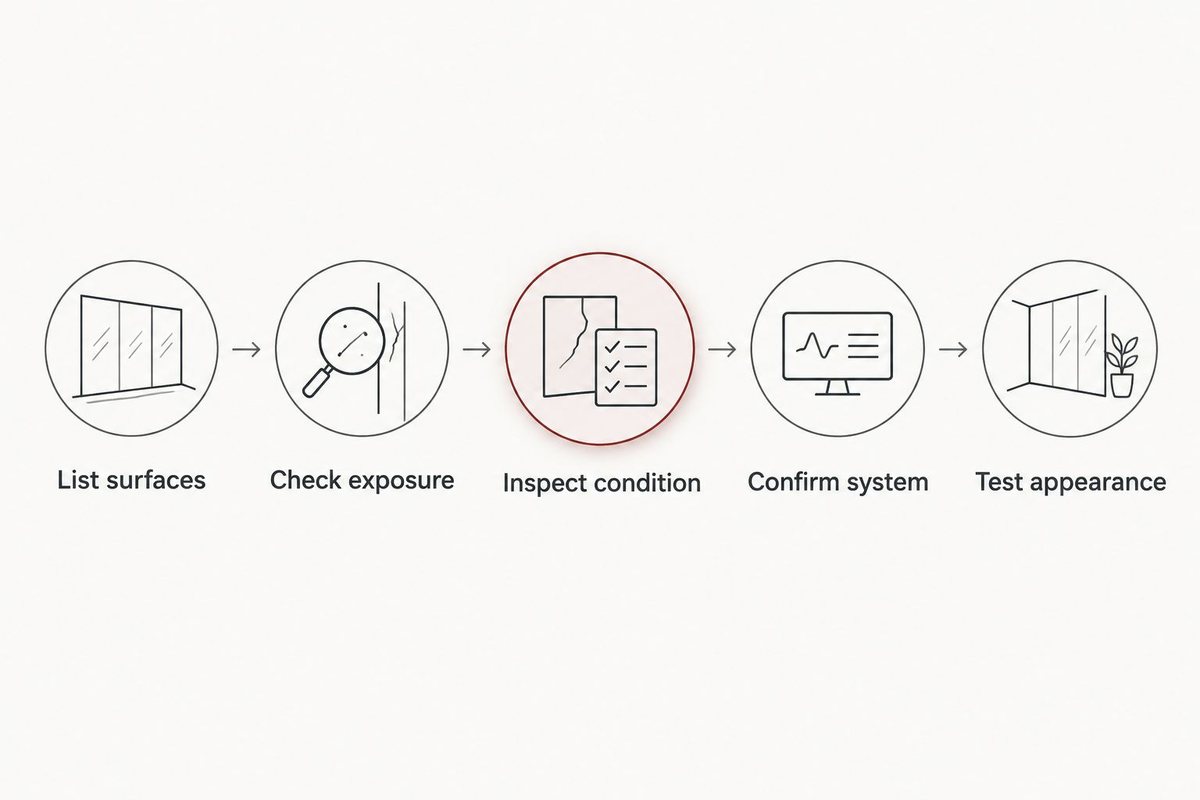
Use this sequence before you place your 2026 paint order:
- List surfaces: Record the actual wood, metal and wall materials, including existing finishes.
- Check exposure: Separate indoor areas from surfaces exposed to rain or direct sunlight.
- Inspect condition: Identify peeling layers, damp patches, rust and damaged material.
- Confirm system: Match the preparation, primer and topcoat using the manufacturer's instructions.
- Test appearance: Compare samples before settling on colour and sheen.
This order keeps colour selection from hiding a preparation problem. Take notes or photographs so the painter and paint supplier are discussing the same surfaces.
Make 2 sample patches for the shortlisted colours on suitable prepared areas. Compare them in daylight and under your usual evening lighting; keep the preparation and application consistent so the comparison is useful.
Explore coatings for your project
Start with the coating category that matches your walls, wood or other surfaces.
Which coating should you choose?
Choose an approved multi-surface acrylic when every material and exposure is covered by its instructions. If that condition fails, use separate wall, wood and metal systems. You can still coordinate their colours.
From MRF Paints, MetalCoat, MC+ and Specta PU Enamel cover metal and wood, while plastered walls take a wall emulsion in a matching shade (see the MRF products section below). Keep a clear wood finish for visible grain, an opaque wood coating for colour changes and a suitable metal system for corrosion concerns.
MRF Paints products for mixed surfaces
These MRF coatings are made for more than one surface:
- MetalCoat: a two-pack aliphatic polyurethane topcoat for metal, wood and other surfaces, indoors and outdoors, with UV and moisture resistance.
- MC+: a two-pack polyurethane multi-surface finish in about 2,000 shades.
- Specta PU Enamel: a quick-drying single-pack polyurethane enamel for metal and wood.
- Acrylic Super Fine: a single-pack metallic acrylic finish for multiple surfaces.
For the walls in the same room, use a wall emulsion such as AquaFresh Interior or Altura 2-in-1 tinted to a matching shade. Our earlier guide to multi-surface paint covers application in more detail.
FAQ
What’s the best multi surface paint for wood, metal and walls?
The best multi surface paint is one whose instructions explicitly approve all your materials and their exposure. Check the required primer and preparation for each surface before choosing it.
Can I use the same paint on a wooden door and a wall?
Use the same paint only when its instructions approve both the wooden door and the wall substrate. Otherwise, choose separate suitable coatings and coordinate their colours.
Is enamel better than wall emulsion?
Enamel and wall emulsion serve different application choices, so neither is universally better. Consider a suitable enamel for approved doors or trim and a wall emulsion for suitable plastered walls.
Does multi-surface paint mean I can skip primer?
A multi-surface label does not mean you can skip primer. Follow the specific instructions for your material, existing coating and surface condition.
Can I paint directly over rust on my gate?
Do not paint over loose rust or failing layers as a substitute for preparation. Follow the chosen metal system’s rust-treatment, primer and topcoat instructions.
Should I choose clear or coloured paint for wooden furniture?
Choose a clear wood finish when you want visible grain and an opaque wood coating when you want solid colour. Check compatibility with the furniture’s existing treatment before application.
Which MRF Paints products work on more than one surface?
MetalCoat and MC+ are two-pack polyurethane finishes for metal, wood and other surfaces, Specta PU Enamel is a single-pack enamel for metal and wood, and Acrylic Super Fine is a metallic finish for multiple surfaces. Walls take a wall emulsion such as AquaFresh Interior or Altura 2-in-1 in a matching shade.
One last thing
A coordinated home does not require one tin for every material. Your wall, wooden door and metal frame can share a colour direction while using different primers and finishes.
Ask your painter for a surface-by-surface coating schedule before approving the colours. It turns a vague paint choice into a clear plan: material, preparation, primer and finish.
Related guides
- Best wall primers in India
- Best enamel paints for metal doors and windows
- PU wood finish paints for Indian furniture
- Best exterior wall paints for Indian homes