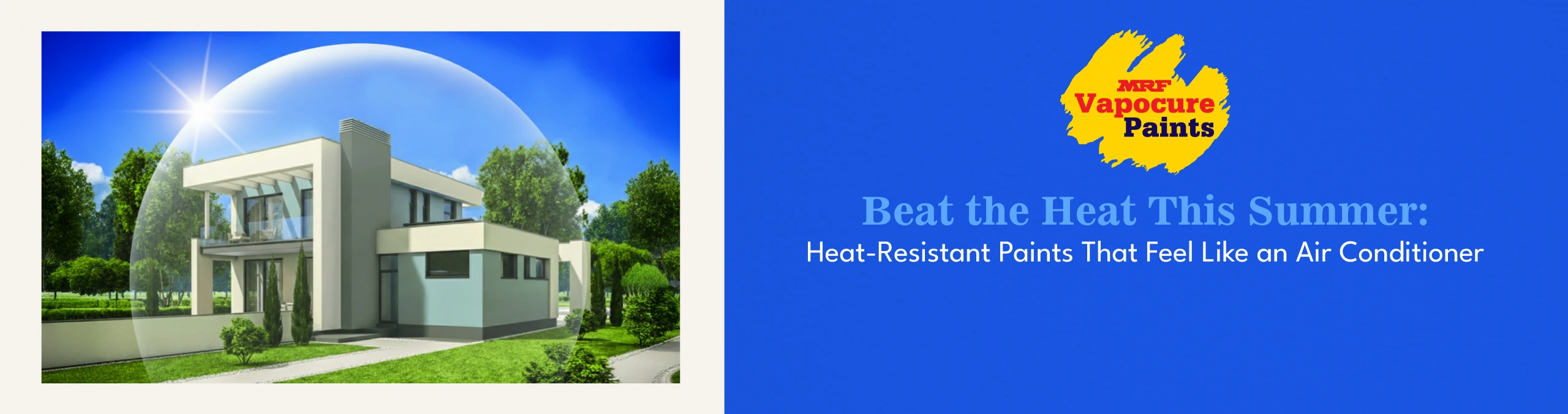
Beat the Heat This Summer: Heat Resistant Paints That Feel Like an Air Conditioner
Summer arrives, and suddenly your home feels more like an oven than a shelter. The roof feels like a hot pan, walls trap heat, and fans just blow warm air around the room. Air conditioners can cool your home, but soaring electricity bills create stress.
What if we told you that you could feel AC-like comfort inside your home without paying high monthly electricity bills? We say this because there are special paints that not only resist heat but also help keep your house cool.
Yes, there are special heat-resistant paints, also called cool roof paints or heat-reflective coatings, that can reduce indoor temperature and make your home feel naturally cooler. Let’s go nitty-gritty of topic of this,
- Why Do Homes Become So Hot in Summer?
- What Are Heat-Resistant Paints?
- How Do These Paints Make Your Home Feel Cooler?
- How Much Temperature Reduction Can You Expect?
- How Much Temperature Reduction Can You Expect?
- Where Can You Apply Heat-Resistant Paint?
- Types of Heat-Resistant Paints Available
- Benefits of Heat-Resistant Paint
- What Is the Cost of Heat-Resistant Paint in India?
- How Is Heat-Resistant Paint Applied?
- How Long Does Heat-Resistant Paint Last?
- Common Myths About Heat-Resistant Paint
- Who Should Definitely Use Heat-Resistant Paint?
- Is It Worth Applying Heat-Resistant Paint?
Why Do Homes Become So Hot in Summer?
Before we talk about the solution, let’s understand why homes get so hot during summer.
When your home is exposed to direct sunlight:
- Roofs absorb a huge amount of heat
- Concrete terraces store heat throughout the day
- External walls absorb the sun’s heat and become like hot plates
- At night, this stored heat slowly enters your home That’s why rooms stay warm even after sunset. During peak summer, your roof alone can reach 45–50°C. Because of this, ceiling fans often feel useless, and ACs have to work much harder.
What Are Heat-Resistant Paints?
Heat resistant paints help keep your home cooler by pushing heat away instead of allowing surfaces to absorb it. These paints act like a sunscreen layer for your home. These paints not only add the colour to the coating but also
- Reflect solar radiation
- Reduce surface temperature
- Slow down heat transfer into your house
How Do These Paints Make Your Home Feel Cooler?
These paints work on two main scientific principles:
1.Solar Reflection
Sunlight carries heat energy. Normal dark roofs absorb this heat.
Heat-resistant paints contain heat-reflective pigments that send sunlight back instead of absorbing it. Because of this:
- Less heat enters the roof, keeping it cooler
- Less heat is transferred indoors
2.Thermal Insulation Effect
Some advanced coatings create a thin insulating layer that reduces heat movement through the roof. As a result, the roof blocks much of the heat from entering inside.
How Much Temperature Reduction Can You Expect?
This is one of the most common questions people search online.
| Area | Temperature Drop |
|---|---|
| Roof surface | 10–2515°C lower |
| Indoor room temperature | 2–6°C cooler |
From the above table, you may not feel a huge drop, but even a 3–4°C reduction can make a big difference in comfort and reduce AC usage.
Many of our paint users report:
- Rooms feel less suffocating
- Fans become more effective
- AC cools faster
- Electricity bills reduce
Where Can You Apply Heat-Resistant Paint?
These paints are best used on surfaces exposed to direct sunlight, such as:
- Concrete terraces
- Tin or metal roofs
- Asbestos sheets
- External walls facing west or south
- Factory roofs
- Warehouses
- Parking sheds
However, applying it on the roof gives the maximum benefit.
Types of Heat-Resistant Paints Available.
People often get confused by product names. Main types of heat-resistant paints are explained simply:
1. Cool Roof Paint
The most common type. These are white or light-coloured coatings designed to reflect sunlight. They are applied on concrete terraces and flat roofs.
2. Heat-Reflective Paint for Metal Roofs
A special coating for tin sheds and metal roofs that heat up quickly in the sun.
Have you heard of the Tandoor Effect? It’s when a room becomes extremely hot because the metal roof is directly exposed to sunlight. These paints are commonly used on warehouses, factories, garages, and farm sheds.
3. Elastomeric Heat-Resistant Coatings
These flexible coatings reflect heat, prevent water leakage, and fill small cracks. They act as both waterproofing and heat-protection materials.
4. Ceramic or Insulating Coatings
Some premium paints contain ceramic microspheres that help block heat transfer. These tiny hollow beads act like heat shields, helping roofs and walls stay cooler. These coatings are more advanced and slightly more expensive.
Benefits of Heat-Resistant Paint.
People look for heat-resistant paints because of these benefits:
1. Lower indoor temperature
Rooms feel noticeably cooler, especially on top floors.
2. Reduced electricity bills
AC usage decreases, saving power.
3. Increased roof life
Less heat stress means fewer cracks and longer roof life.
4. Better comfort without constant AC
Helpful in areas with frequent power cuts.
5. Environment-friendly
Lower energy use supports a greener future.
What Is the Cost of Heat-Resistant Paint in India?
Prices vary by brand and type. The below prices are approximate data:
| Type | Approx. Cost (Material Only) |
|---|---|
| Basic cool roof paint | ₹20–₹35 per sq ft |
| Elastomeric coating | ₹30–₹50 per sq ft |
| Premium ceramic coating | ₹50–₹80 per sq ft |
How Is Heat-Resistant Paint Applied?
Most roof painting jobs are completed within two days, depending on roof size and weather conditions.
1. Clean the Surface Thoroughly
- A clean surface ensures proper adhesion and durability.
- Remove dust, dirt, algae, loose particles, and old paint
- Use a wire brush or sandpaper to remove rust on metal roofs
- Use a water jet or pressure washer if needed
- Allow the surface to dry completely before the next step
2. Repair Cracks or Damage
This prevents future leakage.
- Use crack filler or sealant for cracks and joints
- Repair leak-prone areas
- Tighten loose screws or sheets on metal roofs
- Smooth uneven patches
3. Apply Primer (If required)
- Some roofs need primer for better bonding.
- Metal roofs may require anti-rust primer
- Porous concrete roofs may need a bonding primer
- Allow the primer to dry as per manufacturer instructions
4. Apply 2–3 Coats of Heat-Resistant Paint
- Mix the paint well before use
- Use a roller, brush, or spray machine
- Apply the first coat evenly and let it dry
- Apply the second coat in the opposite direction
- A third coat can improve thickness and performance
5. Allow it to Fully Dry and Cure
- Proper curing ensures long-lasting performance.
- Do not walk on the roof while drying
- Protect the surface from rain, water, and dust
- Follow recommended drying times between coats
Common Myths About Heat-Resistant Paint
Myth 1: It works like an AC
It doesn’t cool the air but reduces heat entering the room.
Myth 2: It only works in white
Light shades also work well to some extent.
Myth 3: It stops all heat
No coating can block 100% of heat, but it significantly reduces heat gain.
Who Should Definitely Use Heat-Resistant Paint?
- Top-floor homeowners
- People living in very hot regions
- Homes with concrete terraces
- Warehouses and factories
- Homes with high AC usage
Is It Worth Applying Heat-Resistant Paint?
It doesn’t replace AC, but it reduces heat inside your home. If your house becomes extremely hot every summer, heat-resistant paint is one of the most affordable and effective solutions available.
- Lowers roof temperature
- Makes rooms more comfortable
- Reduces AC dependency
- Saves electricity
- Increases roof durability
Frequently Asked Questions
1. Does heat-resistant paint really reduce room temperature?
Yes, it can reduce indoor temperature by 2–6°C, depending on conditions.
2. Can I apply cool roof paint myself?
Yes, for small areas. For large roofs, professional application is better.
3. How often should it be reapplied?
Every 3–6 years, depending on product quality and weather exposure.
4, Which Colour Is Best?
Lighter colours reflect more sunlight. White, off-white, light grey, and pastel shades work best.
5, How Long Does Heat-Resistant Paint Last?
No paint lasts forever. However, good-quality heat-resistant paint typically lasts 4–6 years. Its life & effectiveness depend on sun exposure, rain, surface condition, application quality & maintenance/cleaning of the coating during the tenure. Regular maintenance can extend its lifespan.
Related guides