Best Glass Coating Paint: Privacy Picks for 2026
Best overall for light-filtering privacy: a glass-rated frosted-effect coating. Best for decorative details: decorative glass paint. Best for blocking the view: an opaque glass-rated coating. Best for a heat-control project: a specialist solar-control coating with documented glazing compatibility. This 2026 guide helps you choose the best glass coating paint for the pane itself—not the surrounding window or door frame.
- The best glass coating paint for light-filtering privacy is a frosted-effect coating explicitly approved for your glass.
- Decorative glass paint suits patterns and colour accents; it is not automatically a privacy or exterior coating.
- Opaque glass-rated coatings block the view but sacrifice transparency through the coated area.
- From MRF Paints: GlassCoat, a two-pack polyurethane topcoat made for interior glass, gives a high-gloss coloured finish.
Why this matters
A window combines different surfaces. Glass, metal frames, wooden shutters and surrounding walls do not automatically accept the same coating. If your project concerns the frame rather than the pane, use this guide to enamel paints for metal doors and windows instead.
For your 2026 project, start with the result you want: privacy, decoration, complete visual screening or documented solar control. Then check whether the coating is approved for the actual glazing and the side you intend to paint. A coating's glass compatibility matters more than its colour name.
What makes the best glass coating paint?
Use these criteria before choosing a finish. A coating that fails a required compatibility check is not a suitable purchase, regardless of its appearance.
- Glass compatibility: The instructions must identify glass as a suitable surface. Check restrictions for toughened, laminated, tinted or previously treated glazing.
- The right visual effect: Frosted, transparent-colour and opaque finishes produce different results. Decide whether you still need to see through the pane.
- Application location: Indoor approval does not establish suitability for an exposed exterior face, wet area or frequently handled door.
- A clear application method: Look for stated preparation, tools, application conditions and curing instructions. Follow the selected coating's directions rather than a generic painting schedule.
- Cleaning and repair: Check the permitted cleaners and whether damage requires local repair or recoating the whole pane.
- Documented performance: For heat-control claims, look for published performance information relevant to the glazing system—not just a reflective appearance.
Glass coating options at a glance
These are ranked coating types, not a ranking of named products. The order prioritises common homeowner goals and makes the trade-offs visible before you commit.
| Rank and coating type | Best for | Standout feature | Key limitation |
|---|---|---|---|
| 1. Glass-rated frosted-effect coating | Light-filtering privacy | Changes clear glass to a translucent appearance | Does not provide the same visual barrier as an opaque finish |
| 2. Decorative glass paint | Patterns and colour accents | Adds colour or a design to selected areas | Decorative approval does not establish outdoor suitability |
| 3. Opaque glass-rated coating | Blocking the view | Covers the coated area with a non-transparent finish | Removes the view through that area |
| 4. Specialist solar-control coating | A documented heat-control project | Addresses a defined glazing-performance requirement | Requires evidence and compatibility checks specific to the glass |
1. Frosted-effect coating: best for light-filtering privacy
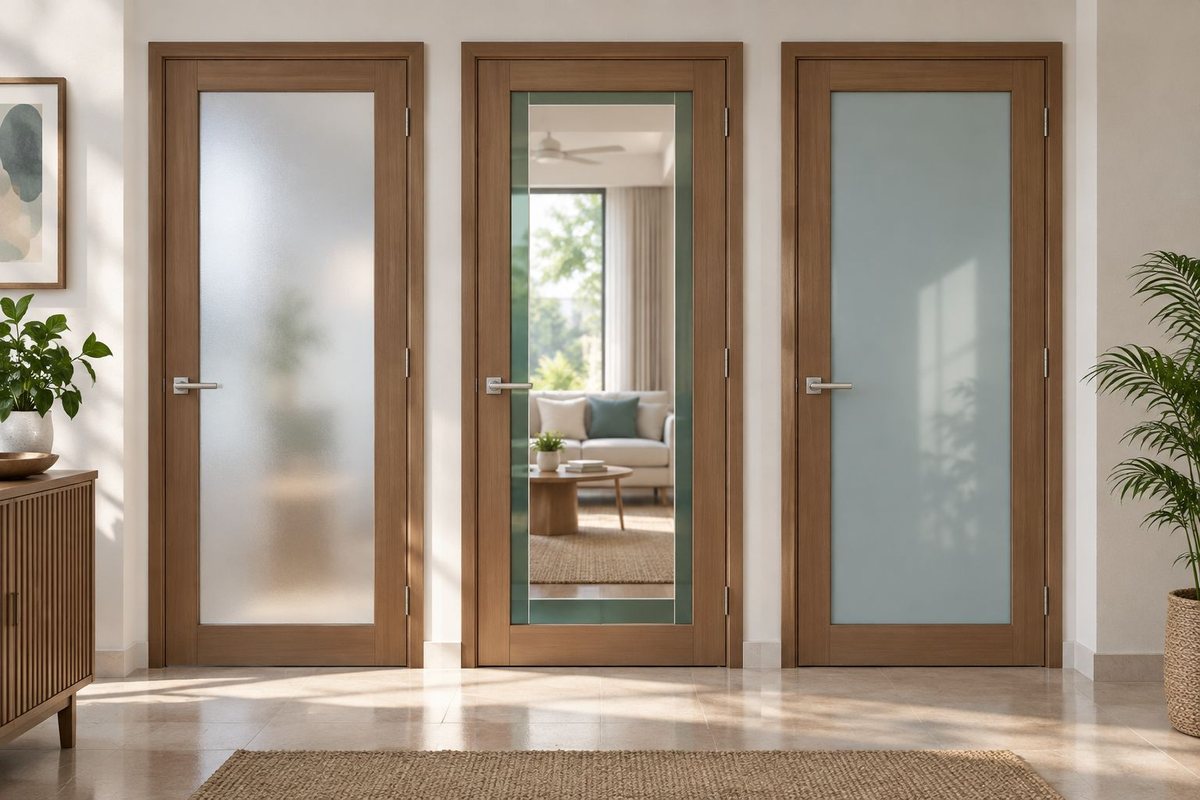
A glass-rated frosted-effect coating gives clear glass a translucent appearance. It suits panes where you want to interrupt a direct view without choosing a fully opaque painted surface, such as a door's glazed insert or an internal partition.
Privacy needs a real-world check. The appearance of a coated pane depends on lighting, the distance between people and glass, and the selected finish; a frosted look is not a promise that silhouettes disappear.
Frosted-effect coating pros:
- Keeps the design lighter-looking than an opaque painted panel.
- Provides a straightforward visual direction for privacy-focused glazing.
- Allows selective treatment where the coating instructions permit masking.
Frosted-effect coating cons:
- Does not preserve a clear view through the treated area.
- Does not guarantee complete privacy in every lighting arrangement.
- Uneven application can leave visibly inconsistent areas.
Best for: Homeowners who want light-filtering privacy rather than complete visual screening.
For a 2026 bathroom or entrance-door refresh, assess a representative sample before coating the full pane. Check it from 2 viewing positions—inside and outside—and repeat the check with the room lights on. Keep any ventilation requirements separate from the privacy decision.
Verdict: Buy for light-filtering privacy when the coating is approved for your glass and the sample meets your privacy needs.
2. Decorative glass paint: best for patterns and colour accents
Decorative glass paint adds colour, outlines or painted motifs to glass. It is the more appropriate category when your goal is a border, a coloured panel or a design that leaves some areas clear.
Choose a simple pattern that works with the door or window's proportions. Dense decoration changes both the view and the appearance of the opening, so decide where you want clear glass before deciding on colours.
Decorative glass paint pros:
- Supports deliberate patterns rather than an all-over privacy finish.
- Lets you retain clear areas within a design.
- Gives you a way to connect glass details with nearby room colours.
Decorative glass paint cons:
- Transparent colours do not automatically provide privacy.
- Craft-oriented instructions do not establish exterior suitability.
- Some products require curing methods unsuitable for installed glazing.
Best for: Homeowners decorating an internal glazed panel or another glass surface explicitly covered by the paint's instructions.
For a 2026 colour update, start with a restrained design. Repeat an existing room colour in a narrow border or selected motif rather than covering the pane simply to match the walls. If the instructions require heat curing, do not improvise a heating method on an installed window.
Verdict: Buy for decoration; skip it as a substitute for a verified privacy or exterior coating.
A sample layout helps you judge how much clear glass remains. Compare the design with the room behind it, not just against a blank background.
3. Opaque glass-rated coating: best for blocking the view
An opaque glass-rated coating creates a non-transparent painted area. It fits a project where screening matters more than retaining the view through the treated glass.
Treat this as a change to the opening, not just a colour update. Covering a pane removes its transparency, and the result needs to suit both the room and the outside-facing elevation.
Opaque glass-rated coating pros:
- Provides a clear design choice when transparency is unwanted.
- Can make the treated area visually consistent with surrounding colours.
- Avoids relying on decorative transparent colour for screening.
Opaque glass-rated coating cons:
- Removes the view through the coated area.
- Changes the pane's contribution to the room's daylight.
- Requires explicit compatibility checks, including restrictions relevant to solar exposure.
Best for: Homeowners who deliberately want a painted, non-transparent section of glazing.
Before a 2026 repaint, use a removable visual mock-up to judge how a blocked-out panel changes the room. This assesses appearance only; it does not prove coating adhesion or glass safety. Ask the glazing supplier about restrictions before painting sun-exposed, treated or specialist glass.
Verdict: Buy only when losing transparency is intentional and the glazing and coating instructions permit the application.
4. Solar-control coating: best for documented heat-control work
A specialist solar-control coating belongs in a performance-led project, not a colour-led one. Assess it using published information for the intended glazing, application side and installation conditions.
A reflective, dark or metallic-looking finish is not evidence of a particular reduction in room temperature. Glass compatibility and the stated performance measure must guide the decision.
Solar-control coating pros:
- Focuses the selection on a defined glazing-performance goal.
- Gives you a basis for comparing documented technical information.
- Makes appearance, light transmission and performance part of the same decision.
Solar-control coating cons:
- Needs more verification than a purely decorative choice.
- Can change the appearance or visibility of the glazing, depending on the specified system.
- Does not replace an assessment of other sources of room heat.
Best for: Homeowners addressing a specific glazing-related heat problem with supplier or installer guidance.
Ask what the published performance figure measures and which glass configuration it covers. A coating-only statement is not automatically a result for your installed window. Also check how the proposed treatment affects the glazing warranty.
Verdict: Hold until the supplier confirms compatibility and provides performance information relevant to your window.
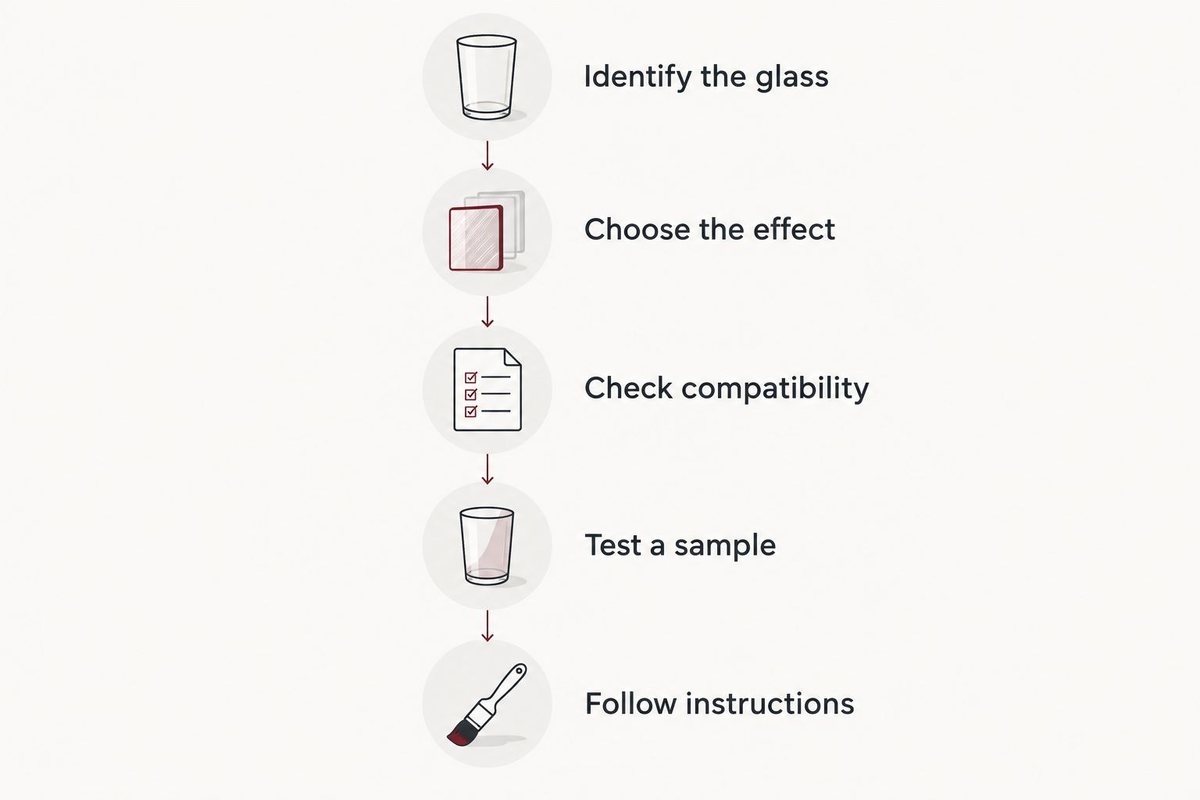
Choose and apply a glass coating in 5 steps
These 5 planning steps help you move from an attractive finish to a suitable application. The selected coating's instructions govern preparation, application and curing.
Identify the glass
Find out whether the pane is ordinary, toughened, laminated, tinted or already treated. Use glazing documentation or ask the supplier; appearance alone is not enough. Confirm which face of the pane the coating permits you to treat.
Choose the effect
Write down the main goal: light-filtering privacy, decorative colour, visual screening or documented heat control. Choose the coating category that serves that goal. Do not expect a decorative finish to solve every window problem.
Check compatibility
Read the coating instructions alongside any glazing restrictions. Check exposure, cleaning requirements, preparation and curing. Stop if the instructions do not cover your glass or intended application.
Test a sample
Compare 2 sample areas on suitable spare glass if the supplier permits: the intended finish and an untreated area. Judge visibility, colour and application consistency. A sample is a visual and application check, not proof of long-term performance.
Follow instructions
Protect frames, fittings, seals and adjacent surfaces as directed. Use only the specified preparation and application method, and respect the stated curing conditions before cleaning or handling the surface. Do not add an unrelated wall primer underneath to try to improve adhesion.
MRF Paints GlassCoat for glass
MRF Paints suits homeowners planning wall, wood and specialty coatings alongside a window or door refresh. Keep those surfaces separate in your specification: the wall finish, wooden component, metal frame and glass pane each need an appropriate coating.
For the glass itself, MRF Paints makes GlassCoat, a two-pack polyurethane topcoat developed for interior glass surfaces. It gives a high-gloss, easy-to-clean coloured finish, resists yellowing and fading in sunlit rooms, and is made to bond with glass without flaking. Because it is a coloured gloss finish, it suits the decorative and opaque options above; it is not described as a frosted or solar-control coating. Mix the base with its hardener, avoid applying in direct sunlight or high humidity, and follow the data sheet. It comes in 1, 4 and 20 litre packs.
For the frame around the glass, see MRF’s enamels for metal doors and windows or its finishes for wooden doors and windows.
How these options are ranked
The ranking puts the intended result first: privacy, decoration, screening, then specialist performance. Within each category, glass approval, application location, preparation and maintenance determine whether an individual coating belongs on your shortlist. This 2026 guide does not treat an attractive finish as evidence of adhesion, weather resistance or heat-control performance.
Which glass coating should you choose?
Choose a glass-rated frosted-effect coating as the default when your goal is light-filtering privacy. Choose decorative glass paint for a pattern, an opaque glass-rated coating when you intend to lose the view, and a specialist solar-control coating only for a documented performance requirement.
Keep your 2026 decision narrow. Name the problem first, confirm the glazing second, and select the finish third. That order prevents a colour-led purchase from becoming a surface-compatibility mistake.
FAQ
What’s the best glass coating paint for window privacy?
A glass-rated frosted-effect coating is the best starting point for light-filtering privacy. Check a sample from both sides with the room lights on, because a frosted appearance does not guarantee complete screening.
Can I use wall paint on a glass door?
Use wall paint on a glass door only if its published instructions explicitly approve that glass application. Wall suitability alone does not establish adhesion or compatibility with glazing.
Is decorative glass paint better than a frosted coating?
Decorative glass paint is better for patterns and colour accents; a frosted-effect coating is better for light-filtering privacy. Choose according to the result you need rather than treating the finishes as interchangeable.
Can I paint toughened or laminated window glass?
Paint toughened or laminated glass only when both the coating instructions and the glazing guidance permit the treatment. Confirm the application side and any restrictions with the relevant suppliers before preparing the pane.
Will glass coating paint make my room cooler?
Do not assume a glass coating will make your room cooler without relevant published performance information. For a solar-control coating, check what the stated measure covers and whether it applies to your installed glazing.
Does MRF Paints have the right coating for my glass?
Yes, for interior glass. GlassCoat is MRF’s two-pack polyurethane topcoat for glass, giving a high-gloss, easy-to-clean coloured finish that resists yellowing. It is not a frosted or solar-control coating, so use it for decorative or opaque panels.
How do I clean a painted glass window?
Clean painted glass using the method permitted by the coating manufacturer after the specified curing period. Do not assume a cleaner approved for bare glass is suitable for the painted finish.
One last thing
Test privacy with the indoor lights on, not just in daylight. A finish that looks private during your daytime colour check still needs assessment under the lighting you actually use. Make that check part of your 2026 sample review before coating the whole door or window.
Related guides
- Exterior wall paints for Indian homes
- Wall primers for your painting project
- PU wood finishes for Indian furniture