
Best exterior wall paint by durability: 2026 picks
Best overall for routine repainting: an exterior acrylic emulsion. Best for sound walls with fine, non-structural cracks: a specified elastomeric coating. Best for compatible mineral masonry: a mineral silicate paint. This 2026 guide ranks coating types by their suitability for different wall conditions, not by an unsupported promise of years between repaints.
- The best exterior wall paint by durability depends on wall condition, exposure and the complete coating system.
- Exterior acrylic emulsion is the default shortlist for routine repainting of sound, properly prepared walls.
- Elastomeric coatings need documented crack-bridging capability; they do not repair structural cracks or active leaks.
- From MRF Paints, the warranties are the durability guide: AquaFresh Exterior 8 years, Altura 2-in-1 6 years plus 3 against algae and fungus, Campus 4 years.
Why this matters
A durable exterior finish starts below the colour coat. Paint applied over loose plaster, chalky old paint or an unresolved leak cannot compensate for the weak surface underneath. Choose the coating after you identify what the wall needs.
MRF Paints manufactures exterior wall paints, primers and specialty coatings. Its performance warranties are the clearest durability guide it publishes; each is issued on registration and depends on following the prescribed application procedure.
Separate two decisions: which coating suits the wall, and which product documents the properties your home needs. That keeps a decorative repaint from becoming an attempted repair for a building defect.
What makes the best exterior wall paint by durability?
Use these criteria before comparing colours or finish samples:
- Surface compatibility: The coating must suit the plaster, masonry and existing paint. Compatibility matters especially when changing coating types.
- Rain protection: Look for documented resistance to wind-driven rain where that exposure matters. Roof leaks and failed joints need separate repairs.
- Moisture release: Water-vapour permeability matters when moisture needs to escape through masonry. Rain resistance and vapour permeability describe different properties.
- Crack response: A crack-bridging claim must identify what the coating can handle. A flexible finish is not a structural repair.
- Sun and colour exposure: Compare exterior-use guidance and colour restrictions for the actual product. A colour chart alone does not establish resistance to fading.
- Application requirements: Check the primer, surface condition, coat sequence and drying requirements. A coating's stated properties depend on correct application.
Exterior coating types at a glance
| Rank and coating type | Best for | Standout characteristic | Key limitation |
|---|---|---|---|
| 1. Exterior acrylic emulsion | Routine repainting of sound rendered walls | An exterior film-forming finish available in different formulations | Acrylic chemistry alone does not establish weather resistance |
| 2. Elastomeric exterior coating | Specified protection over fine, non-structural cracks | Flexibility and crack bridging where documented | Cannot repair moving structural cracks or stop every source of damp |
| 3. Mineral silicate paint | Compatible mineral masonry requiring a vapour-permeable finish | Bonds with suitable mineral substrates | Requires careful substrate and existing-coating checks |
| 4. Cement paint | A mineral finish on suitable cementitious masonry | Cement-based coating for compatible masonry | Not a direct substitute for a flexible film-forming coating |
This is a practical selection order for 2026, not a laboratory performance table. Products within each category differ, so the final choice rests on the product's technical information and your wall inspection.
1. Exterior acrylic emulsion: best for routine home repainting
Exterior acrylic emulsion is the first category to shortlist when your plaster is sound and the job is primarily a decorative repaint. It forms a paint film on the prepared surface. The exact formulation determines properties such as water resistance, vapour permeability and resistance to surface soiling.
For an Indian home, inspect each elevation separately before choosing it. An exposed boundary-facing wall and a sheltered verandah wall do not necessarily need identical treatment, even when you want the same colour.
Exterior acrylic emulsion pros:
- Provides a straightforward category to compare for conventional exterior repainting.
- Offers decorative colour and finish choices, depending on the product range.
- Can form part of a specified system with a compatible primer and preparation method.
Exterior acrylic emulsion cons:
- The word acrylic does not establish crack-bridging capability or a particular repainting interval.
- Loose paint, damp patches and weak plaster must be addressed before application.
Best for: Homeowners repainting sound exterior plaster without a separate crack-bridging requirement.
In MRF’s range, AquaFresh Exterior, Altura 2-in-1 and Campus are exterior emulsions in this category. The guide to exterior wall paints for Indian homes provides a related starting point for your shortlist; the individual product information should decide suitability.
Verdict: Buy an exterior acrylic emulsion for routine repainting once the wall and preparation system are confirmed.
2. Elastomeric exterior coating: best for specified crack bridging
An elastomeric exterior coating forms a flexible film. Some products are designed to bridge fine cracks, but that capability belongs to the specified product and application system, not automatically to every coating described as flexible.
First establish why the wall has cracked. Cracks associated with building movement, recurring water entry or deteriorating plaster need diagnosis and repair before a decorative coating is considered.
Elastomeric exterior coating pros:
- Offers a category designed around flexibility rather than colour alone.
- Provides crack bridging where the manufacturer documents that property.
- Can address an identified surface requirement within a specified exterior system.
Elastomeric exterior coating cons:
- Does not replace structural repairs or treatment of leaking joints.
- Requires close attention to application thickness and moisture behaviour.
Best for: Sound walls where fine, non-structural cracks fall within the chosen coating's documented capability.
For a 2026 repaint, ask your painter to identify the product and show its crack-bridging instructions before accepting a general recommendation for a waterproof coating. Also check whether the system suits the wall's moisture condition.
Verdict: Buy only when the crack condition and the product specification match; hold if the cause of cracking is unresolved.
3. Mineral silicate paint: best for compatible mineral masonry
Mineral silicate paint uses a silicate binder that bonds with suitable mineral substrates. It is a useful category to consider when compatibility with mineral masonry and water-vapour permeability are central to the specification.
The existing surface determines whether it belongs on your shortlist. Previously painted walls require particular care because an old organic paint film can prevent the mineral interaction that the coating system needs; some formulations use dedicated preparation systems for such surfaces.
Mineral silicate paint pros:
- Offers a mineral coating approach for suitable masonry.
- Provides a vapour-permeable option where that property is documented.
- Supports a substrate-led specification rather than a colour-only decision.
Mineral silicate paint cons:
- Is not a universal coating for every previously painted wall.
- Needs product-specific preparation and careful protection of adjacent surfaces.
Best for: Compatible mineral walls where the substrate and moisture requirements justify a mineral coating system.
Do not choose mineral silicate paint merely because it sounds more durable. Ask the supplier to confirm compatibility with your actual plaster and existing finish, including any required preparatory coats.
Verdict: Buy for a confirmed mineral specification; skip as an unverified replacement over an unknown old coating.
4. Cement paint: best for a cement-based mineral finish
Cement paint is a cement-based coating used on suitable masonry surfaces. Consider it when you specifically want this type of mineral finish and the substrate and application instructions support it.
It serves a different brief from an elastomeric coating. Selecting cement paint does not establish crack bridging, and it does not remove the need to investigate damp or loose plaster.
Cement paint pros:
- Provides a cement-based finish for compatible masonry.
- Offers an option when a mineral coating is part of the intended specification.
- Allows you to compare a different finish approach against film-forming exterior paints.
Cement paint cons:
- Requires the preparation, wetting and curing procedures stated for the product.
- Should not be treated as a flexible coating or a remedy for active leakage.
Best for: Suitable cementitious masonry where a cement-based decorative finish is the explicit requirement.
Ask your painter to explain the surface preparation and curing process before you approve the job. A familiar coating name is not a substitute for a clear application plan.
Verdict: Buy for a deliberate cement-paint specification; skip when your requirement is documented flexible crack bridging.
How this ranking works
Exterior acrylic emulsion ranks first because it is the practical starting category for routine repainting of sound walls. The other categories address narrower requirements: documented crack bridging, a compatible mineral coating, or a cement-based finish.
The ranking follows substrate compatibility, rain exposure, moisture release, crack response and application requirements. It does not assign lifespan scores to unnamed products or claim that one binder outlasts every alternative.
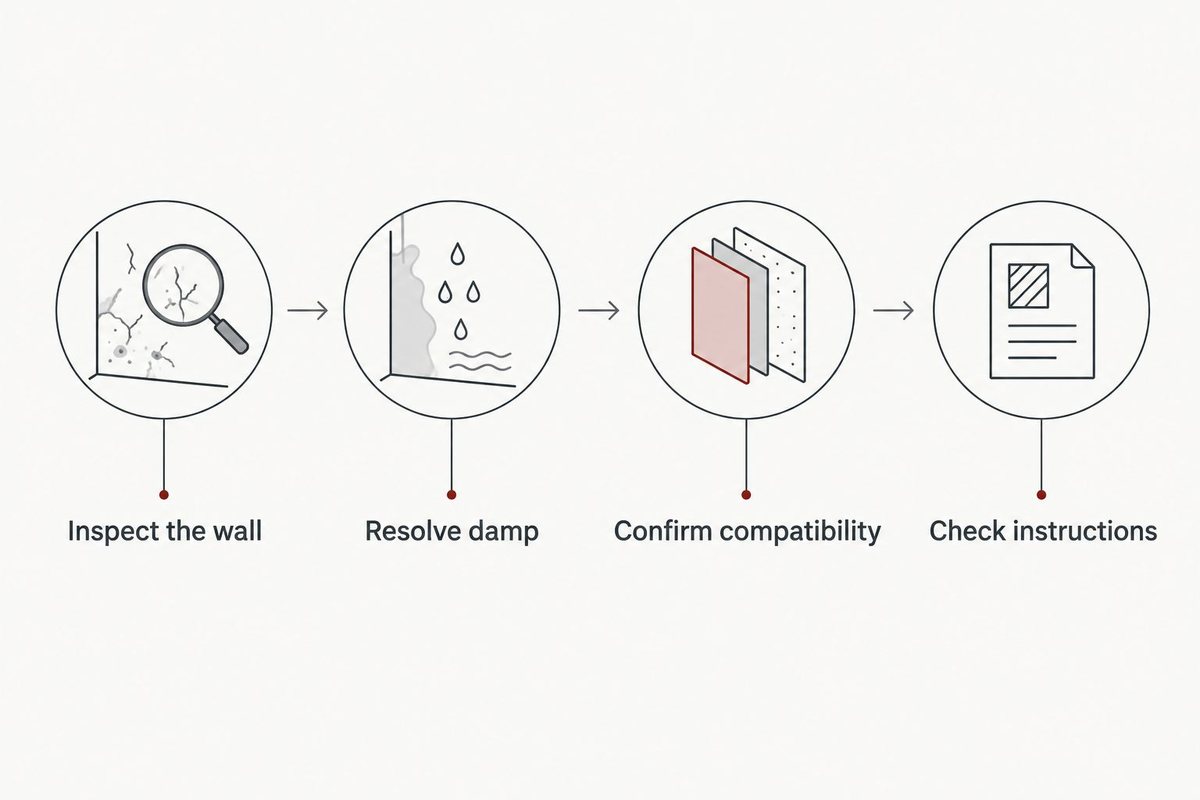
Choose the coating in this order
Inspect the wall
Look for peeling paint, powdery surfaces, hollow or loose plaster, cracks and damp patches. Note where each problem occurs, especially around windows, parapets and pipe penetrations.
Do not ask a painter to cover all these conditions with a thicker finish. Each defect needs its own preparation or repair decision.
Resolve damp
Trace the source of water before repainting. A terrace leak, failed seal or plumbing defect requires treatment at the source; an exterior colour coat is not a substitute.
Keep roof protection separate from wall decoration. A coating suitable for a vertical wall is not automatically suitable for a terrace with standing water or foot traffic.
Confirm compatibility
Identify the existing finish as far as possible, and check whether the new system can be applied over it. Remove unsound material and follow the selected manufacturer's preparation instructions.
Use the wall primer guide to understand the primer decision. Then confirm the exact primer against the chosen topcoat and substrate rather than selecting it independently.
Check instructions
Agree on the product, primer, preparation method and application sequence before work begins. Your 2026 painting plan should also account for the product's stated weather and drying conditions.
Record the selected shade and finish alongside the system. This gives you a usable reference for later maintenance without relying on memory.
Which exterior wall paint should you choose?
Choose an exterior acrylic emulsion as your default for a sound, prepared wall; change category only when the wall has a specific requirement. That is the clearest answer to the best exterior wall paint by durability question without inventing a universal lifespan winner.
From MRF Paints, AquaFresh Exterior is the most durable choice by warranty (8 years) and has a flexible film for fine cracks; Altura 2-in-1 carries 6 years and Campus 4 years. Ask your painter to explain any departure from the data-sheet system.
For your 2026 project, approve a colour sample on the actual wall before the full application. Colour selection matters, but it comes after the repair and coating decisions—not instead of them.
MRF Paints exterior paints by warranty
| MRF product | Type | Coverage (two coats) | Warranty |
|---|---|---|---|
| AquaFresh Exterior | Water-based polyurethane; flexible, stretchable film; resists algae and fungus | 65-75 sq ft per litre | 8 years |
| Altura 2-in-1 | Water-based acrylic emulsion for exterior and interior walls; matte or sheen | 60-70 sq ft per litre | 6 years, plus 3 years against algae and fungus |
| Campus and Campus Shine | Budget water-based exterior emulsions | 55-65 sq ft per litre | 4 years |
Warranties are issued on registration, and validity depends on following the prescribed application procedure, site conditions and warranty terms. For walls with hairline cracks, AquaFresh DampGarde bridges cracks up to 0.5 mm. For more on choosing, see our guide to exterior wall paints for Indian homes.
FAQ
What’s the best exterior wall paint by durability for an Indian home?
An exterior acrylic emulsion is the default shortlist for routine repainting of sound, prepared walls. Choose a different coating category only when the substrate, cracking or moisture requirements call for it, and verify the individual product specification.
Is elastomeric paint better than acrylic exterior paint?
Elastomeric paint is the more relevant category when documented crack bridging is required. It is not automatically better for every wall, and neither category replaces repairs to active leaks or structural cracks.
Can exterior wall paint stop a terrace leak?
Exterior wall paint is not a substitute for repairing a terrace leak. Identify the water-entry point and specify a suitable roof or terrace treatment before repainting affected walls.
Do exterior walls always need primer?
Use primer when the selected coating system and surface condition require it. Follow the manufacturer’s instructions for bare masonry, repaired patches and previously painted surfaces rather than applying a universal rule.
How long will exterior wall paint last?
There is no single figure for all exterior paints; it depends on the product, preparation and exposure. For MRF Paints, the performance warranties are a guide: AquaFresh Exterior 8 years, Altura 2-in-1 6 years plus 3 years against algae and fungus, and Campus 4 years, when the purchase is registered and the data-sheet procedure is followed.
Can I apply mineral silicate paint over old paint?
Apply mineral silicate paint over an existing coating only when the selected system explicitly permits it. The old coating and any required preparation determine compatibility.
What should I ask a painter before an exterior repaint in 2026?
Ask for the proposed coating system and the repair plan before approving the colour. Confirm the primer, preparation method, weather requirements and treatment of cracks and damp patches.
One last thing
Inspect the wall around its openings, not just the large painted areas. Window joints, pipe penetrations and parapet details can admit water that later appears as a paint problem elsewhere.
Before you approve the repaint, ask your painter to show how water-entry defects will be repaired. A neat colour coat should be the final step, not the concealment step.
Related guides