
Best Acrylic Emulsion Paint for Walls: 2026 Guide
The best acrylic emulsion paint for walls in India in 2026 is the finish that matches the room’s daily use, light and existing colour plan: washable acrylic emulsion for busy family spaces, matte acrylic emulsion for soft low-glare rooms, and low-sheen acrylic emulsion for walls that need a subtle lift. From MRF Paints, the acrylic emulsions are RUCA Luxury Emulsion, Altura 2-in-1 and the budget Visa and Visa Shine.
- The best acrylic emulsion paint for walls depends on room use, light and desired finish.
- Choose washable acrylic emulsion for frequently touched family areas in 2026.
- Choose matte acrylic emulsion for a soft, understated wall finish.
- From MRF Paints: RUCA for a silky luxury finish, Altura 2-in-1 for everyday rooms, Visa or Visa Shine on a budget.
Why this matters
Interior paint is not only a colour decision. The finish changes how a wall reflects daylight, how marks show up, and how the room feels after furniture, curtains and flooring are in place.
For Indian homes in 2026, the right acrylic emulsion paint starts with the room, not a shade card. A living room, children’s room, hallway and bedroom do not ask the same thing from a painted wall.
Before choosing an emulsion finish, plan the surface underneath it. This guide to wall primers in India explains why wall preparation belongs in the paint decision, not at the end of it.
What makes the best acrylic emulsion paint for walls
Use these criteria to judge acrylic emulsion paints in 2026. They keep the decision practical and stop a beautiful shade from becoming the wrong choice for the room.
- Room traffic: Consider fingerprints, bags, furniture movement and how often people touch the wall.
- Light direction: Observe the wall in morning, afternoon and artificial light before confirming the finish.
- Surface condition: Look for uneven patches, old paint, repairs or wall dampness before painting.
- Finish preference: Decide whether you want a soft matte look, a gentle sheen or a more easy-care finish.
- Colour depth: Dark, rich and pale shades reflect light differently, even in the same room.
- Paint system: Match the paint choice with suitable surface preparation and the intended application process.
Acrylic emulsion paint works best when the finish supports the room’s job. A hallway must cope with more contact than a guest bedroom; a sunlit room needs a different colour check than a dim passage.
Acrylic emulsion paints at a glance
| Acrylic emulsion option | Best for | Standout feature | Key limitation |
|---|---|---|---|
| Washable acrylic emulsion | Family rooms and hallways | Suits walls that need regular attention | Finish preference still needs a light check |
| Matte acrylic emulsion | Bedrooms and low-glare spaces | Creates a soft visual effect | Marks can be more noticeable on some matte walls |
| Low-sheen acrylic emulsion | Living rooms and dining areas | Adds gentle light reflection | Can highlight an uneven surface |
| Colour-led acrylic emulsion | Feature walls and planned schemes | Supports a focused colour story | Needs coordination with adjoining walls |
The table is a decision guide, not a substitute for checking the current product information, suitable surface and finish options before purchase in 2026.
1. Washable acrylic emulsion: best for busy family spaces
Washable acrylic emulsion is the strongest starting point for walls that see daily contact. Think entrance areas, passages, children’s rooms and the wall beside a dining table.
The key question is simple: will this wall be touched, brushed against or noticed when it looks untidy? If the answer is yes, put practicality ahead of a finish chosen only for appearance.
Washable acrylic emulsion pros:
- Fits active areas where walls receive routine attention.
- Gives homeowners a practical route for family spaces.
- Works well when colour needs to sit within an everyday-use room.
- Keeps the paint decision focused on how the room is actually used.
Washable acrylic emulsion cons:
- It is not the automatic choice for every bedroom or feature wall.
- The final look still depends on shade, surface preparation and room light.
- A highly textured or uneven wall needs attention before any finish is chosen.
Best for: hallways, children’s rooms, dining spaces and frequently used living areas.
Verdict: Buy if the wall belongs to a busy part of the home and easy day-to-day care is your first priority in 2026.
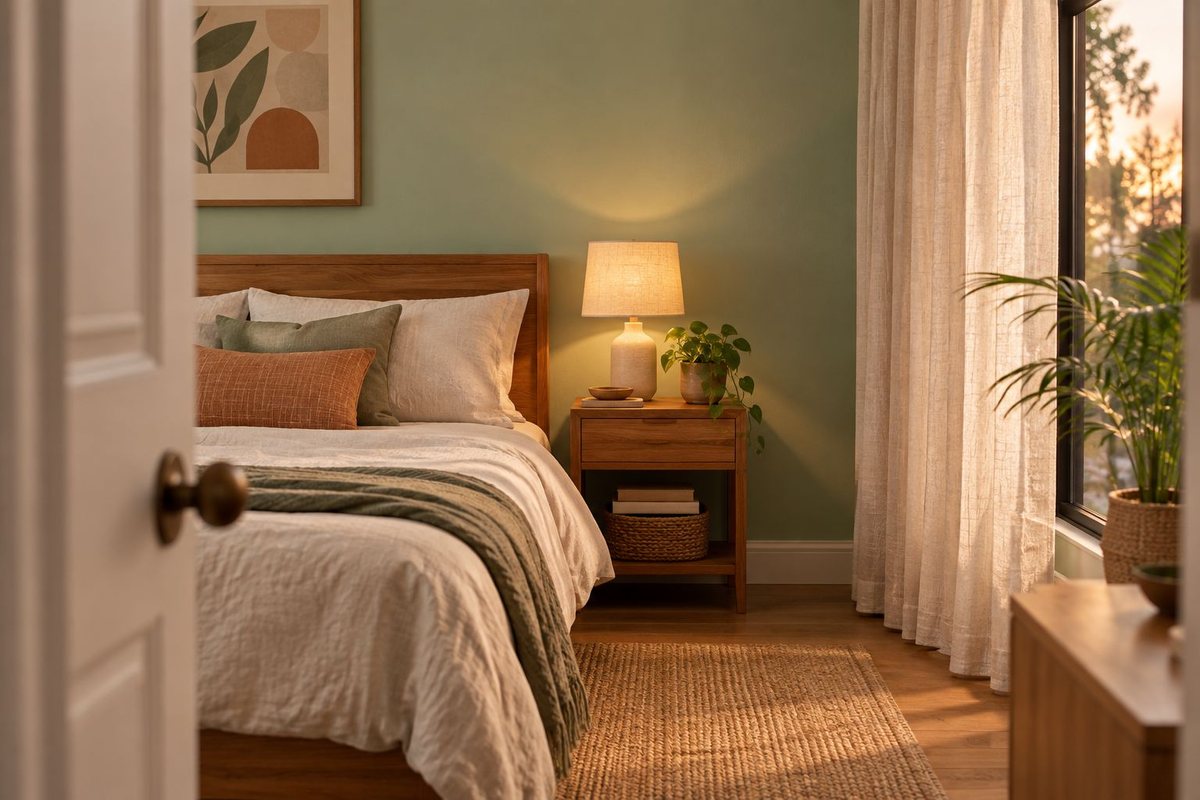
2. Matte acrylic emulsion: best for calm bedrooms
Matte acrylic emulsion is the right choice when you want walls to look quiet rather than reflective. It suits bedrooms, reading corners and rooms where soft colours are meant to create a relaxed mood.
A matte finish can make a pale neutral, muted green, warm beige or dusty blue feel more settled. It also gives a feature colour a softer expression than a shinier finish.
Matte acrylic emulsion pros:
- Supports a low-glare, understated interior look.
- Lets colour take centre stage without strong reflection.
- Suits bedrooms and spaces designed for rest.
- Pairs naturally with layered fabrics, wood furniture and warm lighting.
Matte acrylic emulsion cons:
- It is not the first choice for every high-contact wall.
- Surface repairs and uneven areas should be assessed before painting.
- The same shade can look different under daylight and night lighting.
Best for: bedrooms, study rooms, guest rooms and quieter interior spaces.
Verdict: Buy when a soft visual finish matters more than noticeable light reflection.
A bedroom colour decision should include the light you actually use at night. View a sample near the bed, beside curtains and close to the main light source before confirming the full wall colour in 2026.
3. Low-sheen acrylic emulsion: best for living rooms
Low-sheen acrylic emulsion sits between a flat matte appearance and a more reflective finish. It works for homeowners who want a living room wall to catch some light without becoming the room’s main visual feature.
This option deserves a careful wall check first. Light reflection can draw attention to patching, old repairs or surface variation, especially near windows and ceiling lights.
Low-sheen acrylic emulsion pros:
- Adds a gentle sense of light to an interior wall.
- Works well with living-room colour schemes that need some lift.
- Suits rooms used for both daytime gatherings and evening relaxation.
- Gives a middle path between a muted and reflective look.
Low-sheen acrylic emulsion cons:
- It is less forgiving of an uneven wall surface.
- Strong side light can change how the finish appears.
- It needs a colour check with furniture and flooring in place.
Best for: living rooms, dining rooms and well-planned common areas.
Verdict: Hold until you have checked the wall in both natural and artificial light. Choose it when the surface looks even and the room needs subtle brightness.
4. Colour-led acrylic emulsion: best for feature walls
Colour-led acrylic emulsion is for a wall with a clear role: behind a sofa, at the head of a bed, around a dining area or at the end of a passage. The paint finish supports the design, but the colour plan does the real work.
Do not choose a feature-wall shade in isolation. Compare it with the adjoining wall colour, floor tone, curtains, wood finishes and the room’s strongest light source.
Colour-led acrylic emulsion pros:
- Gives a room one deliberate visual focus.
- Helps break up an open space without adding a physical divider.
- Allows homeowners to use a deeper or more expressive shade thoughtfully.
- Makes colour planning easier when the remaining walls stay quieter.
Colour-led acrylic emulsion cons:
- A feature colour can feel disconnected without a wider room palette.
- Dark shades need careful viewing across different times of day.
- It is not a fix for poor surface preparation.
Best for: TV walls, bed backdrops, dining walls and selected living-room surfaces.
Verdict: Wait until the furniture, lighting and adjoining colours are clear. A feature wall should complete the room, not compete with it.
Choose by room, not by trend
A paint trend can inspire a colour direction, but room use should decide the final finish. This is the simplest way to choose the best acrylic emulsion paint for walls in 2026.
Entry and hallway
Prioritise a finish that suits frequent movement and contact. Choose a shade that works with the rooms visible from the entrance so the home feels connected rather than divided.
Living room
Start with daylight. Check how the wall looks beside your sofa, flooring and curtains. A low-sheen or colour-led approach can work when the wall surface is ready and the room palette is settled.
Bedroom
Prioritise comfort and low glare. Matte acrylic emulsion is usually the clearest direction for a bedroom designed around calm colours, layered fabrics and softer lighting.
Children’s room
Prioritise practical use first, then colour. Bright colours can work well, but test them against the room’s daylight because vivid shades often shift through the day.
Kitchen-adjacent wall
Consider how the wall is used, how close it is to cooking activity and whether the colour needs to coordinate with cabinets or tiles. Keep the paint choice part of the whole surface plan.
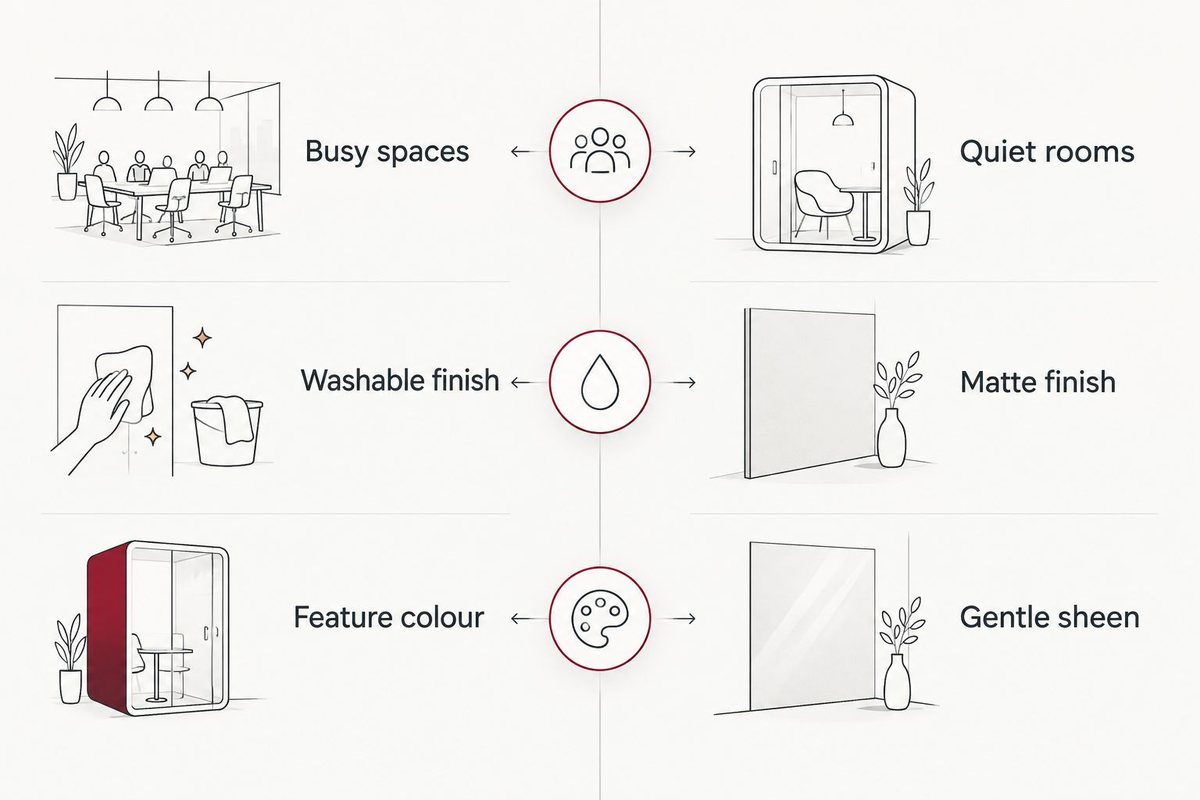
How to compare acrylic emulsion paint before buying
Use this short process before committing to a colour or finish in 2026.
- Name the room’s job. Decide whether it is for rest, entertaining, eating, play or daily movement.
- Study the light. Look at the wall at different times of day and again under the lights used after sunset.
- Check the existing surfaces. Include flooring, wood, tiles, curtains and large furniture in the colour decision.
- Inspect the wall. Identify repairs, patchiness, moisture concerns or uneven areas before finalising the paint system.
- Choose finish after colour direction. A finish should support the room’s mood and daily use.
- Confirm current product guidance. Read the relevant product information before choosing the final paint and application approach.
Decide what the wall needs to do, then select a colour and finish that fit that need; surface preparation and room purpose belong in the same conversation.
Plan your wall colours
Explore paint ideas before finalising your interior wall colour scheme.
How we ranked these options
These acrylic emulsion options are ranked by room fit, light response, surface sensitivity, colour flexibility and practical daily use. The ranking does not treat one finish as universally better because an interior wall is never used in exactly the same way as the next one.
For 2026, washable acrylic emulsion takes the default position because busy rooms create the most practical paint decisions. Matte acrylic emulsion follows for bedrooms and quiet spaces, while low-sheen and colour-led choices need more careful checking of light and wall condition.
The MRF emulsion for each option is listed in the section below.
Which acrylic emulsion paint should you choose?
Choose washable acrylic emulsion if you are undecided and the wall sits in a regularly used family area. It is the most practical default for hallways, children’s rooms and shared spaces.
Choose matte acrylic emulsion if your priority is a restful bedroom or a subtle, low-glare interior. Choose low-sheen acrylic emulsion only after checking the wall surface and light. Choose a colour-led acrylic emulsion for a feature wall only when the wider room palette is already decided.
The best acrylic emulsion paint for walls in 2026 is not the one with the loudest promise. It is the one that makes your room feel right every day.
MRF Paints acrylic emulsions for interior walls
- RUCA Luxury Emulsion: a water-based acrylic luxury emulsion with a high-sheen silky finish for living and dining rooms. About 140-150 sq ft per litre for two coats; 10-year warranty; 1,261 shades.
- Altura 2-in-1: a water-based acrylic emulsion for interior and exterior walls, over Altura 2-in-1 Primer. About 120-140 sq ft per litre for two coats indoors; 6-year warranty.
- Visa and Visa Shine: budget interior emulsions, standard and high sheen. About 100-120 sq ft per litre for two coats; 4-year warranty.
For the busiest family walls, MRF’s AquaFresh Interior is a water-based polyurethane rather than an acrylic, and it resists scrubbing and stains. Browse shades in the colour catalogue, or work out quantities with our guide to how much paint a 2 BHK needs.
FAQ
What is the best acrylic emulsion paint for walls in India in 2026?
Washable acrylic emulsion is the best default for busy family walls in India in 2026. Matte acrylic emulsion is a better fit for bedrooms and low-glare spaces.
Is matte acrylic emulsion better than washable acrylic emulsion?
Matte acrylic emulsion is better for a soft, low-glare look, while washable acrylic emulsion is better for busy walls needing practical day-to-day care. Choose by room use rather than treating one finish as better everywhere.
Which acrylic emulsion finish is best for a living room?
Low-sheen acrylic emulsion suits a living room when you want gentle light reflection. Check the wall surface and room lighting first because reflected light can reveal uneven areas.
Can I use the same acrylic emulsion paint in every room?
You can use one paint direction across a home, but each room should still be assessed for light, traffic and surface condition. Bedrooms and hallways often need different finish priorities.
How do I choose an interior wall paint colour?
Choose an interior wall paint colour after checking daylight, artificial light, flooring, curtains and furniture. View the shade on the intended wall before confirming it for the full room.
How much does acrylic emulsion paint cost in India?
Acrylic emulsion paint prices vary by product, finish, pack size and seller. Ask an authorised MRF Paints dealer for current prices; the dealer locator on mrfpaint.com lists shops near you.
Do I need primer before acrylic emulsion paint?
Yes on new or repaired walls. For MRF emulsions, use Altura 2-in-1 Primer under Altura, and MRF Interior Wall Primer, Sello 2-in-1 or ST Wall Primer under Visa, 1-2 coats 4-5 hours apart. Fresh plaster should cure for 30 days first.
One last thing
The strongest colour decision in 2026 is often the one you make after looking at the wall at night. Daylight helps you choose a shade; the lighting you live with decides whether you keep loving it.
Paint the Good Life by choosing a finish that works with your home’s real routines, not only a colour that looks good on a small sample.
Related guides
- Best waterproof paints for terrace and roof in India
- Best exterior wall paints for Indian homes
- Best wall texture paint designs for living rooms
- Best enamel paints for metal doors and windows