Best Paint for Wooden Doors: Top Choices for 2026
Best overall for indoor colour changes: water-based wood enamel. Best for repainting a compatible enamel finish: solvent-based wood enamel. Best for exposed doors and windows: exterior-rated opaque wood coating. This 2026 guide compares coating types so you can choose the best paint for wooden doors by location, existing finish and the look you want.
- The best paint for wooden doors depends on exposure, existing finish and whether you want visible grain.
- Choose water-based wood enamel for indoor colour changes, provided the product specifies wooden surfaces.
- Choose an exterior-rated wood coating for doors and windows exposed to rain and sunlight.
- From MRF Paints: Specta PU Enamel for coloured doors, MetalCoat for exposed ones, and FreshWood, WoodCoat or AquaCoat clear finishes to show the grain.
Why this matters
A bedroom door and a rain-exposed window frame need different coating specifications. Choosing by colour alone leaves the most important questions unanswered: does the coating suit wood, does it suit the location, and will it work over the existing finish?
MRF Paints manufactures wood coatings alongside interior and exterior wall paints. The MRF products for each door coating type are listed near the end of this guide. Select the coating for each surface separately rather than assuming the wall paint belongs on the door too.
For your 2026 repaint, decide whether to hide the grain or keep it visible before comparing finishes. That decision separates coloured paints from transparent wood finishes immediately.
What makes the best paint for wooden doors?
Use these criteria before choosing a coating type or shade:
- Wood suitability: The product information must explicitly identify wood as a suitable surface. An enamel label alone does not settle this.
- Exposure rating: Indoor suitability is not outdoor suitability. Check whether the exact coating is intended for exposed exterior woodwork.
- Existing-finish compatibility: Identify what is already on the door and follow the selected coating’s preparation instructions.
- Grain visibility: Opaque paint hides the grain; a transparent finish keeps it visible. Neither is automatically the better choice.
- Application requirements: Check the primer, mixing, equipment and drying instructions before deciding whether to paint yourself.
- Finished appearance: Compare the actual shade and sheen on prepared wood, not only on a screen or colour card.
Wooden-door coatings at a glance
These are coating categories, not ranked products. The order reflects practical homeowner use cases for 2026; suitability still depends on the instructions for the exact product you choose.
| Rank and coating type | Best for | Standout feature | Key limitation |
|---|---|---|---|
| 1. Water-based wood enamel | Indoor doors needing a colour change | Opaque colour with water-based application | Must specify wood and match the existing finish |
| 2. Solvent-based wood enamel | Repainting compatible enamel-coated doors | An opaque enamel route for suitable existing surfaces | Solvent handling and ventilation need planning |
| 3. Opaque polyurethane wood coating | Specialist-applied solid-colour woodwork | A coloured finish within a specified PU coating system | Mixing and application requirements vary |
| 4. Clear polyurethane wood finish | Doors where visible grain is the priority | Transparent finishing rather than solid colour | Does not conceal mismatched repairs or damaged grain |
| 5. Exterior-rated opaque wood coating | Doors and windows exposed to weather | Explicit suitability for exterior wood | Requires the specified preparation and complete coating system |
1. Water-based wood enamel: best for indoor colour changes
Water-based wood enamel is the first category to consider when you want to turn an indoor wooden door into a solid-colour feature. Choose a product that explicitly permits use on wood; do not substitute a water-based wall paint because it has the shade you like.
For a bedroom door, compare the colour with the surrounding wall, frame and flooring. A pale door can blend into the room, while a darker shade creates a deliberate contrast.
Water-based wood enamel pros:
- Gives you opaque colour when visible timber grain is not the goal.
- Uses a water-based formulation rather than a solvent-based enamel route.
- Lets you assess colour and sheen together on a prepared sample before painting the door.
Water-based wood enamel cons:
- A previously coated surface still needs a compatibility check and the specified preparation.
- An interior product is not a substitute for a coating rated for exterior exposure.
Best for: Indoor doors and interior-facing woodwork where a colour change matters more than showing the grain.
For your 2026 shortlist, keep the product’s wood-surface instructions beside the colour selection. Buy: Choose water-based wood enamel for indoor colour changes only after confirming surface suitability and preparation requirements.
2. Solvent-based wood enamel: best for compatible enamel repaints
Solvent-based wood enamel is an option when you are repainting a door with an existing enamel finish. Compatibility is the deciding factor, not the assumption that any new enamel will adhere to any old enamel.
Inspect the current coating for loose edges, cracks and greasy areas before choosing the repaint system. If you cannot identify the old finish, ask the coating supplier or painter how to establish compatibility.
Solvent-based wood enamel pros:
- Provides opaque colour for doors where you want to conceal the grain.
- Offers an enamel repaint route when the existing finish and preparation are compatible.
- Keeps the choice focused on a coating specified for wood rather than a general wall finish.
Solvent-based wood enamel cons:
- Solvent use requires suitable ventilation, safe handling and attention to ignition hazards.
- Existing paint defects cannot be corrected simply by adding another coat.
Best for: Previously enamel-painted wooden doors with an identified, compatible coating system.
Follow the product label for thinner, application and drying requirements. Do not borrow those instructions from another enamel. Buy: Choose solvent-based wood enamel when the existing finish supports it and you can meet the handling requirements.
3. Opaque polyurethane wood coating: best for specialist colour work
An opaque polyurethane, or PU, wood coating gives woodwork a solid-colour finish rather than a transparent appearance. It belongs on the shortlist when you want a specified wood-finishing system and have a painter who understands its application requirements.
PU describes a coating family, not a promise that every product suits every door. Confirm whether the selected system is opaque, intended for your location, and suitable for the existing surface.
Opaque polyurethane wood coating pros:
- Provides solid colour when you do not want timber grain to remain visible.
- Allows the finish to be planned as a complete wood-coating system.
- Gives you a clear brief for a specialist painter: surface preparation, colour and specified sheen.
Opaque polyurethane wood coating cons:
- Some systems require separate components, controlled mixing or particular application equipment.
- A PU label does not establish exterior suitability or compatibility with old paint.
Best for: Specialist-applied, solid-colour doors where the coating system is selected before work starts.
Use the PU wood finish comparison to frame your questions about wood finishes, then confirm door-specific suitability. Buy: Choose opaque PU only with a defined coating system and an application plan your painter can follow.
4. Clear polyurethane wood finish: best for showing timber grain
A clear polyurethane finish is an alternative to paint when the wood itself is the feature. It keeps the grain visible instead of covering it with an opaque colour.
For a wooden entrance door, inspect the timber before committing to transparency. Filled areas, mismatched boards and old marks remain part of the appearance unless the preparation addresses them.
Clear polyurethane wood finish pros:
- Keeps the timber grain visible rather than replacing it with solid colour.
- Makes the wood’s natural pattern part of your entrance design.
- Provides a transparent finishing route when the prepared timber already has the appearance you want.
Clear polyurethane wood finish cons:
- Does not hide mismatched filler, repairs or uneven timber colour.
- Needs explicit exterior suitability if the finished surface faces weather.
Best for: Sound, visually consistent timber doors where showing the grain is the main goal.
A clear finish is not the answer to every search for the best paint for wooden doors. It answers a different design need. Buy: Choose clear PU when you want visible grain and the selected product suits the door’s exposure.
5. Exterior-rated opaque wood coating: best for exposed woodwork
For a door or window frame exposed to rain and sunlight, exterior suitability comes before colour or coating chemistry. Start with a product explicitly intended for exterior wood, then follow its full preparation and coating instructions.
Exterior-rated opaque wood coatings can belong to different formulation families. This category ranks separately because exposure is the deciding requirement, not because it is one specific product type.
Exterior-rated opaque wood coating pros:
- Puts the actual outdoor location at the centre of your selection.
- Provides solid colour when you want to conceal timber grain.
- Lets you coordinate exterior doors and wooden frames without assuming wall paint is suitable.
Exterior-rated opaque wood coating cons:
- A suitable topcoat does not remove the need to address dampness, damaged wood or failing old coatings.
- Exterior suitability must be verified for the exact product and system, not inferred from the brand name.
Best for: Wooden doors and window frames directly exposed to outdoor conditions.
For a 2026 exterior repaint, tell your painter which faces and edges receive rain. Buy: Choose an explicitly exterior-rated wood coating for exposed woodwork; skip interior-only products for that job.
How to choose and prepare your door coating
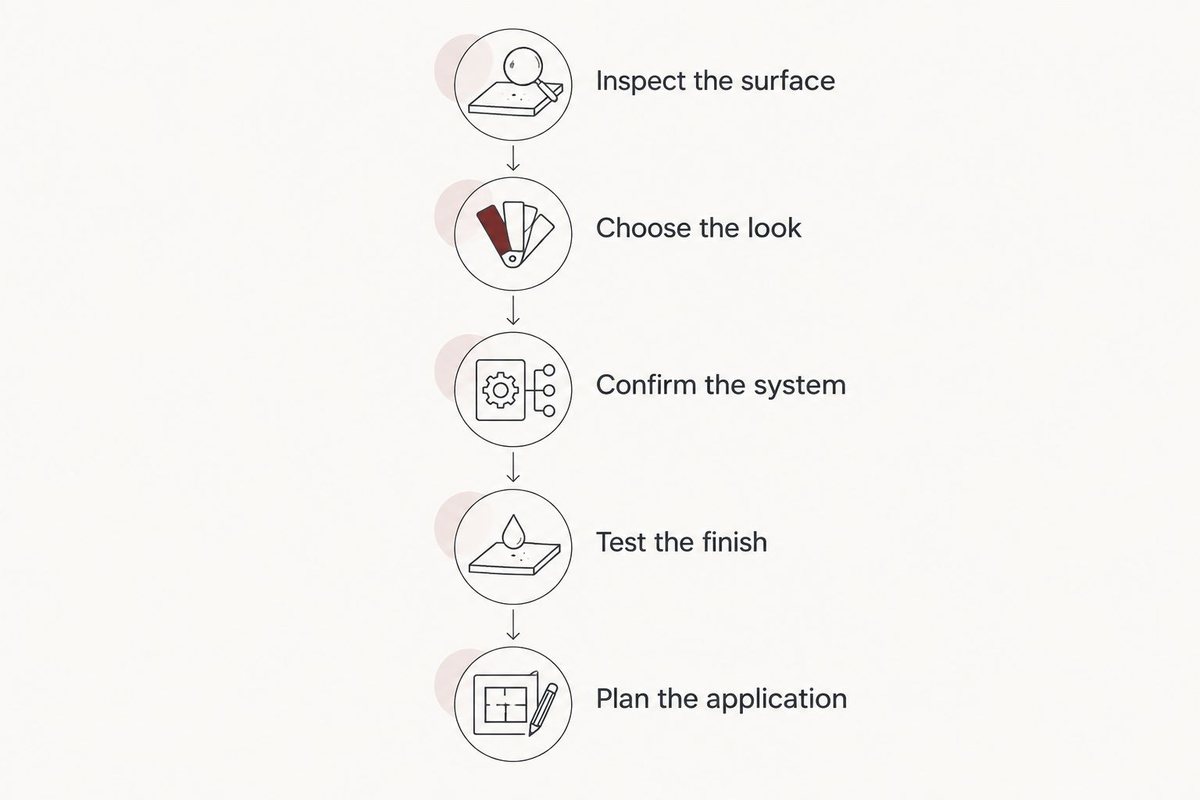
Inspect the surface
Check whether the door is bare wood, painted wood or transparently finished wood. Look at the frame and edges too, not just the broad front face.
Use 3 checks before selecting a system: identify the existing finish, locate damaged or loose areas, and establish the exposure. If moisture is entering the wood, address the cause before coating it.
Choose the look
Decide between 2 finish directions: opaque colour or visible grain. Make this choice first so the product discussion starts with a clear brief.
Opaque colour suits a deliberate shade change or a door with visually uneven repairs. A transparent finish suits timber whose appearance you want to retain.
Confirm the system
Ask for the specified preparation, primer or sealer, topcoat and application instructions. Also confirm whether the selected coating is intended for brushing, rolling or spraying.
Do not choose a wall primer simply because you already have it at home. The primer or sealer must belong to a suitable wood-coating system.
Test the finish
Prepare 2 sample panels using your shortlisted shades and the intended coating system. Compare them in 2 viewing conditions: daylight and the room’s usual artificial lighting.
Include the frame colour in your decision. A door shade that looks balanced alone can look quite different beside an existing cream, white or dark frame.
Plan the application
Agree with your painter on preparation, protection of surrounding surfaces and the treatment of edges. Keep hinges, locks and other moving hardware free of coating unless their instructions permit it.
For windows, follow the selected system’s instructions around joints, glazing and moving parts. Use the manufacturer’s drying and recoating guidance rather than a fixed schedule borrowed from another product.
How we ranked the coating types
This 2026 ranking uses location, grain visibility, existing-finish compatibility and application requirements. Water-based wood enamel takes the indoor colour-change slot; an exterior-rated coating takes priority wherever weather exposure is the main constraint.
The ranking does not claim that one formulation outperforms every other formulation; the data sheet of the product you choose decides suitability.
Which wooden-door coating should you choose?
For an undecided homeowner painting an indoor door, start with water-based enamel explicitly specified for wood. If the door faces rain or sunlight, start instead with exterior-rated wood coatings.
Choose opaque colour to change the appearance; choose a clear finish to show timber grain. Keep solvent-based enamel and opaque PU on the shortlist only when the existing surface and application plan support them.
Your best choice is the coating that answers the whole brief, not simply the shade you liked first.
MRF Paints coatings for wooden doors and windows
- Solid colour, indoors: Specta PU Enamel, a quick-drying single-pack polyurethane enamel for wood and metal in 24 shades, or WoodCoat Italia in High Gloss White or Matt White.
- Solid colour, exposed to weather: MetalCoat, a two-pack aliphatic polyurethane topcoat for metal, wood and other surfaces, indoors and outdoors, with UV and moisture resistance.
- Visible grain, indoors: FreshWood Interior (two-pack PU), the water-based AquaCoat PU 1K or the DIY-friendly EezeeWood Interior.
- Visible grain, outdoors: WoodCoat Exterior (two-pack, all-weather and UV resistant), FreshWood Exterior, the water-based AquaCoat PU 2K or the single-pack EezeeWood XT.
For colour ideas, see our main door colour ideas.
FAQ
What is the best paint for wooden doors in 2026?
Choose by location and look. From MRF Paints, Specta PU Enamel gives an opaque colour on indoor doors, MetalCoat suits doors exposed to rain and sun, and WoodCoat Exterior or FreshWood keep the grain visible under a clear PU finish.
Can I use wall paint on a wooden door?
Use wall paint on a wooden door only if the product instructions explicitly allow that surface and use. Otherwise, choose a coating specified for wood and follow its preparation requirements.
Is PU better than enamel for wooden doors?
PU is not automatically better than enamel for every wooden door. Choose by exposure, existing-finish compatibility, desired appearance and the application requirements of the exact coating.
What should I use on wooden window frames outside?
Use a coating explicitly intended for exterior wooden window frames. Confirm the complete preparation and coating system, including instructions for edges, joints and areas around glazing.
Should I paint a wooden door or use a clear finish?
Paint the door when you want solid colour; use a clear finish when you want visible timber grain. Clear finishes do not conceal mismatched repairs or uneven wood colour.
Do wooden doors need primer before painting?
Wooden doors need the primer or sealer specified by the selected coating system. Bare wood and previously coated wood can require different preparation, so follow the exact product instructions.
Can I repaint a door without removing all the old paint?
Complete removal is not always necessary when the existing coating is sound and compatible with the new system. Remove loose material and follow the selected product’s preparation instructions; investigate an unknown finish before coating it.
One last thing
Keep an approved sample panel after your 2026 repaint. Write the exact coating name, shade reference and sheen on its reverse so a future touch-up starts with a record rather than a guess.
Ask your painter to document the preparation and coating system too. A colour reference records the appearance; the system record explains what was applied to the wood.
Related guides
- Best exterior wall paints for Indian homes
- Best wood polish for furniture in India
- Best enamel paints for metal doors and windows