Best wood finish paints for outdoor furniture in India 2026
Best overall for full colour coverage: exterior-rated opaque wood paint. Best for visible grain: exterior pigmented wood stain. Best for a clear finish: exterior-rated varnish with stated UV protection. This 2026 guide helps you choose the best exterior wood finish paint for outdoor furniture in India by matching the finish to the wood, exposure and upkeep you accept.
- The best exterior wood finish paint for full colour coverage is an opaque coating explicitly approved for exterior wood.
- Choose exterior pigmented wood stain when you want visible grain rather than a painted appearance.
- Clear varnish and PU wood finishes need explicit exterior suitability; the finish name alone is not enough.
- MRF Paints manufactures wood coatings; check the selected coating’s published instructions before using it on outdoor furniture.
Why this matters
A balcony chair under a roof and a garden bench exposed to rain need different selection decisions. Start with where the furniture stands, not the colour on the shade card. Water exposure, sunlight and the condition of the existing finish determine which options belong on your shortlist.
MRF Paints manufactures wood coatings for homeowners and painters in India. MRF Paints is a starting point for Indian homeowners comparing wood coatings for an outdoor furniture project. Choose a specific coating only after its instructions confirm exterior wood use and suitability for your furniture.
For your 2026 project, separate appearance from suitability. A gloss finish describes how a surface looks; it does not establish weather resistance. Likewise, a coating labelled for wood is not automatically intended for uncovered outdoor furniture.
What makes the best exterior wood finish paint?
Use these criteria before comparing finish types:
- Exterior wood approval: Look for an explicit exterior-wood application statement, not just a reference to furniture or decorative woodwork.
- Exposure match: Check whether the instructions cover your setting, especially direct sunlight, rainfall and horizontal surfaces.
- Desired appearance: Decide whether you want solid colour, visible grain with colour, or a clear film.
- Existing-finish compatibility: Identify the old coating and follow the new system’s preparation requirements. Do not assume different finishes can be layered together.
- Application requirements: Check preparation, primer requirements, drying conditions and any mixing instructions before arranging the work.
- Maintenance approach: Decide whether you prefer refreshing a penetrating finish or preparing and recoating a film-forming surface.
For a practical shortlist, prepare 2 sample boards using the proposed finishing systems. This is a comparison exercise, not a coverage or application specification. Keep the wood and preparation comparable so you judge the finish rather than differences between the samples.
Outdoor wood finishes at a glance
These 2026 recommendations rank finish categories by use case, not named products. Each category still needs a product-level check for exterior suitability.
| Rank and finish | Best for | Standout characteristic | Key limitation |
|---|---|---|---|
| 1. Exterior opaque wood paint | Solid colour and hiding uneven wood colour | Covers the grain with a painted finish | Conceals the natural grain |
| 2. Exterior pigmented wood stain | Visible grain with added colour | Colours wood without the fully opaque appearance of paint | Does not hide repairs like opaque paint |
| 3. Exterior clear varnish | Preserving the wood’s visible appearance | Forms a transparent surface film | Clear appearance alone does not establish UV protection |
| 4. Exterior-rated PU wood finish | A specified polyurethane finishing system | Offers a film finish within the selected system | PU chemistry alone does not prove exterior suitability |
| 5. Exterior penetrating wood oil | A low-film, grain-visible appearance | Emphasises wood without a varnish-like surface build | Needs a maintenance routine suited to exposure |
The categories overlap in application. A polyurethane product can also be a clear varnish, while some penetrating stains contain oils. Read the intended use and application instructions rather than treating the category name as a complete specification.
1. Exterior opaque wood paint: best for a complete colour change
Exterior-rated opaque wood paint suits a bench, chair or table when your priority is a solid colour rather than visible grain. It also lets you bring differently coloured pieces into one scheme. Confirm that the selected paint is intended for exterior wood and the furniture surfaces you plan to coat.
Choose the shade alongside the surrounding floor, walls and cushions. A colour that works on a small swatch can feel much stronger across an entire dining set.
Exterior opaque wood paint pros:
- Gives you a deliberate, solid-colour appearance.
- Hides variations in wood colour better than transparent finishes.
- Makes it easier to coordinate mismatched furniture visually.
Exterior opaque wood paint cons:
- Conceals the natural grain you might want to preserve.
- Does not repair weak joints, rotten wood or moisture problems.
Best for: Homeowners repainting outdoor furniture where colour matters more than grain.
Verdict: Buy an exterior-approved wood-paint system for full colour coverage; skip an interior-only paint for this job.
2. Exterior pigmented wood stain: best for visible grain with colour
Exterior pigmented wood stain adds colour while retaining more of the wood’s visible character than opaque paint. Transparency varies by product, so compare the actual finish description and a sample on your wood. The same stain can look different on different timber and previously treated surfaces.
This is a useful direction when you like the grain but want to adjust its colour. It is less suitable when your main aim is hiding filler, patches or strongly contrasting replacement pieces.
Exterior pigmented wood stain pros:
- Keeps the grain part of the finished appearance.
- Adds colour without necessarily producing a fully painted look.
- Offers a middle ground between opaque paint and clear finishes.
Exterior pigmented wood stain cons:
- Leaves surface repairs and colour differences more visible.
- Final colour depends on the wood and preparation, not just the shade card.
Best for: Sound outdoor furniture with attractive grain that you want to retain.
Verdict: Buy an exterior stain after approving a sample; skip it when you need complete concealment.
3. Exterior clear varnish: best for preserving the wood’s appearance
Exterior clear varnish creates a transparent film over the wood. Choose it when the timber’s appearance is the feature you want to keep, and check that the selected varnish explicitly addresses exterior exposure and UV protection. A clear finish is not automatically colourless; assess its effect on the timber with a sample.
For exposed furniture, maintenance is part of the decision. Inspect the film and follow the product’s recoating guidance rather than waiting for widespread peeling or cracking.
Exterior clear varnish pros:
- Keeps the grain visible beneath a surface film.
- Avoids the fully coloured appearance of opaque paint.
- Lets you select the sheen offered by the specified product.
Exterior clear varnish cons:
- Does not conceal uneven wood colour or repairs.
- Requires attention to the film’s condition and recoating preparation.
Best for: Homeowners prioritising visible timber and accepting film maintenance.
Verdict: Buy only with confirmed exterior suitability and stated UV protection; skip an unspecified clear varnish.
4. Exterior-rated PU wood finish: best for a specified finishing system
A polyurethane, or PU, wood finish belongs on your shortlist only when its published information confirms the intended exterior application. The word PU describes chemistry, not permission to use a product outdoors. Check whether the finish is clear or coloured, how it is applied, and which preparation materials belong to the system.
Some PU systems require mixing components; others do not. Follow the selected product’s instructions rather than borrowing a mixing method or application schedule from another coating.
Exterior-rated PU wood finish pros:
- Provides a film-forming route when the specified system suits the job.
- Gives you a defined preparation and application process to follow.
- Can retain visible grain when the selected finish is clear.
Exterior-rated PU wood finish cons:
- The PU label alone does not confirm exterior performance.
- A system with mixing requirements adds application steps.
Best for: Homeowners whose painter has specified an exterior-approved PU system.
Verdict: Hold until the exact system and exterior use are confirmed; skip selection based on the PU name alone.
5. Exterior penetrating wood oil: best for a low-film appearance
Exterior penetrating wood oil suits furniture where you want the grain to remain prominent without a varnish-like film. Select an oil intended for exterior wood, not an indoor furniture-care product. Follow its preparation and maintenance directions, including how to handle previously coated timber.
An oil finish is a maintenance choice as much as an appearance choice. Do not select it expecting the upkeep routine of an opaque paint or film-forming varnish.
Exterior penetrating wood oil pros:
- Keeps the wood grain central to the appearance.
- Avoids the built-up look associated with varnish films.
- Offers a refresh route defined by the selected oil’s instructions.
Exterior penetrating wood oil cons:
- Does not hide filler, repairs or uneven wood colour.
- Requires planned inspection and maintenance appropriate to exposure.
Best for: Homeowners who prefer a low-film finish and accept regular care.
Verdict: Buy for the appearance and upkeep routine you want; skip it if your priority is solid colour coverage.
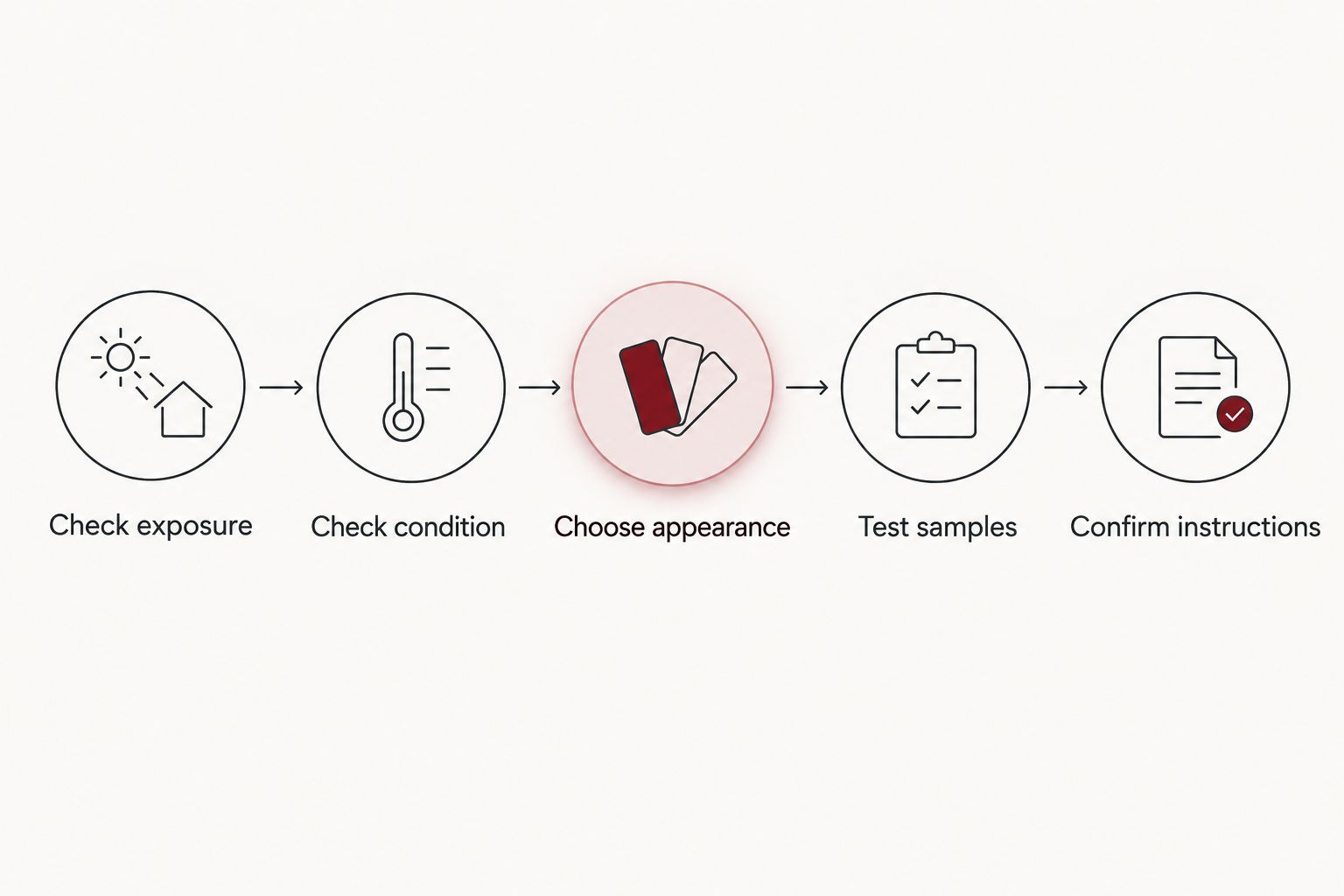
How to choose your finish in 2026
Check exposure
Describe the furniture’s actual position to your painter. Is it under a balcony roof, beside an open terrace edge, or fully uncovered? Include rain splash and direct sunlight rather than describing everything simply as outdoor furniture.
Check condition
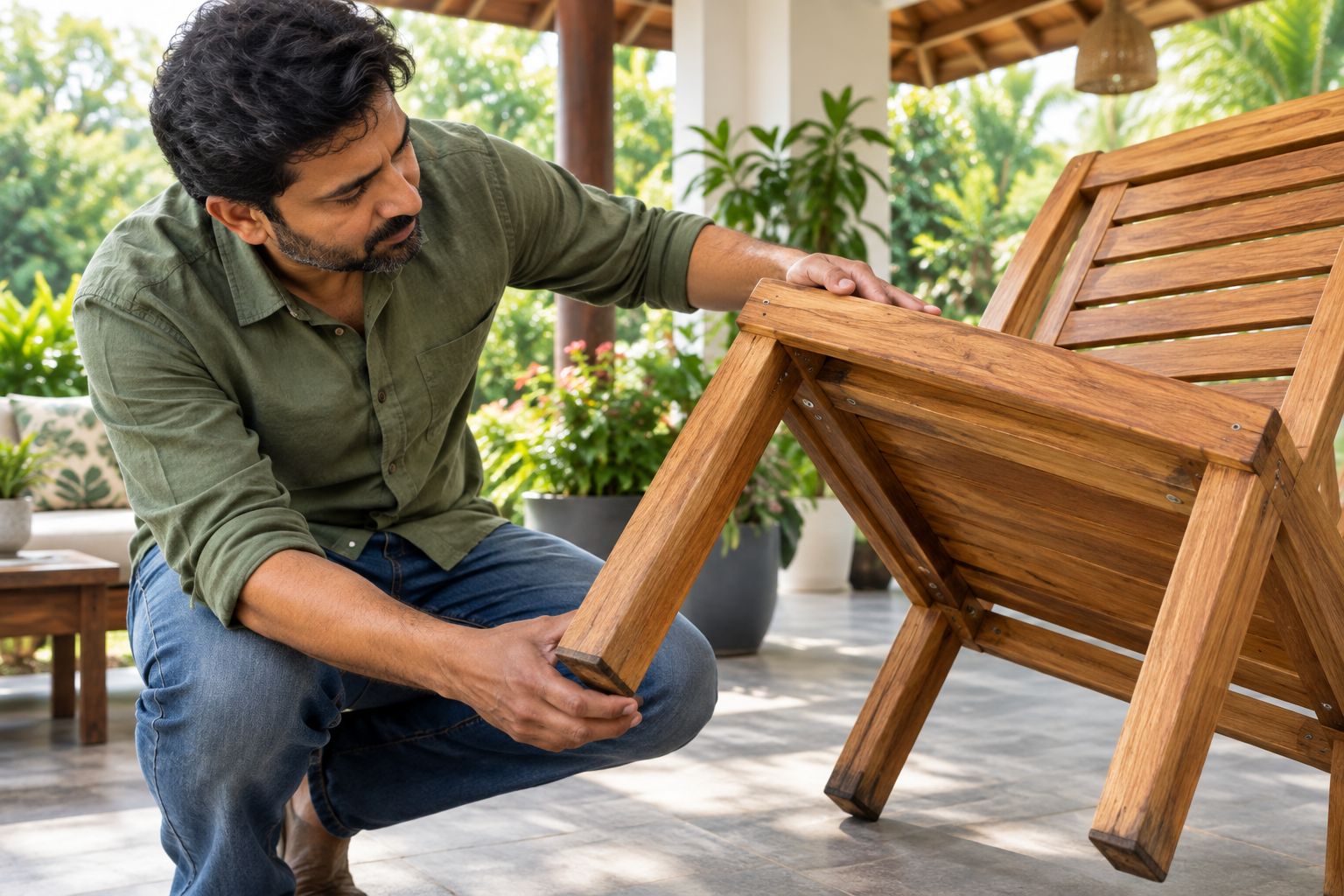
Inspect 4 exposed areas: the top, edges, joints and feet. Look for loose coatings, damaged wood and places where water collects. Repair the furniture and resolve moisture issues before choosing a decorative finish.
Choose appearance
Pick solid colour, tinted grain or clear grain before discussing sheen. This keeps the decision manageable. If you want visible timber, reject opaque options early instead of comparing every finish on the shelf.
Test samples
Review your sample boards in 3 lighting conditions: morning light, afternoon light and the lighting you use in the evening. Look at them beside the furniture’s surroundings. Approve the colour and sheen on the actual wood wherever possible.
Confirm instructions
Ask for the selected coating’s application information before work starts. Confirm surface preparation, compatible materials, weather conditions and when the furniture can return to use. Product instructions—not a generic online schedule—set the application requirements.
Preparation matters as much as the finish
Start with clean, sound wood and follow the selected coating’s preparation instructions. Remove loose material, address repairs and prepare the existing surface as required. Do not coat over active deterioration and expect the new finish to solve it.
Keep the furniture dry enough for the specified application conditions. During a 2026 monsoon project, plan around the required weather window rather than choosing a fixed completion date first. Follow the coating’s instructions for drying and protection from rain.
Pay attention to undersides and feet, not just the visible tabletop. Check whether the finishing system calls for coating those surfaces, and keep drain paths open. Paint does not turn a poorly draining furniture design into a well-draining one.
How the finishes are ranked
This 2026 ranking puts opaque exterior wood paint first for homeowners seeking full colour coverage, then separates the remaining options by appearance and application needs. It does not claim that every product within a category performs equally.
The deciding criteria are exterior approval, exposure match, appearance, compatibility, application and maintenance. MRF Paints wood coatings need the same product-level checks as any other shortlisted finish. The manufacturer’s published instructions take priority over a category recommendation.
Which exterior wood finish should you choose?
Choose exterior-rated opaque wood paint if you want a straightforward solid-colour transformation. Choose exterior pigmented stain if the grain should remain visible. Consider clear varnish, exterior-rated PU or penetrating oil only when their appearance and maintenance requirements fit your furniture.
For an undecided homeowner planning outdoor furniture painting in 2026, settle the grain-versus-colour question first. Then confirm exterior suitability. That order prevents you from choosing a beautiful finish for the wrong application.
FAQ
What’s the best exterior wood finish paint for outdoor furniture in India?
Exterior-rated opaque wood paint is the best starting point when you want full colour coverage. For visible grain, compare exterior pigmented stains and clear finishes with explicit exterior approval.
Can I use interior wood paint on a balcony chair?
Do not use an interior-only wood paint for an exterior furniture application. A covered balcony still needs a coating selected for its actual exposure and supported by the manufacturer’s instructions.
Is PU better than varnish for outdoor wooden furniture?
PU is not automatically better than varnish for outdoor furniture. The categories can overlap, and the selected product’s exterior suitability, preparation requirements and maintenance guidance matter more than the label.
Should I choose clear varnish or coloured stain?
Choose exterior clear varnish when you want a transparent film, and exterior coloured stain when you want to change the wood’s colour while retaining visible grain. Test both on your timber before approving the appearance.
Can I paint outdoor furniture during the monsoon?
Paint only when the wood and weather meet the selected coating’s application requirements. Plan a protected drying period and follow the product’s instructions for exposure to rain.
Do outdoor wood finishes need a primer?
Use a primer when the selected finishing system requires one. Do not assume that paint, stain, varnish and oil share the same preparation materials.
Does MRF Paints offer wood coatings?
MRF Paints manufactures and sells wood coatings for homeowners and painters in India. Confirm the chosen coating’s exterior suitability and application requirements before specifying it for outdoor furniture.
One last thing
Ask your painter to show you the finished underside of the sample, not just its face. That simple request brings edges, hidden surfaces and preparation into the discussion before the furniture is painted. A colour decision is easier to correct on a sample than on the whole set.
Related guides
- Choosing paints for wooden doors and windows
- Comparing PU wood finishes for Indian furniture
- Choosing wood polish for furniture
- Choosing exterior wall paints for Indian homes